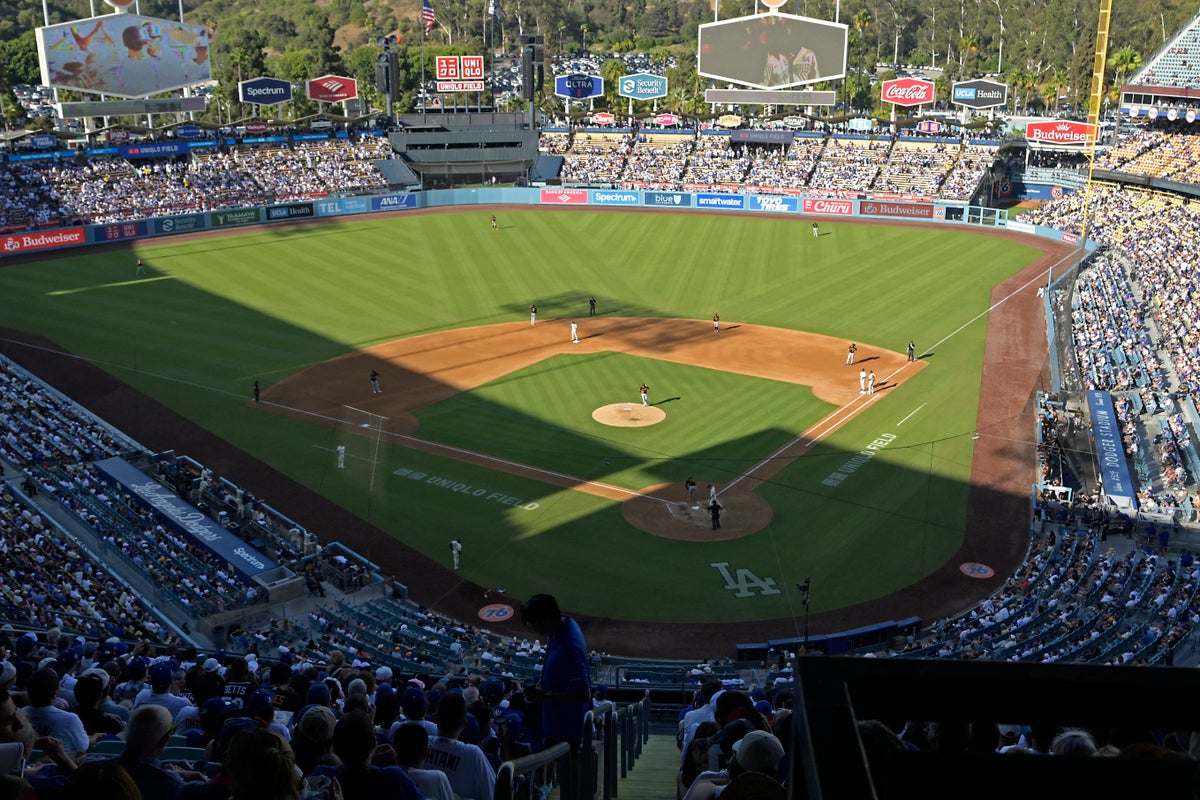
The core economic and operational friction point in modern sports venue litigation centers on a stark paradox: franchises market an immersive, high-energy spectator experience that inherently relies on alcohol consumption and intense tribalism, yet they simultaneously claim zero institutional liability when that precise environment generates violent patron-on-patron crime. When plaintiffs in civil suits attempt to introduce historical security failures from rival incidents, such as the 2011 Bryan Stow beating at Oracle Park, into current proceedings against organizations like the Los Angeles Dodgers, they are not merely seeking to inflame a jury. They are attempting to shatter the legal firewall franchises use to isolate single-incident tragedies as statistical anomalies rather than systemic operational failures.
Evaluating this tactical maneuver requires deconstructing how sports organizations manage premises liability, risk mitigation, and threat forecasting. If you enjoyed this post, you might want to read: this related article.
The Economics of Venue Negligence
Stadium operators function as institutional architects of crowd psychology. A professional sporting event aggregates tens of thousands of hyper-partisan individuals into a confined physical footprint, introduces high-potency intoxicants, and amplifies aggressive stimuli via stadium audio-visual systems. From a risk management perspective, fan violence is not an unpredictable stochastic event. It is a known variable with a quantifiable baseline frequency.
Franchises maintain liability shields by framing violent altercations as individual criminal acts committed by rogue actors, thereby breaking the chain of proximate cause. To dismantle this defense, plaintiffs must establish foreseeability. Under standard premises liability doctrine, a property owner owes a duty of care to protect invitees from foreseeable third-party criminal acts if past incidents establish a pattern of risk. For another look on this story, refer to the recent update from The Athletic.
By pushing to admit evidence from historical benchmarks like the 2011 attack on a San Francisco Giants fan at Dodger Stadium—where inadequate lighting, sparse security presence, and deficient ingress-egress management compounded the hazard—plaintiffs are attempting to prove systemic institutional notice. The legal battle hinges on whether a violent incident at a different venue, or a similar incident years prior at the same venue, constitutes sufficient notice to alter the required standard of care.
The Failure of Current Security Frameworks
Standard venue security models rely on reactive, static interventions. These typically include bag checks, metal detectors at primary gates, and roving patrols of uniformed personnel whose primary mandate is crowd flow rather than behavioral surveillance. This approach fails for three fundamental reasons.
First, static perimeters address prohibited physical objects while ignoring behavioral vectors. The weapon in most severe stadium assaults is physical force augmented by alcohol, not contraband smuggled past screening stations. Security staffing models generally scale linearly with ticket sales, ignoring non-linear risk spikes associated with high-rivalry matchups, playoff implications, and tailgating duration.
Second, private security deployment suffers from high turnover, minimal investigative training, and limited legal authority. Unlike sworn law enforcement officers, contract security guards are structurally discouraged from intervening in volatile physical altercations due to liability exposure and corporate risk aversion. Consequently, security personnel often function as observers rather than active mitigators.
Third, the handoff between parking infrastructure and stadium bowls represents a structural governance gap. Stadium ownership frequently controls the seating bowl and immediate concourses, while external parking lots are managed by municipal authorities, third-party parking concessionaires, or delegated to independent security contractors. This fragmentation creates jurisdictional ambiguities where violent flashpoints occur in institutional blind spots, allowing franchises to disclaim operational control over the exact zones where risk concentration peaks.
Evidentiary Mechanics and Jury Cognition
The strategic push to have juries hear about prior violent precedents involves navigating strict rules of evidence regarding character, habit, and substantial similarity.
Defendants routinely argue that introducing external or historical attacks violates rules against propensity evidence and introduces unfair prejudice. Their legal teams frame past events as contextually distinct, emphasizing differing venue layouts, distinct police jurisdictions, and varying alcohol sales policies. Their objective is to isolate each lawsuit into a vacuum, treating every brutal beating as an isolated micro-event rather than a symptom of industry-wide negligence.
Conversely, plaintiffs use historical benchmarks to establish the industry standard of care. If a stadium operator is aware that chronic under-staffing in parking structures during high-tension games historically correlates with violent assaults, maintaining that exact staffing model constitutes gross negligence. The legal utility of introducing the 2011 incident lies in demonstrating that management had actual or constructive notice of specific, foreseeable threat vectors and consciously chose to under-invest in mitigation strategies to preserve profit margins.
Quantitative Risk Thresholds in Crowd Management
Managing stadium security involves balancing the marginal cost of additional security personnel against the expected monetary value of potential legal judgments and reputational damage.
Let the total security cost function be represented by $C(s)$, where $s$ is the security investment variable (including staffing density, lighting quality, and surveillance infrastructure). The expected loss from fan violence is modeled as $L(s)$, a decreasing function of security investment. Franchises typically optimize for cost minimization:
$$\min_{s} [C(s) + L(s)]$$
In practice, because liability caps, insurance payouts, and legal settlements are often heavily discounted or absorbed by third-party risk pools, the perceived corporate cost of $L(s)$ is artificially low. This creates a financial incentive for franchises to under-allocate resources to $s$ until a catastrophic lawsuit forces a recalibration of the risk matrix. When plaintiffs demand that juries hear about catastrophic historical precedents, they are attempting to artificially inflate the perceived magnitude of $L(s)$ in the minds of the court, forcing organizations to reprice their operational risk models.
Strategic Operational Redesign
Mitigating the legal and physical vulnerabilities of large-scale sports venues requires moving away from superficial compliance measures toward proactive threat engineering. Stadium operators must decouple security expenditure from baseline ticket revenue and tie it directly to behavioral risk indicators.
Integrating predictive crowd analytics allows security operations centers to monitor concourse congestion, ambient noise levels, and alcohol consumption velocity in real time. Deploying dedicated, highly trained tactical response units rather than passive observers shifts the security posture from deterrence through presence to rapid intervention capability. Furthermore, unifying jurisdiction across parking infrastructure, tailgating zones, and seating bowls under a single command structure eliminates the jurisdictional gaps that currently enable institutional negligence.
Failure to overhaul these operational frameworks guarantees that civil litigation will continue to serve as the primary corrective mechanism for public safety in sports entertainment, forcing stadium owners to pay the ultimate market price for systemic oversight deficits.