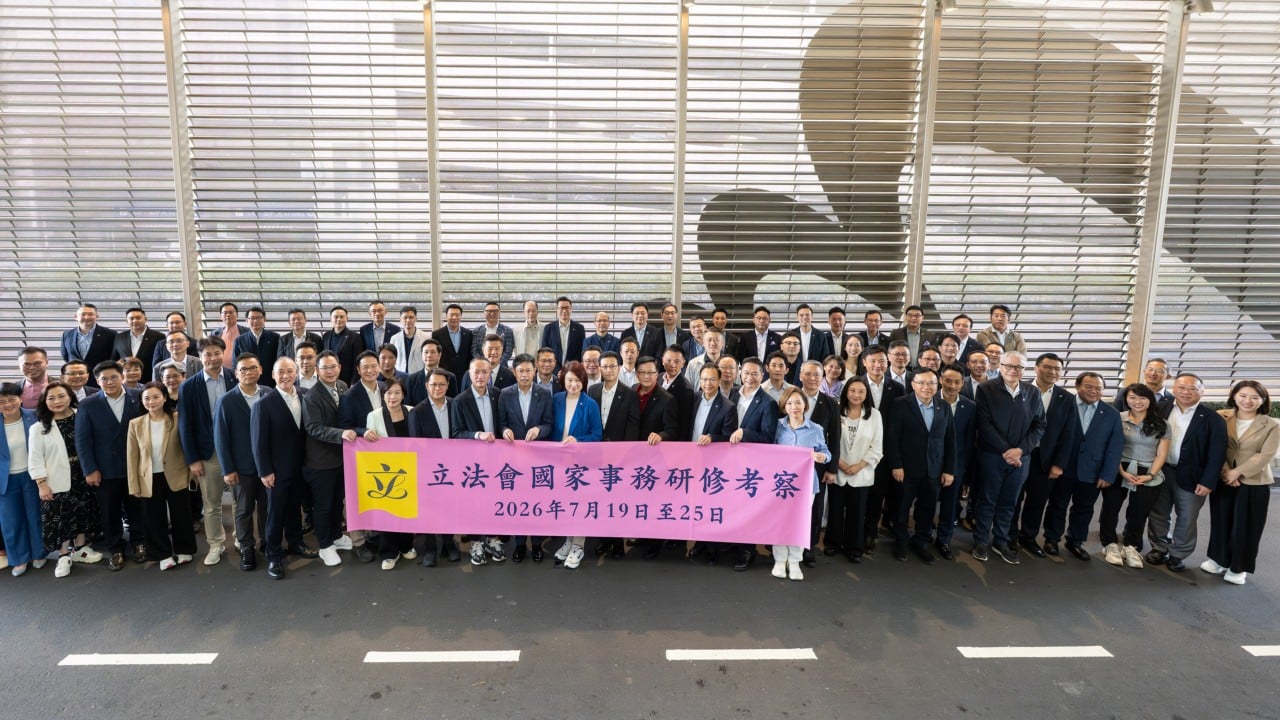
When all 90 members of Hong Kong’s Legislative Council pack their bags and head to Beijing together, it isn't just a standard business trip. It's a massive shift in how the city is going to be run.
On July 19, 2026, the entire legislature boarded a flight to the capital for a week-long national affairs study tour. This marks the first time since the 1997 handover that every single lawmaker has made this collective journey. If you think this is just a symbolic photo-op or a week of passive listening, you're missing the bigger picture.
The city is changing its approach to governance. Lawmakers are moving away from purely local debates and trying to mesh their work directly with national goals. This trip is the engine behind that change.
The Blueprint for Hong Kong's First Local Five-Year Plan
For decades, Hong Kong operated on a completely different planning cycle than the mainland. While Beijing mapped out its grand macroeconomic goals, Hong Kong largely reacted to market forces. That era is officially over.
Lawmakers are using this trip to lay down the tracks for Hong Kong’s first-ever local five-year plan. It’s a direct attempt to align the city's economic growth with the national 15th Five-Year Plan running from 2026 to 2030. They want to make sure local policies don't clash with central government directives.
Starry Lee Wai-king, the Legco President, made it clear before departing that this firsthand experience will directly shape how lawmakers scrutinize future bills. They aren't just reading policy papers in their Central offices anymore. They're trying to figure out how to make massive projects like the Northern Metropolis actually succeed by borrowing ideas from the mainland’s playbook. Recent legislative movements, like the passage of the Huanggang port co-location bill, show that the government wants to speed up cross-border integration. To do that, the people writing the laws need to understand the minds of the people in Beijing.
What Lawmakers Are Actually Doing Behind Closed Doors
Let's talk about the itinerary. This isn't a leisure tour or a sightseeing vacation. The lawmakers are spending a massive chunk of their time inside the Hong Kong and Macao Work Office of the Communist Party of China Central Committee. They're attending specialized seminars led by mainland officials, state scholars, and policymakers.
The discussions cover heavy topics. They are examining national security frameworks, international relations, and the mainland's legal system. They're also studying state governance ideologies. For a legislature that now operates under an executive-led model with zero effective opposition, understanding the exact policy intent coming out of Beijing is critical. It ensures that when bills land on the table in Hong Kong, they pass without friction.
But it’s not all sitting in lecture halls. A large portion of the week involves field research into what Beijing calls new quality productive forces.
The Obsession With New Quality Productive Forces
If you want to understand where Hong Kong's economy is being pushed, you need to understand this phrase. It’s Beijing’s current shorthand for growth driven by tech upgrades rather than cheap labor or speculative real estate bubbles.
The delegation is touring facilities focused on aerospace, artificial intelligence, and advanced information technology applications. They're also checking out how traditional heavy industries handle green transitions and new-energy transportation.
Hong Kong has struggled for years to diversify away from its heavy reliance on property and financial services. By looking closely at how Beijing scales up its tech sectors, lawmakers hope to bring practical blueprints back home. They want to see how AI and tech infrastructure can be integrated into Hong Kong’s existing institutional frameworks without disrupting the free-market mechanisms that keep the city unique.
The Shift in Local Grassroots Governance
Another major focus area is community-level management. Mainland cities handle public services and neighborhood disputes through highly structured grassroots networks.
Some local lawmakers noted before the trip that while the mainland’s system differs fundamentally from Hong Kong’s setup, there are parts worth adapting. Hong Kong’s own district administration has undergone significant restructuring over the last couple of years. Lawmakers want to see how mainland municipal models maintain social stability and deliver daily public services efficiently.
Expect this knowledge to feed straight into local policies regarding public housing estates, welfare distribution, and community support networks. They want to make local governance tighter, faster, and more responsive to the public while maintaining strict alignment with national security goals.
The Economics of the Trip
Let's look at the raw numbers. The trip costs about HK$15,600 per lawmaker. That money comes directly out of their duty visit accounts. To keep things grounded and avoid public backlash over spending, all participants are flying economy class for the short flight.
Critics might argue that flying 90 politicians to Beijing is an expensive exercise in political alignment. But proponents point out that if this trip prevents even one major policy blunder on massive infrastructure projects, the investment pays for itself. The shared experience is also designed to build teamwork among lawmakers, cutting down the internal bickering that sometimes slows down policy implementation.
Turning Insights Into Actionable Local Laws
So, what happens when they get back on July 25? The real work begins in the legislative chambers.
Lawmakers face the task of turning these observations into concrete local laws. You'll likely see a wave of new bills targeting technology integration, quicker cross-border transport links, and tighter coordination with the Greater Bay Area.
To see if this trip actually worked, you need to watch how these lawmakers vote and debate on upcoming development funds. Keep a close eye on the upcoming legislative sessions in late 2026. Track the funding requests for the Northern Metropolis and tech startups. The shift in how these projects are funded and managed will tell you exactly how much the legislature learned during their week in Beijing.