The envelopes arrive in stacks, tucked between grocery circulars and credit card offers. They are thin, white, and marked with the official seal of a state agency. For most, they are junk. For others, they are a ticking clock.
Think about a woman named Maria. She isn't a statistic, though in the eyes of the system, she is precisely that. Maria works two jobs, one at a dry cleaner and another cleaning offices at night. She has a daughter with asthma. For Maria, Medicaid is not a political talking point or a line item in a federal budget. It is the inhaler that keeps her child breathing through the night. It is the thin line between a stable life and a catastrophic collapse.
When the system fails, it doesn't usually happen with a bang. It happens with a "return to sender" notice. It happens when a phone line stays busy for four hours. It happens when an eligibility audit, designed to save money, accidentally severs the lifeline of someone who actually qualifies.
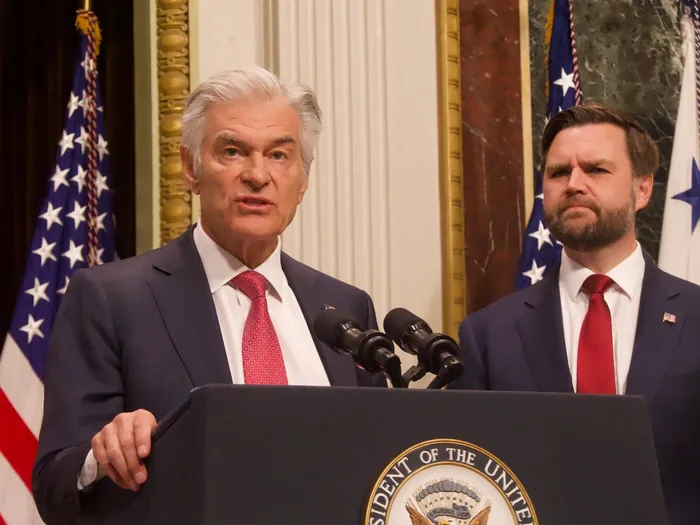
This is the messy reality behind the recent announcement from Dr. Mehmet Oz. Now serving as the Administrator for the Centers for Medicare and Medicaid Services (CMS), he has launched a massive, 50-state audit of Medicaid program oversight. The goal sounds technical: "integrity." But the stakes are human.
The Leak in the Boat
Medicaid is a titan. It covers nearly 80 million people. It is the largest source of health coverage in the United States, a sprawling safety net that catches the elderly, the disabled, and the working poor. But for years, that net has been fraying.
The problem is twofold. On one side, billions of dollars are lost to "improper payments." This isn't always about shadowy villains in back alleys. Often, it is bureaucratic sludge—payments made to providers for services never rendered, or checks sent to people who no longer live in the state. On the other side of the ledger, legitimate beneficiaries are being purged from the rolls due to administrative errors.
Imagine a bucket used to carry water to a thirsty village. If the bucket has holes, the village stays thirsty. You can keep pouring more water in—more taxpayer funding—but if you don't plug the leaks, you are just wasting resources while the people at the end of the line suffer.
Dr. Oz’s audit is, essentially, an attempt to find every single hole in that bucket. By auditing all 50 states, the federal government is looking to see who is actually minding the store. They want to know why some states have high error rates and why others seem to be operating in a fog of outdated data.
The Invisible Stakes of Oversight
The word "audit" usually puts people to sleep. It shouldn't. In the context of healthcare, an audit is a diagnostic tool.
If a doctor ignores a patient's skyrocketing blood pressure, they are negligent. If a government ignores the mismanagement of $800 billion in annual spending, the consequences are equally dire. When money is wasted on fraudulent billing or administrative bloat, it isn't just disappearing into thin air. It is being taken directly from the "care" side of the equation.
Every dollar lost to a fraudulent provider is a dollar that cannot be used to fund a home health aide for a senior with dementia. Every cent wasted on a redundant administrative process is a cent that could have gone toward dental care for a child in rural Appalachia.
The 50-state audit is intended to force a level of transparency that has been missing for decades. It is a demand for accountability. But for the people on the ground—the Marias of the world—the fear is that a push for "integrity" will become a blunt instrument. They worry that in the rush to purge the "ineligible," the system will lose sight of the vulnerable.
A System Caught in the Gears
To understand why this audit is happening now, you have to look at the "Unwinding."
During the pandemic, the federal government prohibited states from kicking anyone off Medicaid. It was a period of continuous enrollment that provided a rare moment of stability for millions. But when the public health emergency ended, the gates opened. States began the Herculean task of re-evaluating everyone.
It was a disaster.
In some states, 70% of the people who lost coverage didn't lose it because they made too much money. They lost it because of paperwork. They moved and didn't get the letter. They couldn't navigate the website. They were "procedurally terminated."
This is the friction of the American safety net. It is designed to be difficult to navigate, a series of hurdles that serve as a deterrent. But when the stakes are life and death, friction is a luxury we cannot afford.
Dr. Oz is stepping into this chaos with a clipboard. He is looking at how states managed this transition. He is looking for the "bad actors"—the providers who gamed the system while the world was distracted. But he is also, theoretically, looking at whether states are fulfilling their most basic promise: to provide care to those who qualify.
The Human Cost of the Ledger
Numbers have a way of flattening the human experience. We talk about "improper payment rates" as if they are abstract percentages. They aren't.
Consider the small-town pharmacist who hasn't been reimbursed for months because of a coding error in the state’s new software. Consider the rural hospital that is on the verge of closing because its Medicaid payer mix is so mismanaged that the books never balance.
The audit is a recognition that the "back office" of healthcare is just as important as the "front office." You can have the best doctors in the world, but if the payment system is broken, the clinic doors stay locked.
The skeptics argue that this is a political theater, a way to trim the rolls under the guise of "fiscal responsibility." The proponents argue it is the only way to save a program that is drowning in its own complexity. The truth, as it usually does, lies in the tension between the two.
Beyond the Audit
What happens when the audit is over? What happens when the reports are filed and the "improper payments" are tallied?
If the audit is successful, it should lead to a more surgical approach to healthcare. It should mean that the system becomes better at identifying who truly needs help and faster at delivering it. It should mean that fraud is treated as a theft from the most vulnerable members of society.
But a successful audit requires more than just finding errors. It requires a fundamental shift in how we view the people who rely on these programs. They are not "beneficiaries" to be managed or "costs" to be mitigated. They are neighbors. They are the people who cook our food, care for our elderly, and keep our cities running.
The real test of Dr. Oz’s initiative won't be found in a spreadsheet. It will be found in whether a mother like Maria can sleep through the night, knowing that her child's health isn't dependent on a piece of paper that might have been lost in the mail.
Efficiency is a cold word, but when applied to empathy, it becomes a lifeline. The 50-state audit is a gamble that we can find the heart of the system by first fixing its brain. We are watching a giant machine try to relearn how to be precise. If it fails, the cost won't be measured in dollars. It will be measured in the silence of those who were told they no longer exist in the eyes of the state.
The light is on in the auditor’s office. The files are open. The world is waiting to see if the ledger finally balances in favor of the people.