The ink on the customs form is barely dry, yet the olive oil sits in the metal drum, refusing to move.
To the port authority in Rotterdam, it is cargo code 1509. To the clerk checking the manifests against newly minted diplomatic cables, it is a liability. But to Tariq, standing among the terraced groves outside Ramallah, that oil is four months of aching knees, cracked soil, and a fragile, desperate math that has kept his family on this hill for three generations. When a dozen foreign ministries across a continent away draw a sudden, unyielding line in the ledger, the shockwave does not travel through fiber-optic cables first. It arrives in the quiet ache of a farmer watching his livelihood evaporate into bureaucratic coldness.
We talk about international law as if it exists in a vacuum, suspended in glass jars within high-ceilinged conference rooms in Geneva or Brussels. We treat trade sanctions like surgical tools, wielded by distant hands with clinical precision. Yet every embargo, every exclusionary trade clause, and every red flag stamped across an origin certificate has a pulse.
Consider what happens next.
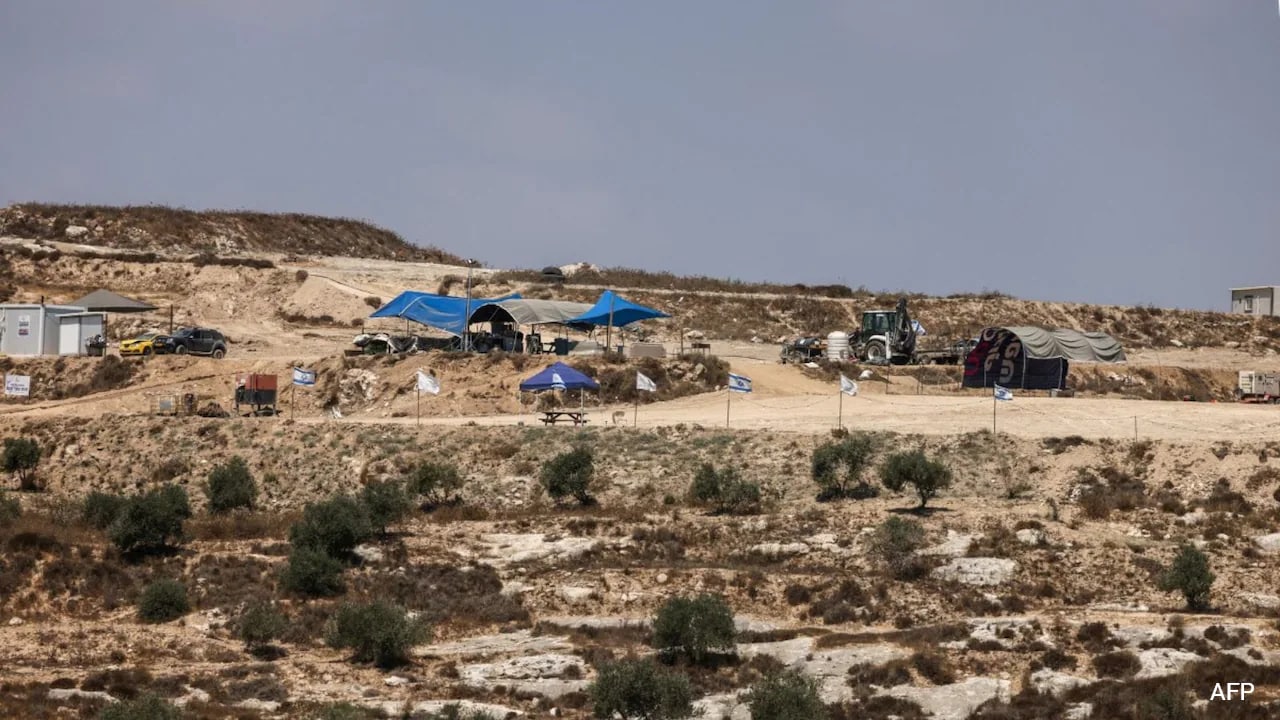
Twelve nations—from the damp chill of Scandinavian capitals down to the Mediterranean ports of southern Europe—have slammed a collective door. They are no longer just voting on resolutions or issuing diplomatic rebukes that vanish by the evening news cycle. They are changing the physical architecture of commerce. Israeli settlements in the West Bank, long woven into the complex, unequal tapestry of local supply chains, now find their goods legally radioactive. Honey, wine, textiles, and agricultural produce originating from beyond the 1967 green line are being turned away at borders.
To understand why this matters, you have to look past the political posturing and stare directly at the balance sheet.
For decades, the expansion of these communities relied not just on ideology or state subsidies, but on economic normalization. Roads were paved, factories were built, and industrial zones hummed with the quiet cooperation of a shared regional market. Workers crossed checkpoints before dawn. Goods flowed outward toward European supermarkets with stamps that obfuscated their exact origin, or proudly proclaimed a market access that felt permanent.
Permanence is a fragile illusion.
When twelve sovereign governments decide that participating in the economy of a disputed territory violates their domestic legal obligations under international humanitarian law, they are rewriting the rules of gravity. They are telling corporations that profit no longer insulates complicity.
Let us be entirely honest about the anatomy of this shift. This is not a sudden moral awakening born of pure altruism. Diplomacy is rarely so romantic. It is the slow, grinding accumulation of legal liability meeting public outrage. For years, consumer advocacy groups mapped supply chains with the persistence of detectives. They traced the barcode on a jar of tahini back to an industrial park sitting on expropriated pasture. They showed shareholders that buying local goods from an expanding settlement carried a hidden price tag: lawsuits, reputational ruin, and the quiet withdrawal of sovereign pension funds.
Money talks, but international law eventually drowns out the noise.
When the European Court of Justice previously ruled that products from settlements must be explicitly labeled, it felt like a minor bureaucratic nuisance. A warning label on a box of dates. But warning labels are the warning tremors before an earthquake. Retailers do not want to manage the logistical nightmare of segregation. Supermarket chains do not want activists picketing their distribution centers over a crate of cherry tomatoes.
So the corporate response is swift, brutal, and absolute. They stop buying.
This brings us back to the dust of the West Bank, where the human cost of these macro-economic shifts settles heavily on shoulders that had nothing to do with drafting foreign policy.
Imagine a hypothetical worker named David, living in a modular home in a hilltop community. He moved there twenty years ago for affordable housing and a subsidized mortgage, trading ideological fervor for a quiet suburban life with olive trees. He commutes to an aluminum window factory twenty minutes down the road. His employer relies entirely on export markets to stay solvent. When foreign buyers pull out overnight, the factory does not pivot; it shutters. David’s mortgage becomes an anchor dragging him down into insolvency. He is neither a policymaker nor a militant; he is an employee whose economic survival was staked on a geopolitical gamble that just went bust.
Now look across the valley at Tariq. He operates in the same fractured geography, yet his universe is inverted. His olives grow within sight of David’s fence, but their paths to market have never intersected fairly. Tariq’s struggle has always been about permits, access roads, and the slow administrative strangulation of his agricultural cooperative. When European capitals penalize settlement goods, the immediate hope in towns like Tariq’s is that trade will flow directly, unencumbered by the shadow of occupation. Yet, the broader regional economy is so deeply entangled that when one part bleeds, the infection spreads. Stricter border controls, heightened security checks, and evaporating regional infrastructure squeeze every producer, regardless of which side of the razor wire they wake up on.
Sanctions are meant to be a substitute for war. They are designed to exert pressure without spilling blood, to force governments to recalculate the cost of their territorial ambitions. But a substitute for war is still an instrument of economic warfare. And in any war, the collateral damage is measured in closed businesses, unpaid school fees, and the quiet desperation of families watching their futures evaporate.
We are watching the redrawing of economic boundaries in real time. It is happening quietly, obscured behind legal jargon about rules of origin, preferential trade agreements, and bilateral treaties. Yet the consequences are visceral.
The twelve nations that enacted these measures have drawn a bright, unyielding line in the dirt. They have declared that the status quo of creeping annexation is no longer cost-free. In doing so, they have triggered a chain reaction that will ripple through boardrooms, bank accounts, and backyard gardens for years to come.
The ink on the customs form dries. The ship prepares to cast off, leaving the contested cargo behind on the concrete dock. The ledger has been updated. And out in the hills, caught between the ancient rhythm of the soil and the unforgiving calculus of modern geopolitics, people wait to see what remains when the numbers finally add up.