Two thousand dollars vanished before Elena finished her morning espresso.
She didn't lose her wallet on the commuter train into Chicago. She didn't fall for a phishing scam. She simply opened her brokerage app at 8:32 a.m., watched a line of bright green numbers bleed into a violent shade of crimson, and felt that familiar, hollow drop in her stomach. Her retirement account, heavy on semiconductor index funds, had just taken a sudden, sickening lurch downward.
The culprit wasn't a missed earnings target. It wasn't a supply chain collapse in Taiwan, nor a sudden regulatory ban on artificial intelligence chips. It was a whisper. A rumor circulating through financial trading desks that Nvidia’s board of directors was preparing to sit down behind closed doors to discuss the future of Chief Executive Officer Jensen Huang.
Panic.
That one word describes the immediate reaction on Wall Street whenever the mortality, retirement, or potential succession of a modern tech titan is breathed into a microphone. Within minutes of the reports hitting financial terminals, billions of dollars in market value evaporated. Traders didn't wait for an official press release. They didn't wait for context. They sold first and asked questions while nursing their coffee.
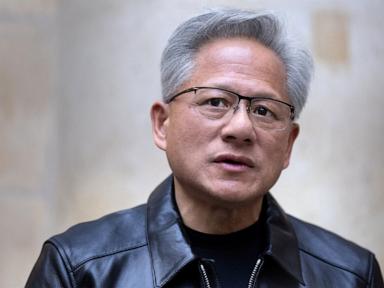
To understand why a routine governance discussion can trigger a market earthquake, you have to step away from the ticker symbols and look at the strange, fragile psychology of modern capitalism. We like to pretend that trillion-dollar companies are immortal machines—self-sustaining engines of code, silicon, and capital. They aren't. Sometimes, they are just a guy in a black leather jacket holding the whole sky up on his shoulders.
The Anatomy of a Market Tremor
Let’s look at what actually happened, stripping away the breathless cable-news chyrons. Reports surfaced indicating that Nvidia’s board was scheduled to review succession planning and the long-term tenure of Jensen Huang, the co-founder who has steered the company since 1993.
For anyone who has ever sat on a corporate board, this sounds painfully ordinary. Responsible directors are legally and fiduciarily obligated to ask a dark, pragmatic question every single year: What happens if our CEO gets hit by a bus tomorrow? In normal companies, that conversation happens quietly in a wood-paneled conference room, documented in dry minutes, and filed away without moving a single stock price by a fraction of a penny.
Nvidia is not a normal company.
Over the past several years, Nvidia transformed from a respected maker of video game graphics cards into the foundational bedrock of the global artificial intelligence boom. Its market capitalization swelled into the multi-trillion-dollar stratosphere, briefly eclipsing tech giants that had dominated for decades. Your smartphone apps, the medical research labs sequencing proteins, the massive data centers humming quietly in the Virginia countryside—nearly all of them rely on Nvidia’s architecture and its proprietary software ecosystem, CUDA.
When investors buy shares of Nvidia, they aren't just buying quarterly revenue numbers or server racks. They are buying Jensen Huang’s brain. They are buying his thirty-year obsession with parallel computing, his ruthless execution speed, and his uncanny ability to see around technological corners five years before his competitors even realize there is a turn.
So when the words "board" and "Huang's future" appeared in the same headline, the market didn't hear "standard corporate governance." It heard "the engine might be leaving the train while we are traveling at two hundred miles an hour."
Living Through the Key-Man Trap
I remember the exact feeling of watching a founder-led empire wobble from the inside. Years ago, I worked at a mid-sized logistics software firm in Austin. Our founder was a brilliant, exhausting force of nature who knew every line of legacy code and personally closed every major enterprise contract. Whenever a client had an impossible demand, he would stay up until three in the morning sketching out the architecture on a whiteboard. We felt invincible.
Until the Tuesday morning he checked into the hospital for an emergency appendectomy and complications kept him offline for three weeks.
The silence in the office was suffocating. Without him in the room to make the final call, middle managers froze. Sales deals stalled in legal review because nobody knew how much discounting authority they actually had. Engineers argued in circles over product roadmaps. That three-week absence exposed an uncomfortable truth: we didn't have a company. We had a cult of personality with a payroll department.
In finance, analysts have a clinical, sterile name for this vulnerability. They call it key-man risk.
Imagine a grand suspension bridge spanning a wide, unforgiving river. Every cable, every steel beam, every rivet is engineered to distribute weight evenly so the structure can survive hurricanes and heavy traffic. Now, imagine that instead of anchoring those cables into solid bedrock on either side, the builders tied every single strand to one massive iron ring held by a single giant standing on the shore. As long as the giant stands firm, traffic flows smoothly. The moment the giant shifts his weight—or even looks like he might sit down to rest—the entire bridge shudders.
That is Nvidia today. And to be honest, it terrifies even the most seasoned institutional investors.
Why Succession Rumors Hurt Different at the Top
When Tim Cook took over Apple from Steve Jobs in 2011, Wall Street skeptics predicted a slow, inevitable decline. Cook wasn't a product visionary in a black turtleneck; he was a supply-chain master from Alabama. Yet Cook turned Apple into a financial juggernaut by building an operational machine that didn't require one man's singular genius to design every iPhone curve.
When Satya Nadella stepped into the top job at Microsoft after Steve Ballmer, he inherited a massive, bureaucratic giant that had lost its cultural edge. Nadella didn't have to invent Microsoft from scratch; he had to unlock the talent trapped inside it.
Huang’s position at Nvidia is fundamentally different from both of those transitions. Consider what makes his leadership uniquely difficult to replicate:
- Thirty-three years of uninterrupted context. Huang co-founded Nvidia at a Denny’s booth in San Jose in 1993. Unlike hired-gun CEOs who rotate through Fortune 500 boardrooms every five years, he has lived through every near-death bankruptcy scare, every failed chip architecture, and every strategic pivot the company has ever made.
- A flat, unconventional command structure. Most mega-corporations rely on neat layers of vice presidents filtering information upward. Huang famously maintains dozens of direct reports, bypassing traditional middle management to stay directly plugged into engineering teams on the ground.
- The glue holding the ecosystem together. Nvidia’s dominance isn't just hardware; it is the tight integration of chips, networking gear, and software. Huang acts as the chief evangelist, chief architect, and chief negotiator with every major cloud provider on Earth, from Microsoft and Google to Meta and Amazon.
If you pull a thread like that out of the fabric, you don't just lose a spokesperson. You risk unraveling the invisible cultural tension that keeps fifty thousand employees moving at a sprint.
The Invisible Stakes for Everyday Investors
Let’s go back to Elena in Chicago, staring at her phone while her espresso goes cold.
Elena doesn't work in Silicon Valley. She is a high school biology teacher who diligently puts twelve percent of every paycheck into a target-date retirement fund and a couple of low-cost technology exchange-traded funds. She has never read a semiconductor white paper. She couldn't explain the difference between a Blackwell GPU and a Hopper architecture if her life depended on it.
Yet Elena’s financial future is directly tethered to what happens in Nvidia’s boardroom.
Because of how modern index funds work—weighting companies by their total market value—Nvidia has grown so massive that it accounts for a disproportionate slice of the entire S&P 500. When you buy a standard "safe" index fund today, a huge chunk of your money automatically flows into a handful of mega-cap tech stocks, with Nvidia sitting right near the top of the pile.
When Nvidia shares plunge on a rumor about Jensen Huang, the damage doesn't stay contained to hedge fund managers in Greenwich, Connecticut. It ripples quietly through teachers' pension funds in Ohio, university endowments in California, and millions of ordinary 401(k) accounts across the globe.
That is the hidden emotional weight behind these market swings. Financial journalists write about "multi-billion-dollar sell-offs" as if it were monopoly money being swept off a board. In reality, it is a collective anxiety attack experienced by millions of regular people who suddenly realize their diversified portfolios are resting heavily on the health, stamina, and continued ambition of a man in his early sixties.
What the Boardroom Conversation Actually Means
If you are holding tech stocks right now, or simply trying to make sense of the noise, it helps to separate the visceral panic of the trading floor from the slower, more deliberate reality of corporate governance.
First, a board discussing a CEO’s future does not mean a firing is imminent. In fact, after steering a company through one of the greatest value-creation runs in human history, Huang holds immense leverage. A board discussion about his future is far more likely to center on compensation, long-term retention, and building a bench of internal successors than on showing him the door.
Boards at this altitude spend their time asking thorny, forward-looking questions. How do you keep a multi-billionaire founder motivated when he already has more money than he could spend in ten lifetimes? How do you prevent rival tech giants—who are desperate to break Nvidia’s stranglehold on AI hardware—from poaching the senior lieutenants sitting right beneath him? And how do you gradually institutionalize Huang’s decision-making process so that when he eventually decides to step back, five or ten years from now, the company doesn't suffer a cardiac arrest?
Second, market overreactions are a feature, not a bug, of algorithmic trading. Today’s stock market isn't populated solely by thoughtful human analysts reading balance sheets. A massive percentage of daily trading volume is driven by high-frequency algorithms programmed to scan news headlines for high-volatility keyword combinations. When an algorithm sees "Nvidia," "plunge," "board," and "CEO future" clustered together, it executes sell orders in microseconds, triggering stop-losses and cascading downward momentum before a single human being has finished reading the second paragraph of the article.
Knowing this doesn't make the red numbers on your screen sting any less. Watching hard-earned savings fluctuate violently because of unconfirmed boardroom chatter is exhausting and deeply unsettling. It forces you to confront an uncomfortable truth about modern investing: certainty is an illusion. Even the most dominant companies on earth are ultimately human organizations, subject to age, fatigue, ambition, and the inevitable passage of time.
The Weight of the Jacket
There is an old photograph from the mid-1990s showing a young Jensen Huang in a modest office, surrounded by bulky beige desktop monitors and tangled cables, long before the black leather jackets became a global trademark. Back then, Nvidia was thirty days away from running out of cash, surviving only through a last-minute pivot and sheer stubbornness. Nobody on Wall Street cared who ran the company. Nobody watched his every blink for clues about the future of global computing.
Success changes the gravity of a person's life. Three decades later, that same engineer cannot even have his tenure discussed in a routine governance meeting without wiping out the equivalent of a small nation's gross domestic product in a single afternoon.
By late morning in Chicago, Elena finally locked her phone and slipped it into her coat pocket. She didn't panic-sell her index funds. She walked into her classroom, picked up a dry-erase marker, and started drawing a diagram of cellular respiration on the whiteboard—a complex, messy system where dozens of tiny molecular parts have to work together just to keep an organism breathing.
Across the country, in quiet conference rooms and bustling trading floors, the machines kept humming, the algorithms kept scanning, and one man in California walked into another day of work carrying the expectations of an entire economy stitched into the lining of his coat.