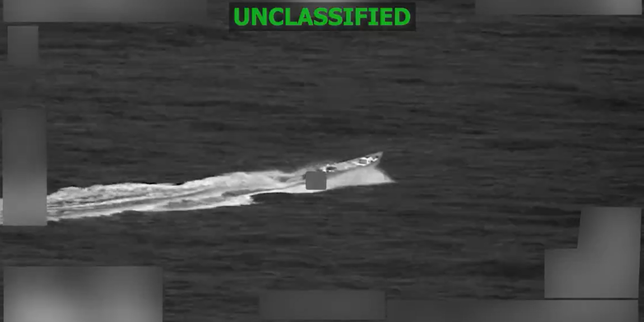
The Pacific Ocean is massive, mostly empty, and incredibly difficult to police. That is exactly why transnational criminal organizations love it. A recent lethal encounter between US forces and a suspected drug smuggling vessel highlights just how violent and volatile these high-seas operations have become. When a US military intervention ends with a dead suspect on a boat in the middle of nowhere, it is not just another standard bust. It is a sign that the stakes are rising for everyone involved.
Maritime security forces face a logistical nightmare. Tracking low-profile vessels across millions of square miles requires immense resources. When contact happens, decisions are made in seconds. This specific deadly encounter shows that the margin for error has completely vanished.
Inside the Deadly Pacific Confrontation
The incident unfolded in the international waters of the Eastern Pacific Ocean. US maritime forces spotted a suspected low-profile vessel, a type of custom-built boat frequently used by cartels to move massive quantities of narcotics while avoiding radar detection. These boats sit incredibly low in the water, making them nearly invisible to traditional tracking systems until you are right on top of them.
When US forces attempted to intercept the boat, the situation escalated rapidly. Details from official military channels indicate that a lethal force deployment became necessary during the encounter. One suspected smuggler died as a direct result of the kinetic action taken by the US crew. Security teams detained the remaining crew members and seized the vessel along with its cargo.
This is not standard operating procedure. Most interdictions involve a tense pursuit followed by a surrender. Smugglers usually throw their cargo overboard to destroy evidence before compliance. When shots are fired, it means something went wrong or the suspects chose resistance over surrender.
The Reality of Low Profile Vessels
Cartels do not use standard speedboats for long-range smuggling anymore. They rely heavily on semi-submersibles and low-profile vessels. These craft are engineered in hidden jungle shipyards, specifically designed to bypass modern security grids.
- They feature hulls made of fiberglass and wood to minimize radar signatures.
- They utilize specialized exhaust systems that cool gases to hide from thermal imaging.
- They carry thousands of pounds of contraband in tightly sealed compartments.
Operating these boats is a suicide mission even without military intervention. They are prone to sinking, offer zero ventilation, and lack basic safety gear. The crews are typically low-level workers hired by syndicates, risking their lives for a tiny fraction of the cargo's actual street value. When the US military intervenes, these crews face a choice between decades in a federal prison or compliance.
Escalating Force in International Waters
The use of lethal force by US forces in international waters is governed by strict rules of engagement. Under international law and US maritime enforcement mandates, personnel can utilize force primarily for self-defense or to prevent the imminent destruction of life. The fact that this specific encounter turned fatal suggests that the boarding team perceived an immediate, critical threat.
Typical Interdiction Progression:
Detection -> Visual Tracking -> Verbal Commands -> Warning Shots -> Disabling Fire -> Boarding
We see a clear trend where smuggling crews are becoming more aggressive. As tracking technology improves, cartels are pushing their operatives to take bigger risks to protect their multi-million dollar shipments. The financial loss of a seized cargo hull hurts the syndicate, but losing the logistics chain hurts more. This pressure trickles down to the operators on the water, who sometimes choose confrontation over capture.
Geopolitical Friction Over Maritime Borders
These operations do not happen in a vacuum. The Eastern Pacific corridor involves complex legal jurisdictions. The US Coast Guard and Navy operate under bilateral agreements with various Central and South American nations to conduct these boardings legally. These treaties allow US personnel to stop, search, and detain foreign-flagged or stateless vessels in international zones.
However, every lethal incident tests these diplomatic waters. Stateless vessels offer fewer legal hurdles because no foreign government claims them. If a boat flies a specific national flag, the US must secure explicit permission from that nation before executing a forced boarding. The legal framework is a delicate balancing act designed to combat piracy and trafficking without violating national sovereignty.
Why Current Maritime Strategy Needs an Overhaul
Relying solely on physical interceptions at sea is a losing battle. The ocean is too vast, and the cartels have too much cash. For every low-profile vessel stopped by a US cutter, several more slip through the net undetected. We need a fundamental shift in how these networks are targeted.
True disruption happens on land. Intelligence agencies must focus heavily on dismantling the supply chains that build these custom vessels in the first place. Targeting the shipyards, the engine suppliers, and the financial networks funding the construction yields a much higher return on investment than playing cat-and-mouse across thousands of miles of open water.
Governments must also increase intelligence sharing with regional allies. Costa Rica, Colombia, and Ecuador are on the front lines of this geographical pipeline. Providing these nations with better radar capabilities, aerial surveillance assets, and training creates a multi-layered defense system that makes smuggling far more difficult before the boats ever reach deep international waters.
The dead suspect in the Pacific is a stark reminder that the war on maritime trafficking is turning increasingly hot. As enforcement tactics harden, criminal syndicates will adapt with even more dangerous counter-measures, ensuring that the next encounter on the high seas will be just as volatile.