At three in the morning, the world belongs to the ghosts of yesterday and the hungry.
Neon hums against wet asphalt. Inside, the linoleum floor bears the scuffs of a million midnight wanderers—shift workers clocking out, teenagers trading secrets over melting ice, travelers stranded by canceled flights. This is the domain of the classic diner. For decades, the anchor of that universe has been Denny’s, a brand built not on culinary pretense, but on the radical, democratic promise of a lit sign glowing through the dark. Pancakes at noon. Bacon at dawn. A safe harbor when everywhere else has locked its doors.
Yet nostalgia does not pay the rent.
Walk into a typical neighborhood location during the daylight hours, and the atmosphere shifts. The booths are half-empty. The cultural gravity that once pulled families in for Sunday morning platters has fractured. Fast-casual chains with algorithmic efficiency and gourmet pricing have chipped away at the margins. Delivery apps changed the geography of hunger entirely, moving the kitchen away from the physical dining room and into the invisible ether of smartphones.
Survival requires reinvention. For Denny's, that pivot takes a surprising form: a heavy lean into corporate and large-scale catering services.
They call it an attempt to hit a grand slam, a neat nod to their most famous menu item. But behind the sports metaphor lies a desperate, calculated scramble to capture the dollars that never step foot through the front door.
Consider what happens when a business model built entirely on real estate suddenly decides to unmoor itself from its own four walls.
For years, restaurant executives looked at the morning rush and the late-night lull as the twin pillars of their empire. They optimized the griddle. They streamlined the menu. They waited for customers to arrive. But consumer habits curdled. Inflation squeezed household budgets, making casual dining out an occasional luxury rather than a weekly habit. Foot traffic bled out slowly, drop by drop, quarter by quarter.
The kitchens, however, remained. The commercial-grade flat tops, the walk-in freezers, the armies of line cooks—all of it sat underutilized during the long stretches between the breakfast surge and the evening dinner crowd.
That unused capacity is a sin in the restaurant industry. It is money evaporating into thin air.
So, corporate strategists looked at the office parks, the little league tournament fields, the corporate boardrooms, and the family reunion pavilions. They realized something profound. People do not just want eggs and pancakes in a vinyl booth. They want them at their desk during an exhausting budget review. They want them spread across folding tables at a Saturday morning soccer final.
The strategy is simple in theory, brutal in execution. Transform the local diner into a ghost kitchen of sorts during off-peak hours, pumping out industrial quantities of breakfast scrambles, sandwich platters, and coffee boxes for the local business community.
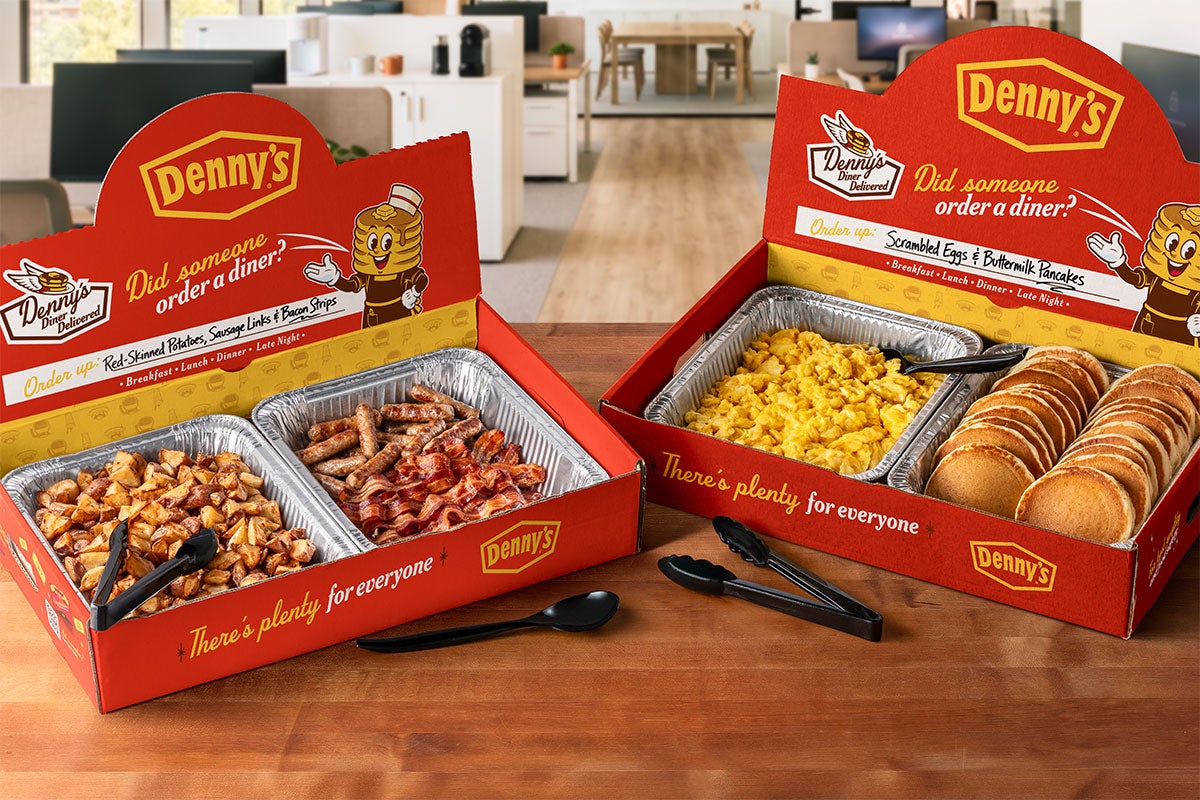
Imagine Sarah, a regional office manager in a midwestern suburb, staring at a calendar choked with back-to-back strategy sessions. Her boss demands a catered breakfast for thirty people by eight in the morning. Ten years ago, she would have called a high-end local bakery or a specialized corporate caterer, paying a princely sum for artisanal pastries that disappeared in four minutes. Today, she opens an app, clicks through a streamlined interface, and orders a massive spread of scrambled eggs, bacon strips, and pancake kits stamped with the familiar red logo of her childhood late-night spot.
To Sarah, it is convenience. To the brand, it is an existential lifeline.
This is not merely about selling more eggs. It is a fundamental rewiring of how a legacy brand thinks about its own identity. When you rely solely on walk-in traffic, you are at the mercy of neighborhood demographics and real estate trends. When you build out a robust catering architecture, you turn every restaurant into a local hub of operations, stretching its economic footprint far beyond the physical parking lot.
Skeptics point out the obvious hazards. Can a brand famous for a greasy-spoon aesthetic successfully pivot to high-end corporate boardrooms? Will the execution match the ambition? Consistency has always been the ghost haunting large chains. A bad stack of pancakes served in a booth affects one unhappy diner; a ruined breakfast catering order for a hundred corporate executives destroys a contract forever.
The operational strain on kitchen staff is real. Cooks who are used to working the rail ticket by ticket, order by order, now have to stage massive prep runs hours in advance, balancing the unpredictable surge of walk-in customers with the rigid, unforgiving deadlines of corporate drop-offs.
Yet the financial imperative drowns out the doubts. Traditional dine-in margins are razor-thin, battered by rising labor costs and expensive supply chains. Catering offers higher average ticket sizes and predictable, scheduled revenue. It is the corporate equivalent of booking hotel rooms for a convention instead of waiting for random tourists to wander in off the street.
The gamble extends far beyond balance sheets. It touches the psychological core of what a diner means to the American landscape.
For generations, the diner was a physical anchor. It was where you went to escape the world, to sit anonymously in a booth with a cup of lukewarm coffee and a notebook. If the future of these institutions lies in aluminum catering pans delivered to sterile office parks and community center gymnasiums, something intangible shifts. The romance of the midnight counter gives way to the cold efficiency of the logistics manifest.
And yet, adaptation is the only true law of survival. Species that refuse to move with the climate vanish into the fossil record. Brands that refuse to follow the customer out of the building and into the boardroom suffer the same quiet extinction.
The neon sign still flickers in the dark, casting its red and yellow glow across empty vinyl booths at three in the morning. Outside, the world keeps spinning, hungry and restless. Inside, the line cook turns another egg, knowing that tomorrow, a large part of their labor will leave through the back door, packed in cardboard boxes, bound for places the founder never imagined.
The game has changed. The kitchen keeps cooking. And the morning rush arrives, whether anyone is sitting in the booth or not.