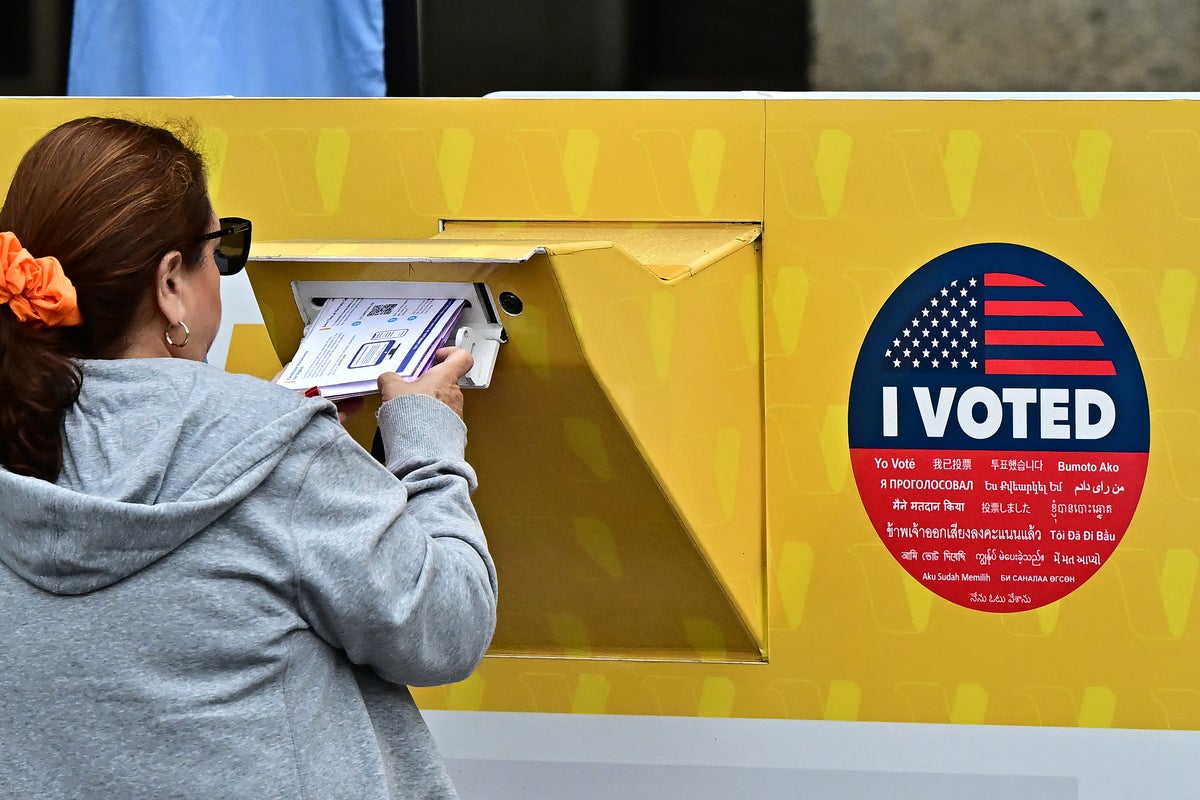
Sidewalk concrete remembers every argument dropped upon it. In Los Angeles, the pavement outside a polling place holds the scent of old eucalyptus leaves, discarded flyers, and the heavy, metallic tang of anxiety. October air usually brings a false chill here, a crispness that vanishes by noon, leaving voters to sweat through their coats while they wait in lines that stretch past dry cleaner windows and taco trucks.
This city likes to think of itself as a movie set, a place where characters sweep onto stages under golden spotlights and deliver monologues that change history overnight. Real municipal survival looks entirely different. It looks like a binder full of zoning maps stained with coffee rings. It looks like a city council member sitting in a folding chair in an overheated gymnasium, listening to a retired accountant explain why a traffic light needs three more seconds on a yellow phase.
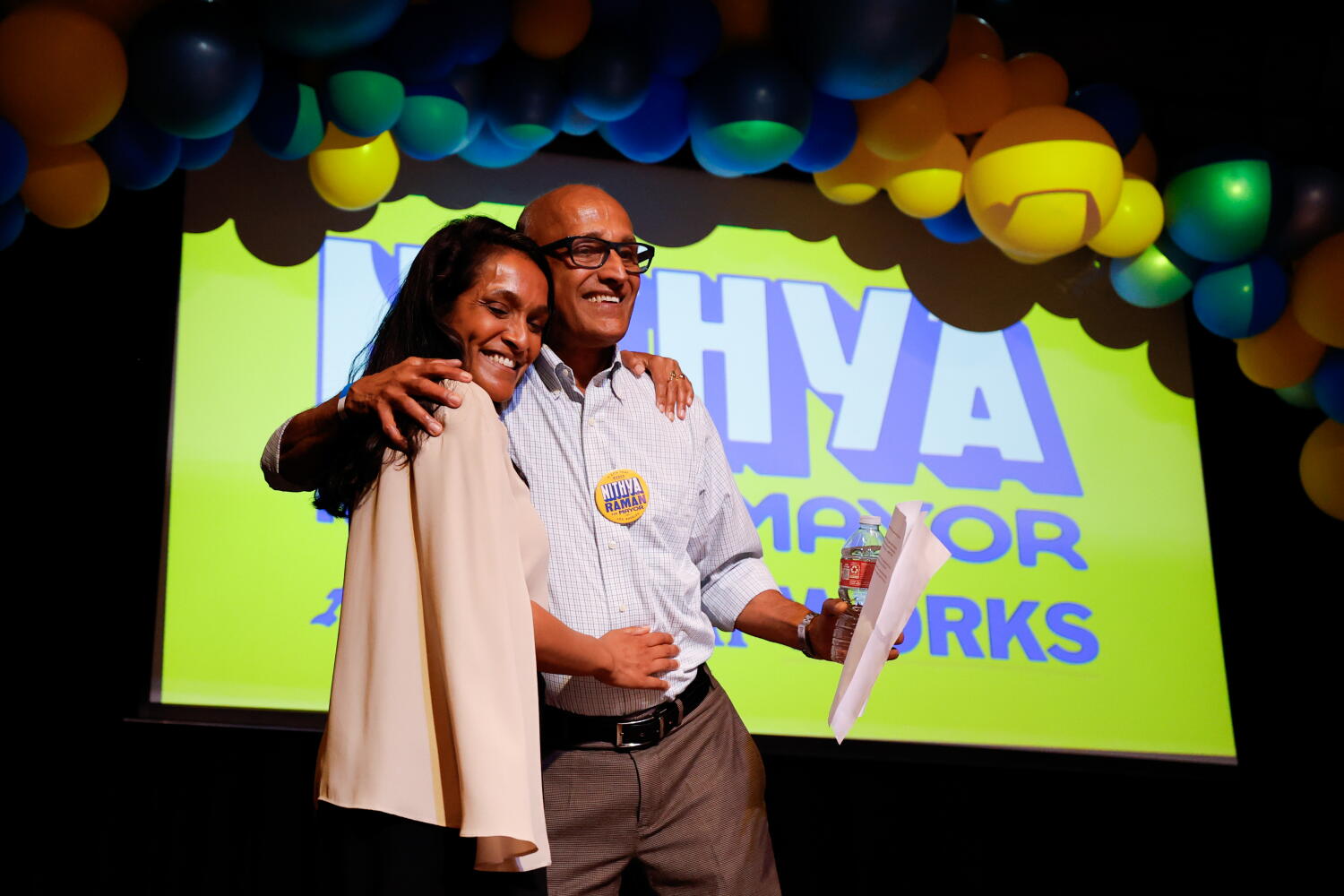
Nithya Raman knows the smell of that folding chair.
For months, political obituary writers sharpened their nibs. They drew neat lines on whiteboards, pointing to redrawn district boundaries and whispered discontent from homeowners who wanted fewer tents and more parking. They looked at the arithmetic of Los Angeles elections and declared her tenure an interesting experiment that had run its course. Incumbents rarely survive redistricting when the mapmakers carve hostile territory right into their backyards. History whispered a warning. The machine usually wins.
Then came the ballots.
Walk down a residential street in Silver Lake just after dusk. The streetlights buzz to life with a yellowish hum that flattens every shadow. Behind closed windows, television sets flicker blue against living room curtains. Inside those houses, people who have lived in the same zip code for forty years argued over kitchen tables about whether their neighborhood was getting better or sliding backward. They felt the squeeze of rising rents. They tripped over uneven sidewalks. They watched encampments grow larger and more permanent under the freeway overpasses.
Fear is an efficient motivator. Anger makes it easy to pull a lever for change, any change, just to feel like someone is steering the car.
Raman’s challengers leaned hard into that friction. They packaged the frustrations of a tired metropolis into clean talking points. They pointed to the sprawling city budget, the sluggish pace of housing construction, and the sheer, exhausting friction of dealing with a municipal bureaucracy that moves at the speed of tectonic drift. It was a compelling pitch. Things are broken. Let someone else try to fix them.
Except politics at the neighborhood level is deeply stubborn.
Consider what happens when an elected official actually answers their phone. Not through a press secretary or an automated email receipt that promises a reply within ten business days, but through a direct, slightly exasperated human voice that knows the name of the local crossing guard.
(Note: The following interaction is a composite reconstruction based on recorded town hall dynamics across District 4.)
"My alley has been dark for three weeks," a resident says, arms crossed tight over a faded windbreaker. "The light pole is out. My daughter walks home from the bus stop in the dark."
In a traditional playbook, this is a dangerous moment. It invites defensiveness. Instead, the response is deadpan and immediate: "Which cross street?" A pen scratches on paper. A promise is logged. Two days later, the bulb is burning again.
Multiply that transaction ten thousand times across Griffith Park, Echo Park, and Sherman Oaks. That is how a comeback is actually forged. Not through soaring rhetorical flourishes or massive ad buys, but through the microscopic accumulation of small, kept promises.
The political establishment miscalculated the depth of that micro-loyalty. They saw a progressive target on a map. They missed the tenant unions, the renters who finally felt represented, the block captains who appreciated a no-nonsense approach to urban planning, and the voters who were simply exhausted by the traditional developer-driven consensus that had shaped Los Angeles for a century.
When the primary dust settled, and the final provisional ballots were coaxed through signature verification machines, the math told a surprising story. The supposed vulnerability had calcified into a base. The maps drawn to squeeze her out had instead forced a mobilization of voters who recognized the fight for what it was: a referendum on whether ordinary neighborhoods could hold onto their local voice against the heavy gravity of downtown downtown power brokers.
Los Angeles remains a difficult puzzle. The housing crisis does not care about election returns. The freeways still snarl at five in the evening. The municipal ledger remains a terrifying labyrinth of unfunded liabilities and desperate human needs. No single politician, no matter how scrappy or digitally savvy, can sweep away systemic inertia with a single term.
Yet something fundamental shifted beneath the asphalt.
The comeback kid label misses the point. Comebacks imply a fall from grace, a dramatic narrative arc scripted for television. What happened in District 4 was something much quieter and much more durable. It was a trench defense. It was proof that when a politician ties their political survival not to the elite donors of the Westside or the real estate syndicates downtown, but to the exhausted, hopeful, deeply stubborn renters and homeowners living two blocks off the main boulevard, the center can occasionally hold.
The sun dips below the Santa Monica mountains, casting a bruised violet light across the concrete grid of the basin. Down on Sunset Boulevard, the traffic thickens into a slow, red river of brake lights. Somewhere in a modest office, a desk lamp clicks on, illuminating another stack of zoning reports, waiting for morning.