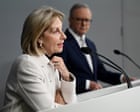
Australia's federal Labor government has rejected a high-profile proposal from Special Envoy to Combat Antisemitism Jillian Segal to strip the ABC and SBS of their internal ombudsmen in favor of an external watchdog. According to government sources cited by The Guardian in November 2026, Canberra has no intention of dismantling the existing complaints frameworks at either public broadcaster.
The reason comes down to both statutory duplication and editorial independence. Australia already maintains an independent statutory regulator—the Australian Communications and Media Authority (ACMA)—capable of investigating unresolved complaints against public broadcasters. Creating a bespoke external body specifically to police Middle East coverage would not only duplicate ACMA's legal mandate, it would also set a precedent for political intervention in public broadcasting. Discover more on a similar topic: this related article.
What Jillian Segal Actually Proposed
To understand why the Albanese government quietly shelved the idea, you need to look at how Segal's position evolved throughout 2026.
Back in July 2026, during hearings at the Royal Commission into Antisemitism and Social Cohesion, Segal criticized the ABC and SBS over what she described as disproportionate and one-sided reporting on Israel and the war in Gaza. At the time, she suggested establishing an independent oversight committee to monitor coverage. She argued that having internal ombudsmen review editorial complaints meant the broadcasters were effectively acting as "judge, counsel and jury" while marking their own homework. Further journalism by The Washington Post delves into comparable views on this issue.
Both broadcasters pushed back hard against that initial pitch. Then, in late October 2026, Segal released an updated priority report alongside appearances at Senate estimates. In that updated document, she refined her demand. Rather than merely adding an advisory committee, she recommended transferring powers away from the internal ABC and SBS ombudsmen to a newly created, external independent ombudsman.
Her rationale centered on community perception and social cohesion. In her updated plan, Segal wrote that many Jewish Australians felt one-directional coverage was fostering hostility toward anyone expressing sympathy for Israel. During Senate estimates, she singled out the tone and frequency of the ABC's Gaza reporting as a specific source of distress.
How the Existing Media Complaints System Works
A major flaw in the push for an external watchdog is how Australia's broadcast accountability framework already operates. Many critics assume an internal ombudsman is the end of the road for a dissatisfied viewer or listener. It isn't.
If you file a complaint about bias, inaccuracy, or breach of editorial standards at the ABC or SBS, the process follows a strict two-tier escalation path:
- Internal Ombudsman Review: The broadcaster's independent internal ombudsman—operating separately from newsroom management—investigates whether the broadcast breached published editorial policies.
- External Statutory Escalation: If the complainant isn't satisfied with the outcome, or if the broadcaster fails to respond within 60 days, the complainant can escalate the matter directly to ACMA.
ACMA is an independent federal regulator with statutory powers to investigate breaches of the ABC and SBS codes of practice. Government sources pointed directly to ACMA's existing jurisdiction when explaining why Segal's transfer-of-powers proposal wasn't going anywhere.
The numbers behind recent complaints also undercut claims that the current system ignores errors. According to data compiled by ABC Alumni Limited following the escalation of the Gaza conflict in October 2023, the ABC ombudsman upheld four complaints out of thousands submitted regarding alleged bias or inaccuracies in Middle East coverage. Notably, when dissatisfied complainants escalated their cases to ACMA over that same period, the external regulator upheld zero complaints.
That gap tells an important story. Even when an external statutory body reviewed the exact same broadcasts that critics claimed were biased, ACMA found no regulatory breaches.
Why the Proposal Divided Jewish and Civil Society Groups
Segal's recommendation didn't just trigger pushback from media executives and free-speech advocates. It exposed sharp divisions within Australia's Jewish community and broader civil society.
Alex Ryvchin, co-chief executive of the Executive Council of Australian Jewry, backed Segal's call for external oversight. Supporters of the plan argued that conventional regulatory mechanisms weren't built to address sustained editorial framing that leaves minority communities feeling alienated or unsafe.
On the other side, the progressive Jewish Council of Australia strongly condemned the proposal, characterizing the push for an external content monitor as "Trumpian" and warning that it posed a direct threat to democratic rights and press freedom. Legal and human rights advocates, including George Newhouse, argued that protecting Jewish Australians from prejudice shouldn't come at the expense of silencing legitimate journalistic scrutiny of Israeli government policies or Palestinian suffering.
The Australian Palestine Advocacy Network also weighed in, warning that creating a specialized watchdog triggered by Middle East reporting risked conflating legitimate political criticism of a foreign state with racial or religious hatred.
Canberra's Balancing Act Ahead of the Royal Commission Report
Politically, the Albanese government had to walk a narrow line when responding to Segal's updated priorities. Following the Bondi Beach terror attack earlier in 2026 and months of painful testimony before the Royal Commission into Antisemitism and Social Cohesion, Labor couldn't afford to look dismissive of Jewish community safety concerns.
A spokesperson for federal Communications Minister Anika Wells struck a diplomatic tone, thanking Segal for her work and reiterating that antisemitism has no place in Australia. The minister's office emphasized that the government would continue working closely with the special envoy and community leaders to strengthen social cohesion.
Behind the scenes, however, the policy line was firm. Scrapping statutory independence for the ABC and SBS boards—or carving out Middle East coverage for special external policing—would hand political opponents ammunition while destabilizing public media governance. Public broadcasters are legally chartered to operate free from government and special-interest interference. Once a government builds an external body to audit coverage of one geopolitical conflict, every lobby group in the country will demand its own media referee.
What Happens Next for Public Broadcaster Accountability
While Labor has ruled out dismantling the ABC and SBS ombudsmen in favor of Segal's proposed body, the broader debate over media standards and social cohesion isn't finished. The Royal Commission on Antisemitism and Social Cohesion is scheduled to deliver its final report in mid-December 2026, and the government has left the door open to reviewing formal commission recommendations once they are tabled.
If you follow Australian media policy or want to engage directly with how public broadcasters handle editorial accountability, you can take three concrete steps right now:
- Review the Editorial Policies: Read the ABC Editorial Policies and the SBS Code of Practice to see the exact impartiality and accuracy benchmarks journalists are legally required to meet.
- Track Ombudsman Rulings: Check the publicly published ABC Ombudsman Investigation Reports to see how specific complaints about international conflict reporting are adjudicated and where breaches are upheld.
- Follow the Royal Commission Findings: Monitor the final report of the Royal Commission on Antisemitism and Social Cohesion in December 2026 to see whether commissioners endorse existing ACMA oversight or propose narrower reforms to broadcast complaint timelines.