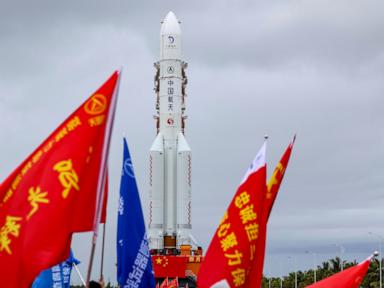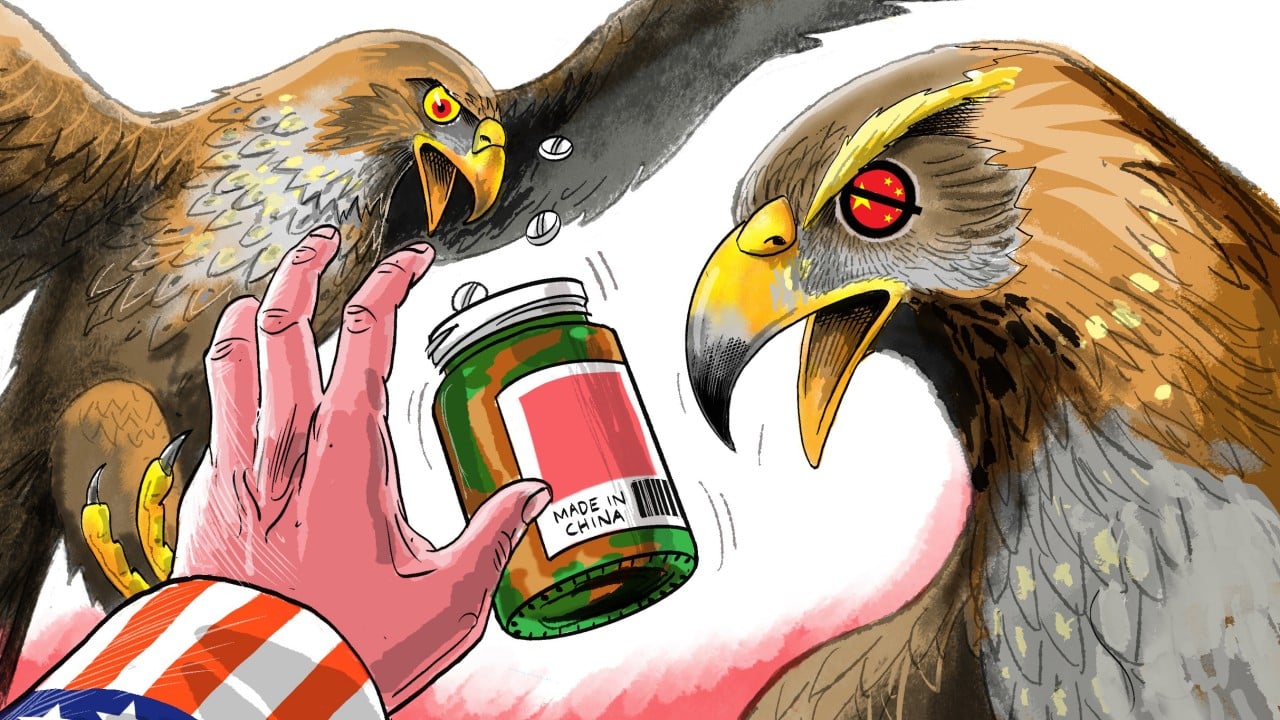
The prevailing narrative in Washington suggests that every breakthrough in a laboratory in Shanghai or Shenzhen is a direct theft from the American future. This zero-sum mentality assumes that scientific progress is a finite resource, a pile of gold that one nation must hoard to prevent another from prospering. But this logic ignores the fundamental mechanics of how modern discovery actually functions. Decoupling the scientific engines of the world's two largest economies won't preserve American dominance; it will merely ensure that the next generation of life-saving cures and energy solutions arrives decades late.
The math of isolation is simple and devastating. Science is no longer a solo sport played by lone geniuses in ivory towers. It is a high-velocity exchange of data, peer reviews, and specialized manufacturing chains. By attempting to wall off Chinese research, US policymakers are effectively blinding American scientists to nearly one-third of the world’s most cited technical papers. We are choosing a slower pace of innovation in the name of a security theater that rarely protects the intellectual property it claims to value. Don't miss our previous coverage on this related article.
The Myth of the Stolen Future
For a decade, the "hawk" position has relied on a specific brand of anxiety: the idea that China is a mere copycat, vacuuming up Western ideas to fuel its own rise. This view is dangerously outdated. While intellectual property theft remains a legitimate legal and corporate concern, it is no longer the primary driver of Chinese scientific output. China now outspends the United States in several key areas of research and development, particularly in materials science and renewable energy storage.
If the US cuts ties, it isn't just stopping "them" from getting "our" secrets. It is stopping "us" from accessing theirs. If you want more about the background of this, MIT Technology Review provides an in-depth summary.
Consider the development of lithium-iron-phosphate (LFP) batteries. This technology is the backbone of the affordable electric vehicle market. The intellectual and industrial center of gravity for LFP is firmly rooted in China. American automakers and researchers who are barred from deep collaboration with Chinese counterparts aren't "protected." They are simply stuck using more expensive, less efficient alternatives while the rest of the world moves toward a cheaper, greener standard.
Talent is the Real Currency
The most aggressive attempts to secure American science have focused on personnel. The Department of Justice’s now-defunct "China Initiative" aimed to root out spies within academia, but instead, it created a climate of fear that has triggered a reverse brain drain. We are actively pushing top-tier researchers out of American universities and sending them back to well-funded labs in Beijing and Hangzhou.
When a physicist or a genomicist feels they are being monitored not for their data, but for their heritage, they leave. This is a self-inflicted wound. The strength of the American system has always been its status as the world’s premier destination for talent. We grew great by being an open net. By closing that net, we aren't keeping the competition out; we are forcing our own talent pool to shrink.
A survey of Chinese-heritage scientists in the US recently revealed that a staggering percentage feel unwelcome and are actively seeking opportunities elsewhere. These are the people who fill our PhD programs, staff our national labs, and found the startups that keep the NASDAQ humming. Losing them is not a security win. It is a generational economic defeat.
The Shared Burden of Global Crises
Climate change and viral evolution do not recognize borders. They do not care about the South China Sea or trade deficits. These are systemic threats that require a scale of data and testing that no single nation can provide in a vacuum.
During the early stages of the pandemic, the rapid sharing of genetic sequences—though imperfect—was what allowed global vaccine development to move at record speeds. If the current trend of scientific "de-risking" continues, the next jump of a zoonotic virus might find us working in silos. Without established channels of communication and trust between the CDC and its Chinese counterparts, the response time will be measured in body counts rather than days.
The same applies to the carbon crisis. The United States and China are the two largest emitters. If one side develops a breakthrough in carbon capture or fusion energy and refuses to share the underlying mechanics due to "national security" concerns, the entire planet loses. We are currently in a race where if the person in the next lane trips, the whole track explodes.
Breaking the Supply Chain of Ideas
The physical supply chain is often discussed, but the "intellectual supply chain" is far more fragile. Modern science relies on a specific ecosystem:
- Raw Data: Collected from massive, diverse populations (where China has an advantage).
- Processing Power: High-end semiconductors and algorithmic design (where the US leads).
- Manufacturing Scale: The ability to turn a prototype into a million units (China’s forte).
- Capital: The venture and state funding to bridge the "valley of death" between lab and market.
When you sever the links between these stages, you increase the cost of every single experiment. An American biotech startup that can no longer easily source specialized reagents or contract research services from Chinese firms finds its burn rate doubling. This doesn't make the startup more "American"; it just makes it more likely to fail before it ever reaches a patient.
The Security Paradox
Security experts argue that we must protect "dual-use" technologies—things like artificial intelligence or quantum computing that have both civilian and military applications. This is a valid concern, but the definition of dual-use has expanded to include almost everything. If we define "security" so broadly that it encompasses basic biology or chemistry, we aren't protecting the nation. We are fossilizing it.
The true path to security is not through secrecy, but through speed. The US won the Cold War not because it kept its physics a secret, but because its open system allowed it to innovate faster than the closed Soviet system. By adopting the restrictive, paranoid tactics of an autocracy, the US risks losing the very "openness" that served as its greatest competitive advantage for eighty years.
Rebuilding the Bridge
We need a framework that acknowledges the reality of geopolitical rivalry without sacrificing the necessity of scientific cooperation. This means moving away from broad, nationality-based bans and toward specific, project-based oversight.
- Transparency, Not Exclusion: Instead of banning researchers, mandate full disclosure of funding sources. If a lab is receiving state funds from an adversary, track it, but don't shut the lab down.
- Reciprocal Access: US policy should demand that China provide the same level of data transparency and intellectual property protection that Chinese researchers enjoy in the West. This uses science as a diplomatic lever rather than a blunt instrument.
- Co-opetition: We can compete on the commercialization of products while cooperating on the basic research that makes those products possible.
The idea that the US can return to a mid-20th-century model of isolated, nationalistic science is a fantasy. The world has changed. The equipment is too expensive, the data is too vast, and the problems are too complex for any one flag to fly over the frontier of human knowledge.
The next time a breakthrough is announced in a lab in Beijing, we should hope that an American scientist was there to see it, and that the data is already on its way to a server in California. Anything less isn't just bad for science; it’s a failure of national strategy. We are currently trying to win a marathon by tying our own shoelaces together.
The real threat isn't that China will catch up. The threat is that in our frantic attempt to trip them, we both stop moving forward entirely.
Would you like me to analyze the specific sectors—such as quantum encryption or CRISPR gene editing—where this scientific decoupling is currently most aggressive?