The Steam Trap
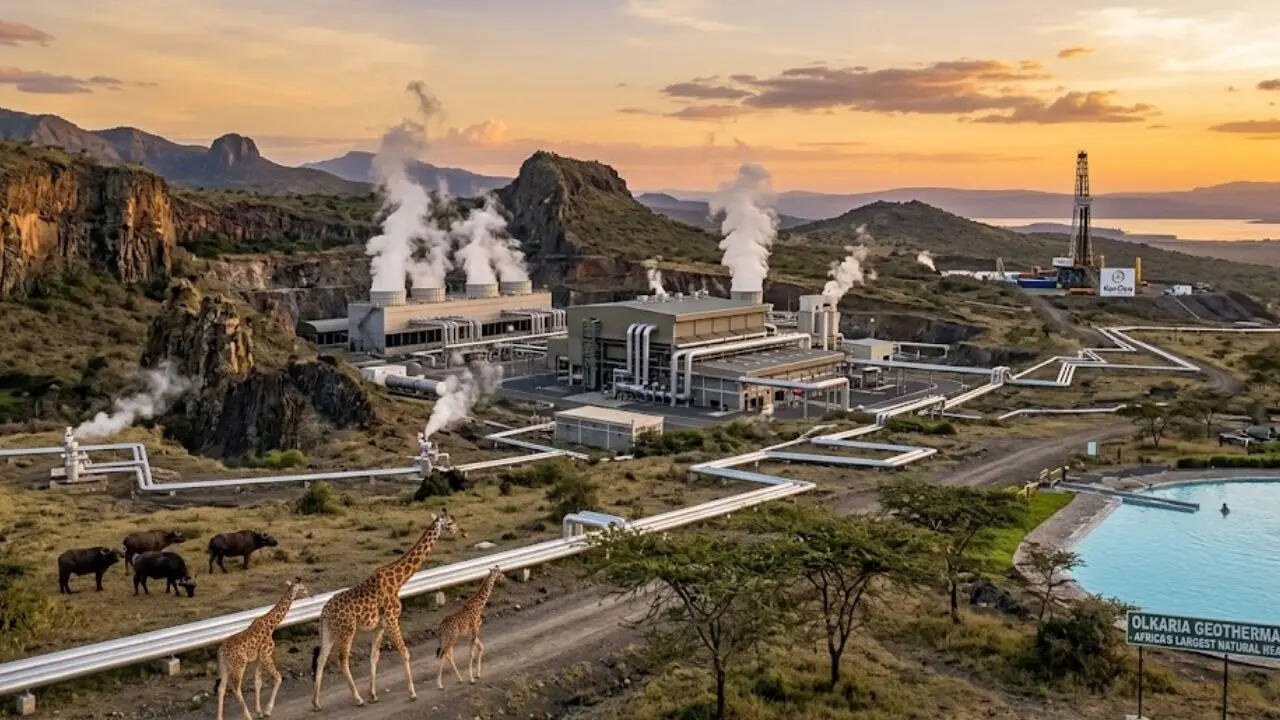
The narrative surrounding Olkaria is always the same. It’s a fairy tale of "limitless" green power bubbling beneath the Rift Valley, a subterranean gift that supposedly puts Kenya on the path to becoming a green energy superpower. Journalists love the visual: white plumes of steam rising against a backdrop of red volcanic soil, promising a carbon-neutral utopia.
But here is the reality check: steam is expensive.
Most analysts treat geothermal as a "plug-and-play" miracle. They see the 950 MW installed capacity and assume the hard part is over. They are wrong. While the fuel—the heat of the earth—is technically free, the machinery required to harvest it is a capital-intensive nightmare that is currently strangling the Kenyan taxpayer. We aren’t mining gold; we are managing a massive, high-pressure plumbing project that carries a price tag most people refuse to acknowledge.
The Myth of Infinite Scalability
The "goldmine" analogy is the first mistake. Gold sits there. Heat moves.
Geothermal reservoirs are dynamic, finicky, and prone to decline. In the industry, we call it "drawdown." When you pull steam out of the ground at the rates Kenya is currently attempting, the pressure drops. To maintain output, you have to drill more wells. A single geothermal well in the Rift Valley can cost between $5 million and $8 million.
If the reservoir pressure dips by even 5% annually, you are on a treadmill of capital expenditure just to stay in the same place. You aren't growing; you’re replacing. This is why your electricity bill hasn't plummeted despite the "hidden energy" under Naivasha.
The Transmission Tax Nobody Mentions
Geothermal has a location problem. The steam is in the Rift. The demand is in Nairobi, Kisumu, and the coastal industrial hubs.
You cannot truck steam. You have to convert it to electricity and send it across hundreds of miles of high-voltage lines. The technical term is "transmission and distribution (T&D) losses." In Kenya, these losses hover around 18% to 20%.
For every five units of "clean" energy generated at Olkaria, one unit vanishes into thin air before it hits a lightbulb. When we talk about the efficiency of geothermal, we often ignore the fact that the grid it feeds into is a leaky bucket. Scaling generation without fixing the grid is like pouring high-octane fuel into a car with a hole in the gas tank. It’s performative progress.
The Debt Beneath the Dirt
Let’s talk about the money. Kenya Electricity Generating Company (KenGen) and the Geothermal Development Company (GDC) aren't funding these projects with pocket change. They are fueled by massive loans from the World Bank, JICA (Japan International Cooperation Agency), and European investment banks.
These loans are often denominated in foreign currency.
When the Kenyan Shilling fluctuates against the Dollar or the Yen, the cost of "free" earth-heat spikes. The consumer doesn't see a "Geothermal Surcharge" on their bill, but they see it in the "Foreign Exchange Rate Adjustment." We have traded the volatility of global oil prices for the volatility of global debt markets.
Why Solar and Wind Are Actually Winning (and Why That’s a Problem)
The contrarian truth is that while geothermal is the "base load" darling, it is being outpaced by the sheer speed and dropping costs of solar and wind.
- Geothermal: 7 to 10 years from first drill to first watt.
- Solar: 12 to 18 months.
The "hidden energy goldmine" is a slow-motion project in a fast-forward world. By the time a new geothermal plant comes online, the technology used to build it is often two generations behind the latest modular solar or battery storage solutions.
However, the grid can't handle too much intermittent power (wind and solar) without a solid base load. This creates a "Geothermal Hostage" situation: Kenya is forced to invest in the most expensive, slowest-to-build energy source just to keep the lights from flickering when the wind stops blowing in Turkana.
The Environmental Cost of "Clean" Energy
Geothermal isn't just steam and water. It’s a chemical cocktail.
When you tap into a volcanic reservoir, you aren't just getting H2O. You are getting Hydrogen Sulfide ($H_{2}S$), Carbon Dioxide ($CO_{2}$), and trace amounts of arsenic and mercury.
- Hydrogen Sulfide: That "rotten egg" smell isn't just an annoyance; it’s corrosive. It eats through the very turbines designed to capture it.
- Water Usage: Geothermal plants require massive amounts of water for cooling. In a region where Lake Naivasha’s water levels are a constant source of ecological and political tension, "green" energy starts looking a bit grey.
The "hidden goldmine" requires a massive environmental footprint that includes heavy industrial drilling rigs, miles of steel piping, and chemical treatment plants. It’s an industrial complex, not a nature park.
The People Also Ask (And Get Wrong)
Isn't geothermal the cheapest energy source in Kenya?
On paper, yes. In reality, no. If you look at the Levelized Cost of Energy (LCOE), geothermal appears cheap because the "fuel" is free. But LCOE is a deceptive metric. It doesn't account for the massive upfront debt servicing, the T&D losses, or the cost of drilling "dry holes." I’ve seen projects where three out of five wells failed to hit the necessary temperature gradients. Those millions of dollars don't just disappear; they are baked into the tariff you pay.
Can Kenya export this energy to neighboring countries?
We are already trying via the Eastern Africa Power Pool. But here’s the rub: Ethiopia is building the Grand Ethiopian Renaissance Dam (GERD). Hydro-power, when built at that scale, is significantly cheaper than geothermal. Kenya’s "goldmine" might find itself priced out of the regional market by a neighbor with a bigger river.
Why not just build more?
Because the Geothermal Development Company (GDC) has struggled with governance and "derisking." Asking the government to manage the high-stakes gamble of exploratory drilling is like asking a librarian to run a high-frequency trading desk. It’s the wrong tool for the job.
The Strategy Shift: Stop Digging, Start Optimizing
We need to stop obsessed with "installed capacity" as the only metric of success. A country with 2,000 MW of capacity that only delivers 1,000 MW reliably to the end user is a failed system.
- Micro-Grids over Mega-Projects: Instead of piping steam power 400km away, we should be building industrial parks directly on top of the wells. If you want cheap power, you move the factory to the steam, not the steam to the factory.
- Binary Cycle Primacy: Most of our plants use "Flash" technology. We should be pivoting to Binary Cycle plants that can use lower-temperature fluids, which reduces the "dry hole" risk and extends the life of the reservoir.
- Direct Use: Why are we only turning steam into electricity? Geothermal heat can be used directly for milk pasteurization, greenhouse heating, and industrial drying. We are losing 60% of the energy potential by insisting it all becomes electrons.
The Rift Valley isn't a "hidden goldmine." It’s a high-maintenance, debt-fueled industrial engine. If we keep treating it like a magic trick, we’re going to find ourselves in the dark, wondering why the "limitless" power cost us everything.
Stop looking for the next big hole in the ground. Start looking at the holes in the balance sheet.