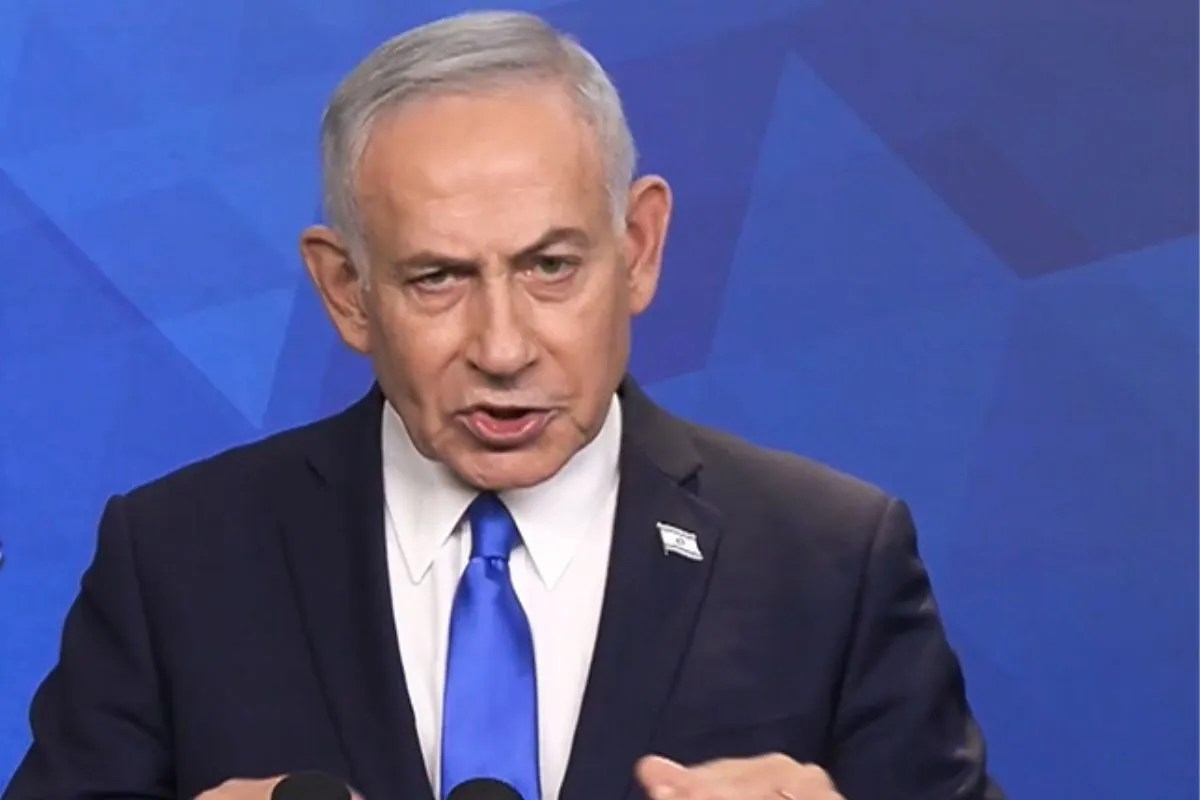
Municipal leaders lack the constitutional, statutory, and diplomatic authority to execute international arrest warrants against sitting foreign heads of state on American soil. When New York City Mayor Zohran Mamdani floated the prospect of arresting Israeli Prime Minister Benjamin Netanyahu ahead of the United Nations General Assembly—citing an International Criminal Court (ICC) warrant—and Netanyahu responded with public defiance, the exchange operated entirely within the realm of political signaling rather than executable law. Understanding this standoff requires separating municipal political incentives from the rigid hierarchy of United States federal supremacy and international treaty law.
The Four Legal Barriers Blocking Municipal Enforcement
Any attempt by a local police department, including the New York City Police Department (NYPD), to detain a visiting foreign leader collides with four distinct legal walls. Each barrier independently invalidates municipal jurisdiction.
1. Federal Supremacy Over Foreign Affairs
Under the United States Constitution, the conduct of foreign relations is vested exclusively in the federal government, specifically the Executive Branch and Congress. The Supremacy Clause (Article VI, Clause 2) invalidates any state or local action that interferes with federal foreign policy. A mayor possesses zero statutory mandate to interpret or enforce international criminal law. If local law enforcement attempted to detain a foreign dignitary against the directives of the White House and the Department of State, federal authorities—specifically the U.S. Secret Service and the Diplomatic Security Service, which are legally obligated to protect visiting heads of state—would be required to intervene and prevent the detention.
2. Non-Party Status to the Rome Statute
The arrest warrant referenced by Mayor Mamdani originates from the International Criminal Court, an institution governed by the Rome Statute. The United States is not a state party to the Rome Statute and does not recognize the jurisdiction of the ICC over non-consenting states. Because the treaty has never been ratified by the U.S. Senate, an ICC warrant carries no legal weight within the American domestic judicial system. Neither a federal magistrate nor a New York State judge can issue a valid domestic arrest warrant based solely on an ICC directive. Without a valid domestic warrant or probable cause of a violation of New York State or federal criminal code, an arrest by the NYPD would constitute unlawful detention.
3. The American Service-Members' Protection Act
Beyond the mere absence of treaty ratification, federal statutory law actively prohibits cooperation with the ICC. Enacted in 2002, the American Service-Members' Protection Act (22 U.S.C. § 7421 et seq.) restricts federal, state, and local government entities from assisting the court. Specifically, the statute bars any agency of the United States, or of any state or local government, from extraditing or transferring any person to the ICC, or providing investigative or enforcement support to the court's warrants. Compliance with an ICC arrest request by a municipal administration would directly violate federal statutory prohibitions.
4. Customary Head-of-State Immunity and the UN Headquarters Agreement
Even if the United States were a party to the Rome Statute, two layers of diplomatic immunity protect a sitting prime minister visiting New York for the United Nations General Assembly:
- Customary International Law: Under long-standing doctrines recognized by U.S. courts, sitting heads of state and heads of government enjoy absolute immunity ratione personae (personal immunity) from the criminal jurisdiction of foreign states while in office. The U.S. Department of State routinely files Suggestions of Immunity in domestic courts to terminate any legal proceedings against sitting foreign leaders.
- The 1947 UN Headquarters Agreement: As the host nation for the United Nations, the United States is bound by treaty obligations ensuring that representatives of member states can transit to and from the UN Headquarters District without impediment. Article IV of the agreement prohibits federal, state, or local authorities from imposing any impediments to transit to or from the headquarters district, explicitly granting diplomatic immunity from arrest or detention to accredited representatives.
The Asymmetry of Political Incentives
If the legal outcome is predetermined, the public confrontation must be analyzed through the mechanics of domestic political utility. Both Mayor Mamdani and Prime Minister Netanyahu derived measurable political value from escalating a dispute that neither expected to culminate in a physical arrest.
Municipal Domestic Signaling
For a progressive mayor governing a deeply polarized electorate in New York City, questioning whether the city's law department can enforce international warrants serves a distinct domestic function. It aligns the administration with activist constituencies demanding accountability over the conflict in Gaza while allowing the mayor to frame his posture as a commitment to international legal norms.
The strategic sequence followed a predictable arc:
- Initial Escalation: Framing the visiting leader as a war criminal and announcing an "active conversation" with city attorneys regarding enforcement options.
- Narrative Capture: Dominating local and international news cycles ahead of the UN General Assembly, positioning City Hall as a moral counterweight to federal foreign policy.
- Controlled Retreat: Acknowledging the supremacy of federal and diplomatic law once the legal review concluded, shifting the burden of enforcement onto the federal government while claiming the moral high ground of having exhausted local options.
Bilateral Counter-Mobilization
For Prime Minister Netanyahu, the threat provided an external foil. By dismissing the mayor's legal authority and announcing his intention to travel to New York regardless, Netanyahu projected resolve to his domestic base. The exchange allowed Israeli officials and U.S. diplomatic counterparts—including the White House and the U.S. Ambassador to the United Nations—to publicly reaffirm the durability of the U.S.-Israel alliance and isolate the mayor's rhetoric as an outlier disconnected from American statecraft.
Second-Order Operational Consequences
While no arrest occurs, rhetorical escalations between municipal executives and foreign heads of state generate tangible operational friction in the host city.
Security Resource Allocation
When a sitting mayor publicly validates the premise that a visiting head of state should be detained, the threat environment surrounding the visit shifts. Demonstrations escalate in scale and intensity, forcing the NYPD Intelligence Bureau and Counterterrorism Bureau to expand perimeter security, deploy additional crowd-control personnel, and coordinate more closely with federal protective details. This creates an internal contradiction: the mayor's political rhetoric increases the operational burden and overtime expenditures of the very municipal police force he oversees.
Erosion of Host-City Neutrality
New York City's status as the premier diplomatic hub relies on an implicit guarantee of operational neutrality. The municipal government manages traffic, sanitation, and perimeter security for hundreds of world leaders every September, many of whom lead authoritarian regimes or face international sanctions. Selective threats of local enforcement undermine the predictability required by the Department of State's Office of Foreign Missions. If municipal leaders attempt to weaponize local administrative powers against specific delegations, it invites retaliatory diplomatic measures against American officials abroad and fuels recurring legislative proposals to relocate international bodies out of New York.
Polarization of Local Civic Cohesion
Foreign policy posturing at the municipal level imports geopolitical conflicts directly into local governance. Unlike federal officials, a mayor is responsible for day-to-day municipal service delivery, public safety, and inter-communal stability across diverse neighborhoods. Framing a bilateral foreign policy dispute in terms of criminal culpability heightens tensions between local activist groups and communal institutions, complicating the mayor's primary mandate of maintaining civil order.
The Strategic Reality for Municipal Governance
Municipal executives operating within the American federal system cannot alter the trajectory of international diplomacy through unilateral legal threats. The constitutional architecture deliberately insulates foreign affairs from local political volatility. Future attempts by city administrations to invoke international tribunals or foreign warrants will inevitably follow the same trajectory: high initial media visibility, immediate federal preemption, and a quiet administrative retreat. Effective municipal governance requires confining executive action to verifiable statutory jurisdictions—focusing resources on public safety, infrastructure, and local civic stability—rather than expending political capital on unenforceable geopolitical theater.