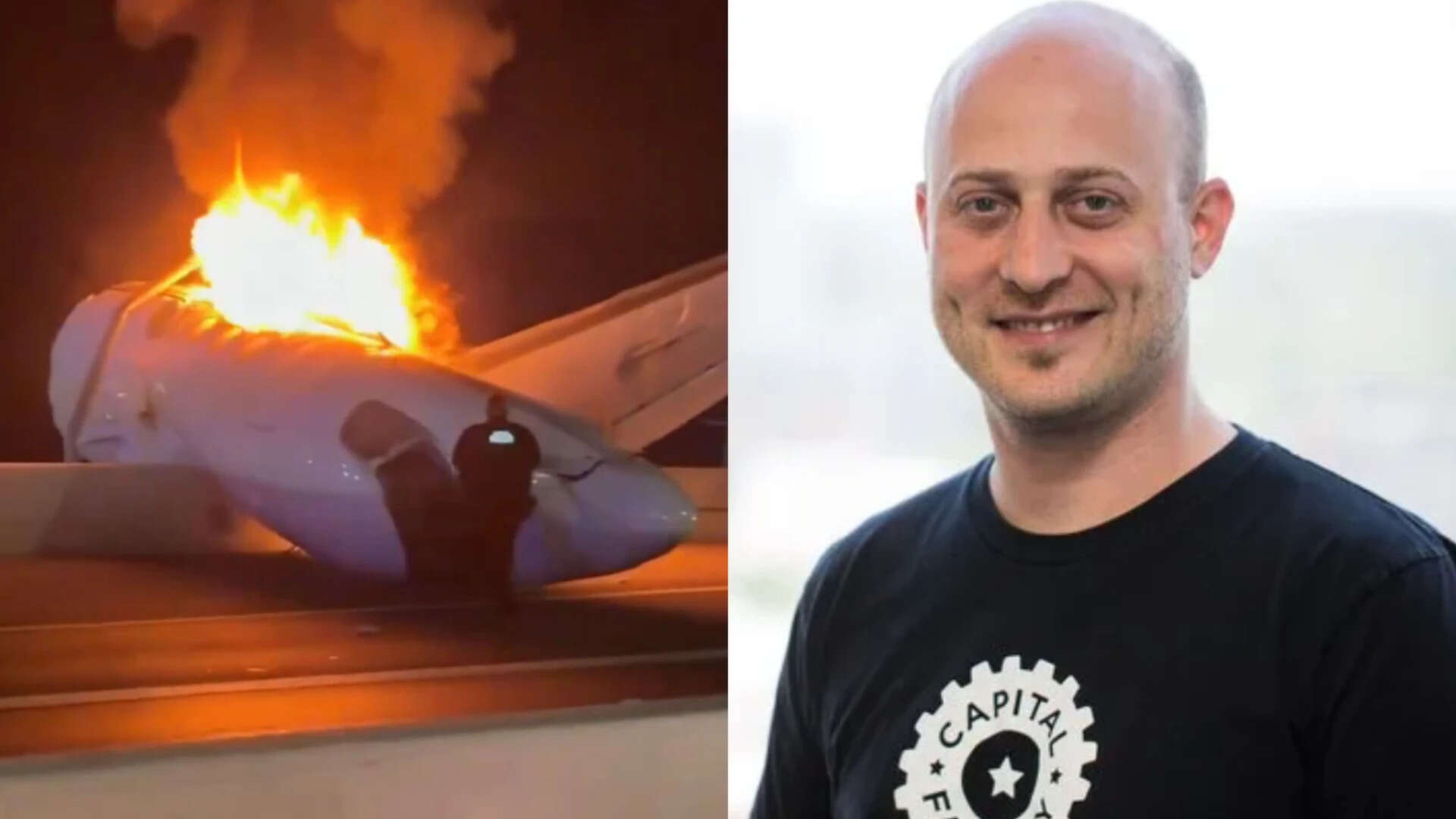
Austin didn't become a magnet for billions of dollars in tech investment by accident. It happened because specific people decided to build an ecosystem from scratch, and nobody did that with more intensity than Joshua Baer.
The 50-year-old founder and CEO of Capital Factory died on Tuesday night, June 16, 2026, when a private jet crashed on a highway in Laredo, Texas. The Cessna Citation Latitude, operated by NetJets, was flying from San José del Cabo, Mexico, to Austin when the pilot reported mechanical failures, low fuel, and a power outage. While attempting an emergency landing at Laredo International Airport, the plane fell short, hit a vehicle on Loop 20, and burst into flames. Five other people on board—two pilots and three teenagers—survived after motorists rushed to the burning wreckage to pull them out. Baer was the sole fatality.
Losing Baer means losing the central node of Texas technology. He called himself an "Austinpreneur," and his professional mission was explicitly stated on his LinkedIn profile: "I help people quit their jobs and become entrepreneurs." He spent decades proving that world-changing companies could scale outside of Silicon Valley.
The Infrastructure of Texas Innovation
When Baer founded Capital Factory in 2009, Austin was known for live music and Dell, not a dense grid of early-stage venture activity. He built Capital Factory to change that, turning it into a massive coworking space, incubator, and venture firm housed in downtown Austin.
He operated on a simple investment philosophy: "Plant lots of seeds. Water everyone's. Repeat." He didn't just write checks; he engineered collisions between early-stage founders, corporate giants, and government entities.
The portfolio built under his guidance reflects a deep bet on highly complex technologies. Capital Factory backed companies that push physical and digital boundaries, moving far beyond standard software applications.
- Saronic: Creators of autonomous drone boats used for military applications, which recently executed the first combat rescue of U.S. personnel by an unmanned vessel off the coast of Oman.
- Icon: A pioneer in 3D-printed construction that builds homes for the unhoused, military barracks, and structural designs intended for the Moon.
- Colossal Biosciences: The biotechnology firm working on de-extinction projects, including attempts to bring back the woolly mammoth.
- Apptronik: Developers of advanced humanoid robotics designed for industrial logistics.
Baer understood that deep tech needs heavy institutional backing. He instrumentalized Capital Factory to secure massive contracts with the U.S. Army's innovation programs, bringing billions of dollars into the state economy and cementing Texas as a defense tech powerhouse. His work caught the attention of federal lawmakers, drawing praise from U.S. Senators Ted Cruz and John Cornyn for turning the state into a global leader in entrepreneurship. In 2023, Austin's mayor awarded him the key to the city.
From College Dorms to the Godfather of Startups
Baer's career began long before Austin's tech boom. He launched his first startup in 1996 from his college dormitory at Carnegie Mellon University, creating an email marketing business. He moved to Austin that same year to work as a software developer at Trilogy Inc., an early tech anchor in the city that trained a generation of local founders.
After launching subsequent tech ventures like URaPI and Netmonitor, he realized his real passion wasn't just running his own companies—it was the mechanics of startups themselves.
"My hobby is startups," Baer told the Austin American-Statesman in 2012. "I don't watch sports or anything like that. So this is what I do. I want to be an investor in every great tech company that comes out of Austin."
He took that obsession into academia, serving as an entrepreneur in residence at the University of Texas at Austin. He co-taught the Longhorn Startup Seminar and Lab within the Department of Computer Science, ensuring that undergraduate students had direct access to real venture frameworks.
Even as generative AI evolved, Baer remained focused on practical execution. Earlier this year, he introduced his "Agents First" framework, pushing businesses to reconfigure their operations for a market run by autonomous AI agents. He constantly looked for the next structural shift.
What Happens to the Ecosystem Now
The immediate operational future of Capital Factory falls to its president and co-founder, Bryan Chambers, alongside the firm's broader leadership team. Chambers publicly committed to continuing Baer's core mission of supporting early-stage innovators, but the loss of a "super connector" leaves a distinct vacuum in fundraising and mentorship circles.
If you are a founder running a business within the Texas ecosystem, or if you rely on the networks Baer established, the strategic next steps require immediate adaptation.
- Audit Your Capital Factory Connections: Identify the specific mentors, investors, and corporate partners you met through Baer's personal network. Reach out to them directly to solidify those relationships independently of his introduction.
- Engage with the Extended Leadership: Do not wait for Capital Factory to restructure. Connect directly with Bryan Chambers and the active general partners to ensure your venture remains visible during the transition.
- Double Down on Defense Tech Hubs: If you operate in robotics, autonomous systems, or defense technology, continue leveraging the institutional pipelines Baer built with the U.S. Army and federal agencies. Those systems are institutionalized and will outlast any leadership transition.
The strength of an ecosystem is measured by how well it survives the loss of its architects. Baer spent two decades building a self-sustaining network of capital, talent, and institutional support. The coming months will test just how deeply those roots were planted.