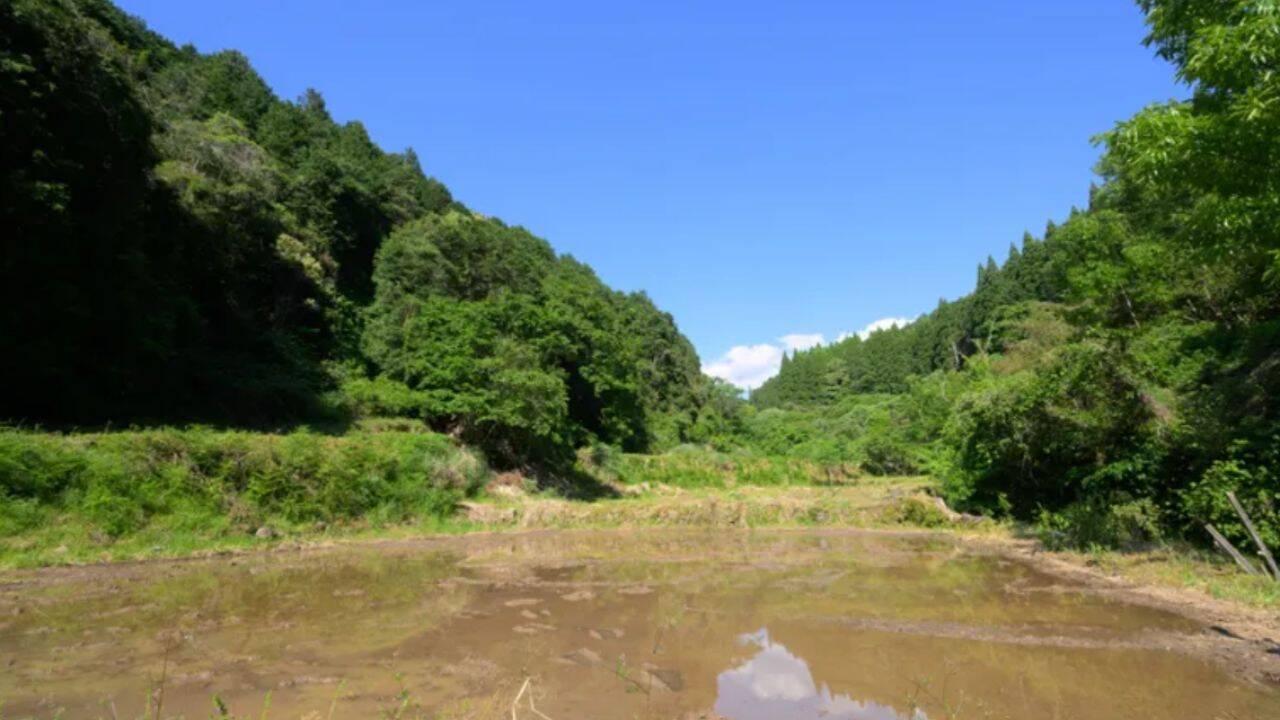
Japan is quietly running out of farmers. As rural areas age and young people head to Tokyo, millions of acres of agricultural land lie forgotten, slowly choking under thick weeds. But a brilliant environmental strategy is turning this crisis on its head. By having abandoned rice fields restored to wetlands, local communities and scientists are recharging vital aquifers and bringing vanished wildlife back from the brink.
You might wonder why we don't just turn these fields back into active farms. The truth is simple. We don't have the people to work them. Instead of letting neglected paddies turn into dry wasteland, pioneering initiatives in Kumamoto and Osaka are flooding them permanently. This keeps the ground wet all year, recharges groundwater supplies, and gives endangered frogs and dragonflies a permanent sanctuary.
It is a low-tech, high-impact solution to a modern ecological disaster.
The Silent Crisis in the Japanese Countryside
For centuries, Japan's traditional agricultural countryside thrived on a delicate balance. This rural ecosystem, often called satoyama, relied on human activity to maintain a diverse mix of secondary forests, streams, and rice paddies. Rice paddies are essentially artificial wetlands. When they are active, they hold water, control floods, and give local wildlife a place to breed.
Now, that balance is broken. Japan's farming population is shrinking rapidly. When a paddy is abandoned, the clay lining dries out and cracks. Coarse weeds and woody shrubs take over. The water disappears.
Without water, the local wildlife simply dies off. Nearly half of Japan's amphibian and aquatic reptile species are currently facing extinction. When you walk through these abandoned areas today, you won't hear the deafening chorus of frogs that used to define Japanese summer nights. It's quiet. Too quiet.
How Abandoned Rice Fields Restored to Wetlands Solve Two Major Problems
This is where the concept of permanent wetland restoration comes in. By actively managed flooding of these abandoned fields, we solve two critical environmental issues at the same time: groundwater depletion and biodiversity loss.
Refilling the Underground Aquifers
Most people think of wetlands as swampy, stagnant areas. In reality, they act like massive natural sponges. When we keep these abandoned fields filled with water throughout the year, the water doesn't just sit there. It slowly and steadily filters down through the soil, replenishing underground aquifers.
In areas like the Aso region of Kumamoto, this groundwater recharge is absolutely vital. Local communities, industries, and agricultural operations rely almost entirely on groundwater for their daily needs. By restoring just 3,000 square meters of abandoned paddies in Mashiki Town, partners like Suntory and local conservation groups are putting millions of gallons of water back into the earth.
Saving the Guests of the Paddies
In rural Japan, farmers historically referred to frogs, newts, and aquatic insects as tangyaku, which translates to "guests of the paddies". They weren't pests; they were welcome neighbors.
Active rice farming, however, has a major flaw when it comes to wildlife conservation. Farmers must drain the fields during the autumn harvest and keep them dry through winter. This seasonal draining interrupts the life cycles of many aquatic species, especially those that need water year-round to survive.
By turning these fields into permanent, year-round wetlands, we eliminate that dry period. It creates a stable, predictable sanctuary where creatures can breed, feed, and hibernate without the sudden shock of a seasonal drain.
Inside the Kumamoto Restoration Method
You can't just turn on a hose and expect a healthy wetland to appear. True ecological restoration takes careful planning and serious sweat equity.
In Kumamoto's Mashiki Town, adjacent to the Suntory Natural Water Sanctuary Aso, the process is highly systematic.
- Clearing the Overgrowth: Years of neglect leave paddies covered in thick, aggressive grasses and woody brush. Volunteers and researchers must manually clear this vegetation to expose the soil.
- Rehabilitating the Waterways: Traditional clay pipes and irrigation channels are often cracked or blocked. Teams repair these ancient channels to divert clean water from nearby forest streams back into the fields.
- Soil Management: Workers sometimes have to excavate the top layers of soil to reach the natural water table or clear out invasive root networks.
- Active Water Regulation: Simple water management facilities are installed to keep the water at an optimal depth. If the water is too deep, plants won't grow; if it's too shallow, the soil dries out and weeds return.
Dr. Yuichi Kano, a freshwater ecologist from Kyushu Open University, has been monitoring these sites closely. Since 2020, his surveys have tracked the return of native species. The data shows that once water flows back into these systems, the speed at which life returns is staggering. Dragonflies, fire-bellied newts, and rare aquatic beetles show up almost immediately. They were just waiting for the water to come back.
Why Year-Round Flooding Outperforms Traditional Farming for Wildlife
Active agricultural fields are highly managed, artificial spaces. Modern commercial farming relies heavily on chemical fertilizers and pesticides, which decimate local insect and amphibian populations. Even "eco-friendly" farms still have to drain their fields, leaving young frogs and insects stranded in dry mud.
Permanent wetlands offer an entirely different environment.
- No Chemical Runoff: Because these wetlands aren't being used for commercial crop yields, there's absolutely no need for synthetic fertilizers or pesticides. The water remains clean, pure, and safe for delicate larval stages of insects and amphibians.
- Complex Microhabitats: Active rice fields are flat and uniform. Restored wetlands are naturally uneven. This creates deep pools, shallow puddles, mudflats, and grassy banks—all within a small area. This diversity of physical space allows different species to find their exact ecological niche.
- Continuous Life Cycles: Insects like dragonflies spend their larval stage entirely underwater. If a field dries out, an entire generation is lost. Permanent water ensures these species can complete their multi-year life cycles without interruption.
The Hard Truths of Community-Led Restoration
It sounds like a fairytale: water flows, flowers bloom, and frogs sing. But let's be realistic. This work is difficult, and keeping these wetlands alive requires long-term commitment.
Nature doesn't just freeze in a perfect state. Without constant maintenance, a restored wetland will naturally fill with sediment, overgrown reeds, and invasive species. In Nose Town, Osaka, for example, conservationists face massive challenges from rising sika deer populations that overgraze native plants, and invasive weeds that quickly choke out open water.
Local farmer Kazuaki Iwamura, who has worked on the Kumamoto projects for over 15 years, stresses that scientists cannot do this alone. It requires local hands. Older villagers often hold the historical knowledge of how water flows through the valley. Corporate partners like Suntory provide the funding and logistical support. Academics provide the data. If any piece of that triangle falls away, the wetland quickly reverts to dry brush.
Your Next Steps to Support Local Conservation
You don't have to live in rural Japan to apply these principles. If you want to make a real difference in freshwater conservation and biodiversity, here is what you can do right now:
- Support Water-Positive Brands: Look for companies that actively invest in watershed replenishment. When corporations commit to putting more clean water back into local aquifers than they extract, real conservation projects get funded.
- Build a Wildlife Pond: If you have a backyard or community garden, skip the manicured lawn. Dig a simple, shallow pond. Fill it with native aquatic plants and leave a shallow slope so frogs and insects can climb in and out. You'll be amazed at how quickly native wildlife finds it.
- Volunteer for Local Wetland Restorations: Almost every region has local conservation trusts working to clear invasive weeds and restore natural waterways. Give them a weekend of your time.
Restoring these broken habitats isn't about looking back with nostalgia. It's about securing our water supply and keeping our natural ecosystems functional for the next century. We have the tools, the science, and the land. All we need is the willpower to keep the water flowing.



:max_bytes(150000):strip_icc()/parliament-hill-in-fall--ottawa--ontario--canada-1064713266-b595c67f48ca4778a985b13bb598ba04.jpg)