Japan just flipped the switch on the No. 6 reactor at the Kashiwazaki-Kariwa Nuclear Power Station. It is the largest nuclear power plant on earth, a sprawling seven-reactor coastal giant owned by Tokyo Electric Power Company Holdings (TEPCO).
To the government and utility executives, this moment is a triumph. The country is staring down a brutal global oil crisis and dealing with massive, non-negotiable electricity demands. Bringing this 1,315-megawatt Advanced Boiling Water Reactor back online helps keep the lights on without importing insanely expensive fossil fuels. You might also find this related coverage interesting: The End of the Blank Check and the Bitter Reality of America First in Israel.
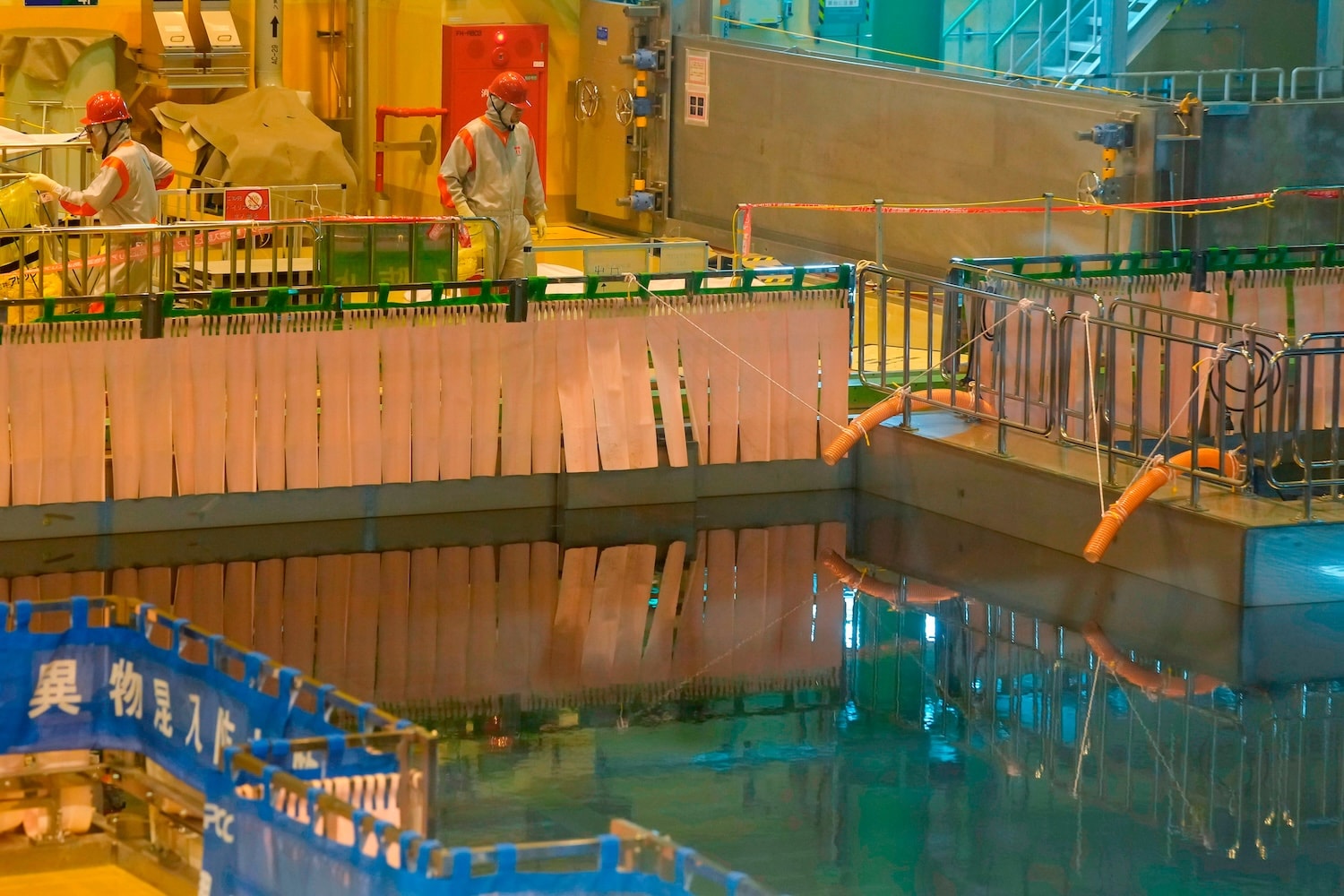
But there is a massive catch that nobody has a real answer for. The cooling pools holding the highly radioactive spent fuel inside this very plant are almost completely full.
Honestly, it is like moving into a mansion when the plumbing is already backed up to the second floor. As discussed in latest reports by NPR, the implications are significant.
The Silent Crisis Inside the Fuel Pools
If you stand in the top-floor observation area of the No. 6 reactor building and look down, you can see the spent fuel pool. It is currently sitting at 88% capacity.
That is not an isolated problem. Kashiwazaki-Kariwa is one of three major nuclear plants in Japan whose cooling pools will completely fill up within the next five years, according to the Federation of Electric Power Companies of Japan. Takeyuki Inagaki, the plant's general manager, admitted flat out that without a solid plan to manage this fuel, power generation will simply stall.
So why turn the reactor back on?
The math behind Japan's energy strategy is desperate. Ever since the 2011 Fukushima Daiichi triple meltdown, Japan has been terrified of nuclear power. The country shuttered all 54 of its reactors. Over the last decade and a half, the nation relied heavily on imported liquefied natural gas and oil. But with global fuel markets in chaos, the economic pain became too much to bear. Prime Minister Sanae Takaichi is aggressively pushing to get reactors back online to secure the grid and slash carbon emissions.
No. 6 is the first TEPCO-owned reactor to resume commercial operations since the Fukushima disaster. Its sister unit, No. 7, is next on the block. TEPCO estimates that running these two units alone will boost its earnings by roughly 100 billion yen ($633 million) every single year.
Money and power are flowing again. The radioactive trash, however, has nowhere to go.
The Broken Promise of Nuclear Recycling
Japan’s official plan for spent nuclear fuel sounds great on paper. The government insists on recycling. Instead of burying the waste forever like the United States plans to do, Japan wants to reprocess the spent fuel, extract the plutonium, and burn it again in specialized reactors. It is a neat, closed-loop concept that appeals to a resource-poor nation.
There is just one problem: the recycling strategy is a spectacular failure.
The Monju prototype fast-breeder reactor, designed specifically to reuse this plutonium, suffered a series of accidents, design flaws, and management scandals before being permanently decommissioned. Meanwhile, the commercial reprocessing facility at Rokkasho in northern Japan has faced decades of delays. Decades.
Because the recycling loop is broken, the spent fuel just sits in the pools at the power plants, piling higher and higher. Civil activists in Niigata Prefecture are understandably furious. They point out that accelerating reactor restarts without a final destination for the waste is wildly irresponsible.
High-density storage of spent fuel inside these pools isn't just a space issue. It also increases the risk of overheating if a natural disaster knocks out the power to the cooling systems—the exact nightmare scenario that caused the Fukushima disaster in 2011.
Looking for a Remote Island Escape Hatch
With local communities refusing to host permanent underground nuclear dumps, the central government is getting creative, and desperate.
Shortly after the No. 6 reactor kicked back into life, Industry Minister Ryosei Akazawa approached the village of Ogasawara. The mission? Requesting a feasibility study to see if a high-level radioactive waste site could be built on Minamitorishima.
Minamitorishima is an isolated coral atoll out in the Pacific Ocean, more than a thousand kilometers away from Tokyo. Geologically, it sits on a stable tectonic plate, which makes it attractive to scientists. Politically, it has zero permanent civilian residents.
Critics see right through the move. Panel members studying final disposal options openly call it a purely political play. It is much easier to push through a nuclear dump on a remote island where there are no local voters to complain or protest.
But even if Minamitorishima works out, it is not a quick fix.
Stages of Radioactive Waste Disposal Site Selection:
1. Literature Survey (Feasibility Study) -> Up to 2 billion yen incentive for municipalities
2. Preliminary Investigation (Boring tests and geological mapping)
3. Detailed Investigation (Constructing underground test facilities)
The entire review and selection process takes at least two decades. Building the actual facility and safely transferring the waste requires another century. After that, the site must be monitored deep underground for tens of thousands of years. You cannot solve a five-year storage emergency with a hundred-year construction project.
What Happens Right Now
TEPCO isn't waiting twenty years for an island repository. They are shuffling the deck chairs to buy time.
Right now, engineers are physically transferring spent fuel rods from the crowded pool at the No. 6 reactor to other dormant reactors on the Kashiwazaki-Kariwa campus that still have a bit of breathing room. It is a temporary shell game.
The utility is also hoping to resume shipping spent fuel to an interim dry-cask storage facility in Mutsu, located in northern Japan's Aomori Prefecture. Other Japanese utilities facing full pools are scrambling to build their own concrete dry-cask storage structures right on their current plant sites. Dry casks are safer than pools because they rely on natural air circulation rather than active water pumps to stay cool, but they are still temporary fixes.
If you are tracking the energy sector or investing in utilities, do not let the hype of the nuclear renaissance blind you to the structural gridlock. Keep a close eye on the regulatory approvals for these local dry-cask storage projects. If a utility cannot get permission from local governors to build dry storage on-site, that reactor will hit a hard operational wall the moment its pool hits 100%.
The Kashiwazaki-Kariwa restart proves that Japan can solve its immediate power shortages. But until the country faces the reality of its radioactive waste, it is just borrowing time on a credit card with an expiration date that is fast approaching.
This detailed video layout breaks down how Japan's nuclear landscape shifted post-2011 and why restarting plants like Kashiwazaki-Kariwa remains a deeply polarizing issue: Japan restarts nuclear reactor amid safety concerns.


