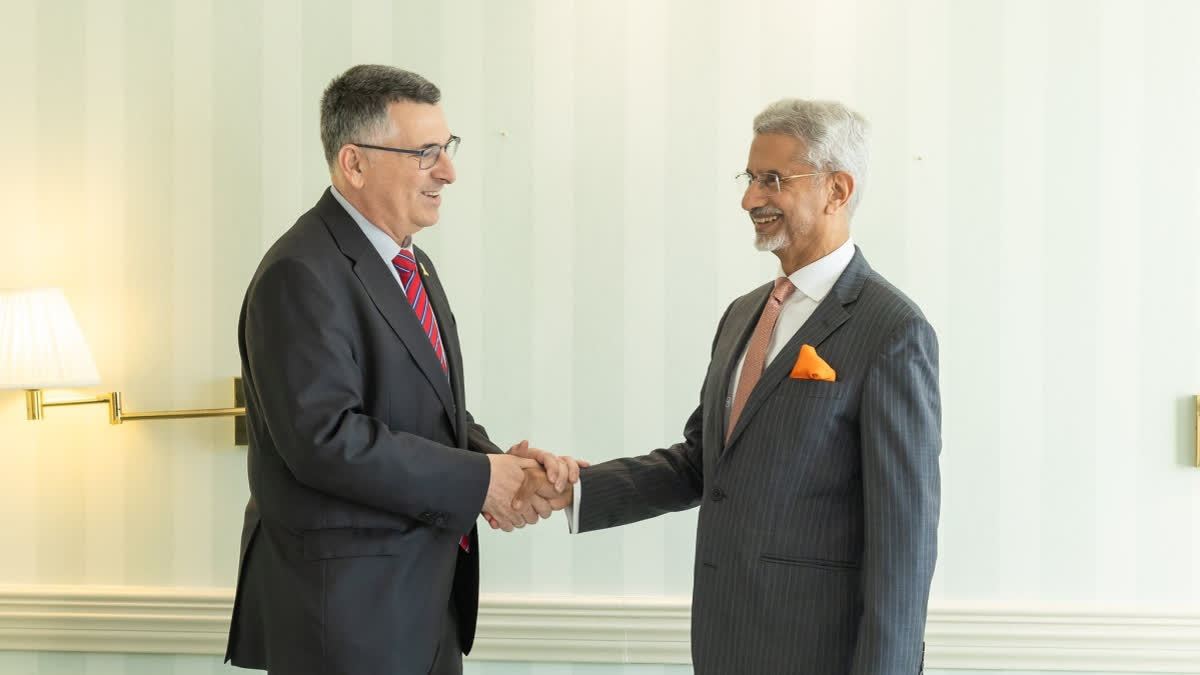
India’s External Affairs Minister S. Jaishankar just spent some quality time on the phone with his Israeli counterpart, Gideon Sa’ar. If you think this was just another routine diplomatic check-in, you’re missing the bigger, much more dangerous picture. The Middle East—or West Asia, as New Delhi prefers—is currently a tinderbox, and India’s energy lifeline is the fuse.
The conversation didn’t just dance around pleasantries. They got into the weeds on Iran, the Strait of Hormuz, and the escalating chaos in Lebanon. For India, this isn't about taking sides in a distant war; it's about making sure the lights stay on and the petrol pumps don't run dry.
The Hormuz chokehold and the 20 percent problem
Let’s talk about the Strait of Hormuz. It’s a tiny stretch of water, but it carries roughly 20 percent of the world’s oil and liquefied natural gas (LNG). Right now, it’s also the center of a massive geopolitical game of chicken. Iran has been flexing its muscles by restricting transit, and the U.S. has responded with a naval blockade.
During the call, Sa’ar was blunt. He called Iran’s actions "economic terrorism" and pushed for "action" from the international community, including India. He’s essentially telling New Delhi that sitting on the fence isn't an option when freedom of navigation is under fire.
India finds itself in a brutal spot. We rely heavily on this passage for energy, but we also have a long-standing, complex relationship with Tehran. If the Strait stays choked, insurance costs for Indian-flagged vessels skyrocket, and the physical risk to our sailors becomes a daily reality. The Indian Navy has already kicked off Operation Urja Suraksha to escort our tankers, but a few warships can't solve a global blockade.
Lebanon is more than just a headline
While the world watches the tankers, the situation in Lebanon is deteriorating fast. For India, Lebanon isn't just a point on a map—it's home to about 1,000 Indian nationals. Even more importantly, India is a major troop contributor to UNIFIL (United Nations Interim Force in Lebanon).
When Israel strikes targets in Lebanon, Indian peacekeepers are often caught in the middle. Jaishankar has been vocal about the "disturbing" trajectory of civilian casualties there. In the call with Sa’ar, the message from the Indian side was likely a mix of concern for our people and a push for regional stability before things spiral into a full-scale regional conflagration.
The Nuclear Elephant in the Room
Sa’ar also used the call to lobby India on the Iranian nuclear issue. He emphasized that preventing Iran from obtaining nuclear weapons—specifically through "no enrichment" and the removal of existing materials—is critical for everyone.
Israel wants India to use its considerable diplomatic weight to pressure Tehran. India, meanwhile, has always preferred a "strategic autonomy" approach. We want a stable Iran that can sell us oil, but we definitely don't want a nuclear-armed Middle East that triggers a global arms race. It’s a needle that Jaishankar has to thread with extreme precision.
Why India’s "Neutrality" is being tested
For decades, India’s foreign policy was basically "be friends with everyone." That doesn't work so well when your friends are trying to blow each other up.
The collapse of the U.S.-Iran talks in Islamabad earlier this month has left a vacuum that's being filled by military posturing. Trump’s "maximum pressure" campaign is back in full swing, and Israel is looking for allies to validate its stance.
India’s real problem is that our economic resilience is tied to these sea lanes. If we stay too quiet, we lose our seat at the table where the rules of the "New Hormuz" are being written. If we speak too loudly, we risk our ties with Tehran or Washington.
What happens next for you
This isn't just "foreign news." It’s "wallet news." When the Strait of Hormuz is blocked, oil prices in Kenya jump 24 percent in a day. India isn't immune. If this deadlock continues, expect the following:
- Fuel price volatility: The government can only absorb so much of the global crude spike before it hits the local petrol stations.
- Naval expansion: Expect to see more "Operation Urja Suraksha" style deployments. The Indian Navy is moving from being a "regional" force to a "protectionist" one.
- Diplomatic tightrope: Watch for Jaishankar to make similar calls to Tehran and Washington in the coming days. India is trying to act as the "Vishwa Mitra" (friend of the world), but even friends have to draw lines eventually.
The takeaway? India is moving beyond just "expressing concern." We're now an active stakeholder in the security of the Persian Gulf because we have no other choice. If you're invested in the markets or just worried about your commute costs, keep your eyes on the Strait. The conversation between Jaishankar and Sa’ar was a clear signal that the status quo is dead.