Imagine holding the exact number of seats needed to crown a prime minister, yet nobody in Jerusalem will even take your phone call.
That isn't a hypothetical political riddle. It's the exact reality facing Israel's Arab political parties ahead of the 2026 Knesset elections. On paper, these factions hold the ultimate mathematical tie-breaker in a deadlocked parliament. In practice, deep ideological red lines, decades of political taboo, and shifting coalition dynamics mean these potential kingmakers could once again be locked outside the cabinet room.
If you've ever followed Israeli elections, you know the math rarely works out cleanly. To form a government in the 120-seat Knesset, a leader needs at least 61 mandates. For years, the electorate has been split almost evenly down the middle between pro-Netanyahu and anti-Netanyahu blocs, leaving neither side with a clear path to victory without outside help. That structural stalemate naturally turns smaller parties into kingmakers. Yet when it comes to Palestinian citizens of Israel—who make up roughly 21% of the country's population—having the votes doesn't automatically buy you a seat at the table.
The Unspoken Rule of Israeli Coalition Building
For over seven decades, an unwritten rule governed Israeli politics. Arab-led parties didn't sit in ruling coalitions.
They could vote from the opposition. They could occasionally prop up a minority government from the outside, like Hadash and the Arab Democratic Party did for Yitzhak Rabin during the Oslo Accords in the 1990s. But actually sitting around the cabinet table, holding ministerial portfolios, and signing off on state budgets? That was considered political suicide for any mainstream Zionist party leader.
Right-wing politicians routinely weaponized the mere idea of an Arab coalition partner, framing it as an existential security threat rather than normal parliamentary arithmetic. Center-left leaders, terrified of losing swing voters who leaned hawkish on defense, usually played along with the boycott. They treated Arab Knesset members as second-tier legislators whose votes didn't count toward a "legitimate" Jewish majority.
Then came June 2021, and everything broke open.
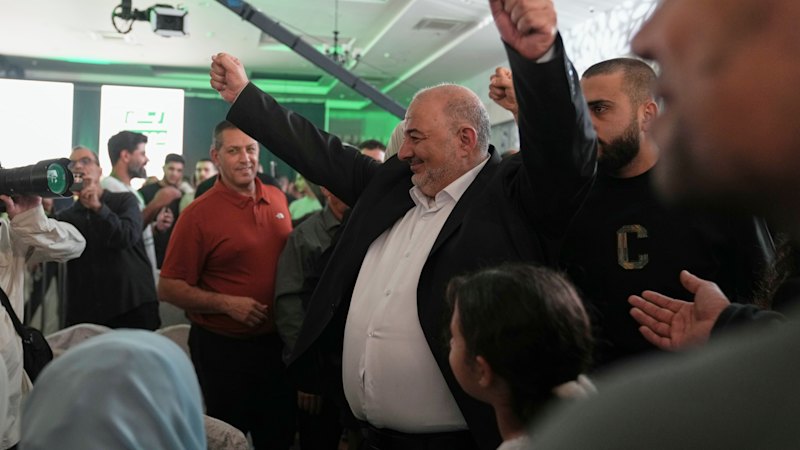
Mansour Abbas, the pragmatic leader of the Islamist Ra'am party (the United Arab List), did what nobody thought possible. He broke away from the broader Joint List alliance and signed a coalition deal with Naftali Bennett and Yair Lapid. For the first time in Israel's history, an independent Arab party became a formal, card-carrying member of the ruling government. Abbas didn't demand changes to Israel's foreign policy or an immediate resolution to the Palestinian conflict. Instead, he traded his four Knesset seats for billions of shekels in infrastructure funding, crime-fighting initiatives, and economic development for neglected Arab towns.
It was a watershed moment. It proved Arab parties could wield real executive power. Yet just over a year later, that fragile "change government" collapsed under its own ideological contradictions, and the backlash was swift.
Why the 2021 Experiment Hasn't Become the New Normal
If Ra'am already broke the glass ceiling, why are Arab parties still facing exclusion in 2026? The answer comes down to a brutal collision of wartime trauma, domestic polarization, and internal division.
The October 7 Hamas attacks and the ensuing multi-front war fundamentally reshaped the Israeli electorate's mindset. Security anxieties hardened across the political spectrum. Centrist voters who were willing to tolerate a pragmatic partnership with Ra'am in 2021 grew far more skeptical of relying on non-Zionist parties for a governing majority. Mainstream opposition leaders like Benny Gantz and Yair Lapid found themselves walking a tightrope. They desperately need the mathematical boost that Arab turnout provides to unseat Benjamin Netanyahu's right-wing bloc, yet openly campaigning on a future coalition with Arab parties risks alienating the exact center-right voters they need to win over.
It's a classic catch-22.
- If opposition leaders embrace Arab parties openly, right-wing media and Netanyahu's Likud party immediately label them dependent on "terror supporters" who won't back the IDF.
- If opposition leaders rule out Arab parties completely, they practically hand Netanyahu another term by capping their own ceiling well below 61 seats.
So what do they do? Most resort to strategic ambiguity. They dodge the question in television interviews, talk vaguely about "broad Zionist coalitions," and hope the election math magically solves itself. Spoiler alert: it rarely does.
It Isn't Just Jewish Parties Doing the Excluding
To understand why these kingmakers might stay on the sidelines, you can't just look at Jewish politicians. You have to look inside Arab society itself, where a fierce ideological battle has been raging for years over whether joining an Israeli government is even worth it.
Arab political representation in Israel isn't a monolith. It's split among factions with wildly different worldviews:
- Ra'am (United Arab List): Led by Mansour Abbas, this socially conservative Islamist party champions a "politics of influence." Abbas argues that sitting in the coalition—regardless of whether it leans left or right—is the only way to secure budgets, fight rampant organized crime in Arab cities, and fix chronic housing shortages.
- Hadash: A predominantly Arab, secular socialist party (the Democratic Front for Peace and Equality) that maintains a Jewish-Arab partnership at its core. Hadash views itself as an ideological opposition movement. Its leaders argue that joining a government overseeing military operations in Gaza or expanding West Bank settlements makes you complicit in policies your own voters despise.
- Ta'al: Led by veteran parliamentarian Ahmad Tibi, Ta'al focuses heavily on Palestinian national identity alongside civic equality. Tibi has historically been skeptical of full coalition membership, preferring to extract concessions from the outside without taking collective cabinet responsibility for military decisions.
- Balad: A secular Palestinian nationalist party that rejects Israel's definition as a "Jewish and democratic" state, calling instead for a "state of all its citizens." Balad flatly refuses to join any Zionist coalition or even recommend a candidate for prime minister to the president.
Notice the friction there? Even if a centrist Israeli prime minister walked up to the Arab parties tomorrow with a blank check, half of them wouldn't cash it.
During the 2022 elections, this exact split proved fatal. Balad broke away from Hadash and Ta'al right before the filing deadline, failed to clear the 3.25% electoral threshold, and burned roughly 138,000 Arab votes into thin air. That single miscalculation handed Netanyahu's right-wing and religious bloc a comfortable 64-seat majority. Arab voter turnout dropped below 53%, largely because disillusioned citizens watched their leaders bicker over strategy while violent crime surged unchecked in their neighborhoods.
The Electoral Threshold Trap and Voter Turnout
In Israeli politics, turnout is destiny. Because Israel uses a nationwide proportional representation system with a 3.25% minimum threshold (roughly four Knesset seats), every percentage point of Arab participation shifts the entire parliamentary map.
When Arab turnout spikes—like it did in March 2020, hitting nearly 65% under a unified Joint List—the Arab parties capture 15 seats. At 15 seats, nobody in Israel can form a stable government without accounting for them. When turnout slumps to 45% or 50%, their representation drops to 8 or 10 seats, making it vastly easier for a right-wing coalition to hit 61 seats on its own.
Honestly, the cynicism among Arab voters is hard to blame. Many watched Mansour Abbas join the government in 2021 with genuine hope that things would change. While that government did pass a historic five-year, 30-billion-shekel development plan (known as Plan 550) aimed at closing economic gaps, much of that funding was later frozen, delayed, or redirected once Netanyahu returned to power with far-right ministers like Itamar Ben-Gvir and Bezalel Smotrich.
For ordinary families dealing with broken local schools, crumbling infrastructure, and hundreds of annual homicides tied to organized crime syndicates, watching political deals evaporate leaves a bitter taste. Why risk standing in line at the ballot box if the government you help build either collapses in twelve months or refuses to let your representatives inside the door?
Can External Support Solve the Stalemate?
If formal coalition membership is toxic for centrist Zionists and unacceptable to nationalist Arab factions, there is a middle-ground workaround that seasoned Israeli political operators whisper about behind closed doors: the "blocking bloc" or external safety net.
Here is how it works in practice. Suppose the anti-Netanyahu Zionist parties win 55 seats, and the Arab parties win 11 seats. Together, that's 66 seats—more than enough to prevent Netanyahu from reaching 61. Instead of handing ministerial posts to Arab lawmakers, the centrist parties form a minority government of 55 seats. The Arab factions agree to vote for the new government during its initial swearing-in confidence vote, or simply abstain, allowing it to take office.
From there, the minority government survives week by week by negotiating specific legislative packages and budget allocations with the Arab parties in exchange for their parliamentary backing.
It sounds neat on a whiteboard. In reality, it's a nightmare to govern that way.
A minority government propped up from the outside lives on life support from day one. Every single Knesset vote becomes a high-stakes hostage negotiation. If a security flare-up happens in the West Bank or along the northern border, the external Arab partners face immense pressure from their constituents to pull the plug. Meanwhile, the prime minister gets hammered daily by the opposition for running a "weak" government that has to beg non-Zionist lawmakers for permission to pass basic laws.
Yitzhak Rabin survived this exact arrangement between 1993 and 1995, and he paid an enormous political price for it—with right-wing protesters relentlessly branding his government illegitimate because it lacked a "Jewish majority." Few modern Israeli politicians have Rabin's political capital or appetite for that kind of daily trench warfare.
What Actually Decides Whether They Get In
Strip away the campaign slogans, and the fate of Israel's Arab parties in the next government comes down to three hard variables that anyone watching the race should track closely:
- Unity Before the Ballot Box: Do Hadash, Ta'al, Ra'am, and Balad run on separate slates, or do they engineer a technical bloc purely to avoid wasting votes below the 3.25% threshold? Separate runs risk another 2022-style wipeout where tens of thousands of ballots vanish. A united technical front maximizes seat count, even if the parties split immediately after the election.
- The Center-Right Swing Vote: Parties like Yisrael Beiteinu (led by Avigdor Lieberman) or right-leaning anti-Netanyahu factions hold the true veto inside the opposition camp. If these hawkish Netanyahu critics refuse to sit in any coalition that relies on Arab votes—even from the outside—the opposition has zero mathematical path to 61 seats regardless of how well Arab parties perform.
- Street-Level Turnout in Key Cities: Watch the turnout numbers in major Arab population centers like Nazareth, Umm al-Fahm, Rahat, and Tayibe on election afternoon. If participation climbs past 58%, the right-wing bloc's chances of securing a standalone majority plummet, forcing the entire Israeli political establishment to confront the kingmaker dilemma head-on.
Political arithmetic doesn't care about taboos. You can exclude a fifth of the electorate from the cabinet room for a decade, and you can pretend their 10 or 14 Knesset seats don't count when drawing up coalition agreements. Eventually, though, the numbers always force a reckoning—and until Israel's mainstream parties decide whether they want a functioning majority more than they fear breaking old political rules, the country's most consequential kingmakers will keep waiting outside a locked door.