The coffee in the paper cup goes cold faster than you expect when the dawn air comes off the Red Sea. You stand there on a concrete pier in western Yemen, listening to the slap of oily water against rusted pilings, and you realize that distance is an illusion. A missile does not care about oceans. It cares about geometry, velocity, and the sudden, violent intersection of steel and flesh.
Thousands of miles away, in the quiet, wood-paneled warmth of a transition-team office in Palm Beach or Washington, maps are spread across mahogany tables. Men in sharply pressed suits trace lines with yellow highlighters. They talk about deterrence, about alliance commitments, about the sacred architecture of Middle Eastern security that has held—or pretended to hold—for half a century. They use words like posture and projection.
They should be listening to the wind instead.
To understand what happens when a new administration inherits an old war, you have to look past the policy memos. You have to look at a workshop in a dry riverbed outside Sanaa, illuminated by the harsh, flickering glare of a diesel generator.
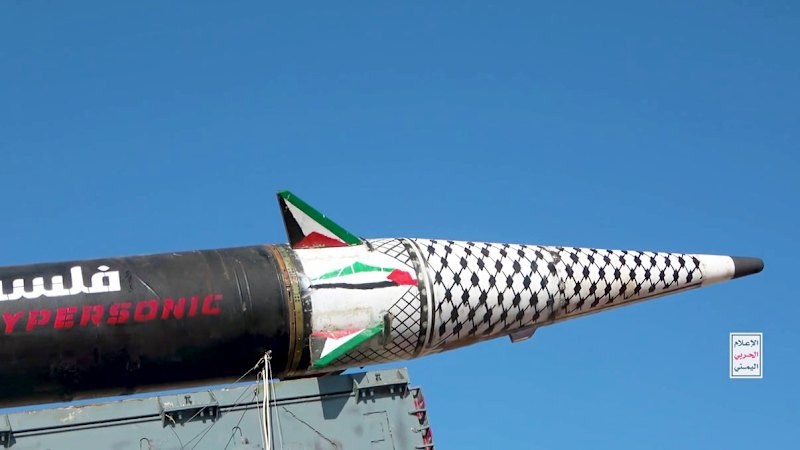
Here, men who grew up fixing Toyotas in mountain passes are doing something extraordinary and terrifying. They are taking crude, Iranian-supplied blueprints and weaponizing physics. They are lengthening rocket bodies, adding delta wings, and tweaking guidance systems that rely on commercial GPS signals bounced off civilian satellites. It is backyard engineering born of desperation, funded by regional rivalry, and refined by years of surviving the most intense air campaign of the modern era.
These are not the polished, multi-million-dollar interceptor targets you see in defense expo brochures. They are rough. They smell of welding slag and scorched rubber.
And they work.
When a Houthi anti-ship ballistic missile leaves a mobile launcher hidden beneath a rocky outcrop, it climbs silently into the stratosphere before tipping over and screaming back down at Mach numbers that defy easy interception. By the time the radar operator on a United States Navy destroyer sees the incoming track bloom on their console, the window for human decision-making has narrowed to seconds.
This is the reality waiting for Donald Trump as he steps back into the Oval Office.
For years, the playbook for American involvement in the Gulf was written in ink that assumed absolute technological supremacy. The formula was simple: sell the hardware, back the regional partners, keep the tankers moving through the Bab el-Mandeb strait, and project enough raw power to make adversaries think twice before crossing an invisible line.
That playbook is currently being shredded by pieces of scrap metal welded together in caves.
Consider the economics of modern conflict, which are as brutal as any battlefield casualty. A standard American SM-2 or SM-6 missile fired from an Arleigh Burke-class destroyer costs upwards of two to four million dollars. The modified drone or ballistic missile flying toward it might cost twenty thousand. Mathematics is a cruel strategist. If you force an adversary to spend a fortune defending against pennies, you win even when you lose. You bleed them through their logistics, exhaust their magazine depths, and create a creeping sense of vulnerability that ripples all the way from the decks of warships to the trading floors of global energy markets.
Saudi Arabia knows this better than anyone.
For nearly a decade, the Kingdom has lived beneath the shadow of this sky-borne attrition. Sleek residential neighborhoods in Riyadh, oil processing facilities in Abqaiq, and tankers idling off the coast of Yanbu have all served as targets for an adversary that learned how to fight asymmetric wars because they had no other choice. The Saudi calculation is desperate and straightforward: they need an American shield that is unyielding, permanent, and unconditional.
Yet the man returning to the White House has built his entire political identity on a different premise.
Trump is transactional. He looks at foreign entanglements not through the misty lens of democratic ideals or historical alliances, but through a cold ledger of costs and benefits. Why should American sailors sweat and bleed in the humid crucible of the Red Sea to keep oil flowing freely to European and Asian markets, he asks, while domestic production hums at home? Why write a blank check for regional security when the partners footing the bill have trillions of sovereign wealth dollars to spend?
The Houthi leadership in Sanaa reads these political tremors with clinical precision. They understand American domestic fatigue. They know that after two decades of endless wars in the broader region, the American public has an allergic reaction to the word deployment. Every time a drone strike misses its mark, or a destroyer has to fire off another million-dollar interceptor to swat down a buzzing delta-wing nuisance, the political cost in Washington ticks upward.
So, they test the boundaries. They launch another salvo. They target another commercial container ship bearing a flag of convenience, forcing global shipping giants to reroute around the entire continent of Africa, adding weeks to transit times and driving up the price of everything from sneakers to gasoline.
They are playing a long, patient game of psychological jujitsu. They want to prove that the American umbrella is leaky, expensive, and ultimately optional.
If you walk down the dock in Jeddah or look out across the azure expanse of the Red Sea on a quiet afternoon, the water looks serene. Gulls wheel overhead. Cargo ships crawl along the horizon like distant toys. It is easy to forget that beneath this postcard facade, fiber-optic cables hum with financial panic and military satellites track every thermal plume from the Yemeni highlands.
This is where the grand strategies of superpowers collide with the stubborn grit of local conflicts.
When Trump weighs his options for helping Saudi Arabia secure its southern border and its maritime lifelines, he will find no clean exits. Walking away completely means handing the strategic choke point of global trade over to an Iranian-backed militia that chants slogans against the West every Friday afternoon. Doubling down means stepping back into the exact kind of open-ended commitment he vowed to avoid.
There is no neat compromise between these two poles.
To help the Saudis effectively now requires more than just waving a diplomatic wand or signing another multi-billion-dollar arms sale agreement. It requires solving the hard, messy engineering problem of low-cost air defense. It requires figuring out how to stop cheap, hard-to-stop missiles without bankrupting the defenders or dragging American boots into the jagged, unforgiving mountains of Yemen.
The men in the workshop outside Sanaa are tightening another bolt tonight. The analysts in Washington are drafting another memo. And out on the dark water, a young sailor on watch is staring into a green radar scope, wondering if the blip appearing at the edge of the screen is just another false alarm, or the beginning of a storm that will reshape the map of the world.


