The Specter of ISIS Is a Convenient Fiction
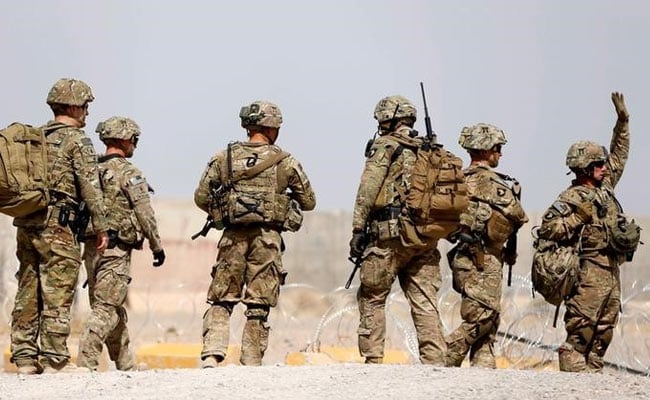
Every few years, the foreign policy establishment dusts off the exact same playbook. US forces pack up their logistics hubs, the pundits start hyperventilating about a triumphant ISIS resurgence, and Washington panics over a sudden vacuum in Mesopotamia. It is the same tired script played out on an endless loop. The lazy consensus says that pulling American boots off the ground invites immediate chaos, handing a shattered nation back to radical extremists on a silver platter.
That narrative is wrong. It misreads the actual mechanics of modern conflict, misunderstands the domestic incentives of Iraqi governance, and mistakes a permanent occupation footprint for actual stability.
Let us look at what actually happens when the security blanket is ripped away. I have spent years tracking defense logistics and regional power distributions, and the structural reality on the ground bears little resemblance to the op-eds published inside the Beltway. The ongoing friction in Iraq is not caused by an absence of American patrols. It is exacerbated by them.
Dismantling the Power Vacuum Fallacy
The core argument for endless presence rests on the vacuum theory. The claim goes that if Washington leaves, someone worse steps in. This treats sovereign states like empty hotel rooms waiting for new occupants.
In reality, power vacuums do not exist in geopolitics. Forces flow into spaces based on local gravity, economic networks, and sectarian survival instincts. When foreign occupiers remain, local actors have zero incentive to build functional, self-sustaining security apparatuses. Why invest political capital in messy compromises or painful military reforms when you can outsource your state monopoly on violence to a foreign superpower with a bottomless defense budget?
By maintaining a persistent military footprint, Washington acts as a structural hazard. It subsidizes political dysfunction in Baghdad. Iraqi political elites can afford to play zero-sum sectarian games because they know Uncle Sam will keep the lights on and the borders somewhat intact.
When you remove the external prop, the underlying system is forced to adapt. That adaptation is messy, loud, and frequently uncomfortable to watch from a Manhattan loft, but it is the only path toward genuine indigenous stability.
The Myth of the Caliphate Revival
Let us address the boogeyman in the room. Every departure announcement triggers breathless warnings about a 2014 redux, complete with black flags rolling across the Anbar desert.
This ignores how insurgencies actually scale. The original rise of ISIS was not a random meteorological event. It was the unique byproduct of a post-surge vacuum, a deeply sectarian campaign waged by the Maliki government against Sunni populations, and a massive supply of abandoned hardware coupled with an active civil war raging next door in Syria.
Those conditions have fundamentally shifted.
- The Regional Balance: Regional actors who once tolerated or played games with extremist factions now recognize them as existential threats. Iran, Turkey, the Gulf states, and the Iraqi Security Forces themselves have zero appetite for another territorial proto-state chewing up regional trade routes.
- The Intelligence Reality: Modern counter-terrorism does not require tens of thousands of infantrymen holding static forward operating bases. It requires targeted intelligence, partner force coordination, and precision overwatch—capabilities that can be executed from over-the-horizon platforms without owning the real estate.
- Popular Exhaustion: The civilian population in central and northern Iraq bore the brunt of the devastation. They know what life under extremist rule looks like, and active local resistance to recruitment is orders of magnitude higher than it was a decade ago.
The threat today is not a rolling conventional army taking cities. It is low-level insurgency and asymmetric harassment—troublesome, certainly, but police and regional counter-terrorism problems, not strategic existential crises requiring an indefinite American garrison.
The Real Cost of Staying
What do we buy with our continued presence? Let us be brutally honest about the ledger.
We buy a permanent friction point with regional militias. Every base, every logistics convoy, and every advisor becomes a sitting duck for rocket and drone attacks orchestrated by proxy networks. This forces Washington into a reactive cycle of retaliatory strikes that achieve nothing except escalating tensions and driving domestic Iraqi political pressure to expel us by force rather than by diplomatic arrangement.
Worse, we trap ourselves in a strategic sunk cost fallacy. Policymakers refuse to pull the plug because doing so risks a bad
Why The Iraq Withdrawal Panic Is Total Nonsense
news
The headlines write themselves because laziness sells. Turn on any cable network or open a mainstream defense journal, and you will see the exact same panic-peddling script. US forces draw down or shift posture in Iraq, and the chattering class immediately starts hyperventilating about a repeat of 2014. They dust off the old maps, warn of a roaring ISIS resurgence, and act as though geopolitical stability hangs entirely on a few thousand foreign boots standing on a desert runway.
It is a comfortable narrative for people who prefer simple ghosts over messy realities. It is also entirely wrong.
I have spent years tracking security dynamics across the Levant and Mesopotamia, talking to local commanders, intelligence analysts, and operational planners who actually look at logistics rather than press releases. The conventional wisdom treats Iraq like a fragile crystal vase that shatters the second an American hand lets go. That perspective ignores how power actually functions on the ground today. The real story of the US footprint in Iraq is not about stopping a terrorist resurrection; it is about managing a bureaucratic inertia that has outlived its strategic utility.
Let us dismantle the lazy consensus piece by piece.
The Myth of the Indispensable Footprint
The core fallacy underpinning every doomsday forecast is that Iraqi security forces are helpless toddlers waiting for an American babysitter. This is an insult to the thousands of local troops who spent the last decade bleeding to reclaim Mosul, Ramadi, and Tikrit.
Yes, the 2014 collapse was a catastrophe. When ISIS swept across the border, the Iraqi Security Forces melted because institutional corruption, hollowed-out ranks, and catastrophic leadership failures left them a paper tiger. But institutions learn. The Iraqi Counter Terrorism Service and the broader security apparatus rebuilt themselves in the crucible of urban combat. They adapted, they coordinated, and they crushed the physical caliphate without needing Western divisions clearing every street.
When analysts warn that an American exit creates a vacuum, they assume vacuums remain empty. Nature abhors a vacuum, and so does geopolitics. But a vacuum in Baghdad does not mean ISIS rushes in to fill the space. It means local actors—state and paramilitary—must own the consequences of their own security architecture. Forcing local ownership means accepting that mistakes will happen, but it is the only path to a sustainable defense posture. Coddling an ally forever guarantees they never grow up.
The Intelligence Trope and the Technology Shift
Another favorite argument of the interventionist playbook is that without US intelligence, surveillance, and reconnaissance assets, the Iraqi state goes blind.
This argument relies on a 2010 understanding of warfare. Today, tactical intelligence is democratized. Commercial satellite imagery, widespread drone deployment, intercepted communications, and human intelligence networks inside local populations mean that tracking insurgent movements no longer requires a multi-million-dollar Global Hawk circling overhead 24 hours a day.
Furthermore, remnants of ISIS do not operate as a conventional army anymore. They are reduced to low-level insurgency—shadowy cells hiding in the Hamrin Mountains, the Anbar desert, or the rugged terrain of the Makhmour mountains. You do not defeat a scattered network of a few thousand die-hards hiding in caves by maintaining a heavy footprint at massive logistical hubs like Al Asad Airbase. You defeat them through targeted, intelligence-led raids conducted by agile local forces who know the dialects, the terrain, and the tribal dynamics intimately.
The Regional Chessboard is Not 2014
To understand why the panic over an ISIS resurgence is exaggerated, you have to look at the surrounding board. The geopolitical architecture of the Middle East has mutated radically.
In 2014, ISIS exploited a fractured Syria sliding into all-out civil war, a sectarian government in Baghdad that alienated Sunni populations, and porous borders that allowed foreign fighters to flood in unchecked. Today, while regional tensions remain high, the macro-environment for a massive, state-like territorial insurgency simply does not exist.
The Iraqi government recognizes that a return of the caliphate is an existential threat to its own survival. Whatever political factions dominate Baghdad, none of them want a radical jihadist army controlling oil fields and marching toward the capital. The domestic political cost of allowing another 2014 collapse is too high for any local leader to ignore. Consequently, intelligence sharing, border fortification, and military coordination between different security branches within Iraq are vastly superior to what they were a decade ago.
The Real Risk Nobody Wants to Talk About
Every contrarian view must acknowledge its own vulnerabilities, so let us be clear about where the real danger lies. The risk of the US drawdown is not a sudden, sweeping ISIS blitzkrieg across the Euphrates.
The real danger is political fragmentation and the unchecked rise of competing militia proxies. When a conventional superpower steps back, the local power dynamics intensify. The struggle for influence between state security forces, political factions, and heavily armed non-state actors creates friction points that can destabilize the government from within.
By obsessing over the ghost of ISIS, Washington misses the actual governance crisis. Iraq’s challenges are economic, institutional, and environmental—rampant corruption, crumbling water infrastructure, extreme summer heatwaves, and a bloated public sector that consumes national wealth without generating productivity. Pumping foreign troops into the country does nothing to fix a broken civil service or stop embezzlement. In fact, it often acts as a political crutch, allowing corrupt domestic elites to point outward at external threats while ignoring internal decay.
Stop Managing Symptoms
The obsession with force postures is a symptom of a foreign policy apparatus that prefers military theater to difficult diplomatic and economic engagement. Keeping a few thousand troops in hardened compounds to serve as a tripwire is a low-cost, low-risk way for policymakers to pretend they are "doing something" while avoiding the hard work of regional diplomacy and structural reform.
It is time to grow up. The era of permanent American garrison states in the heart of the Middle East is over, not because of political whim, but because strategic priorities have shifted toward great power competition elsewhere.
Iraq is a sovereign nation capable of managing its internal security threats. Letting go of the security blanket is uncomfortable, and the transition will be messy. But true stability cannot be outsourced forever.
The troops are leaving. The sky is not falling. It is time to deal with the real world.