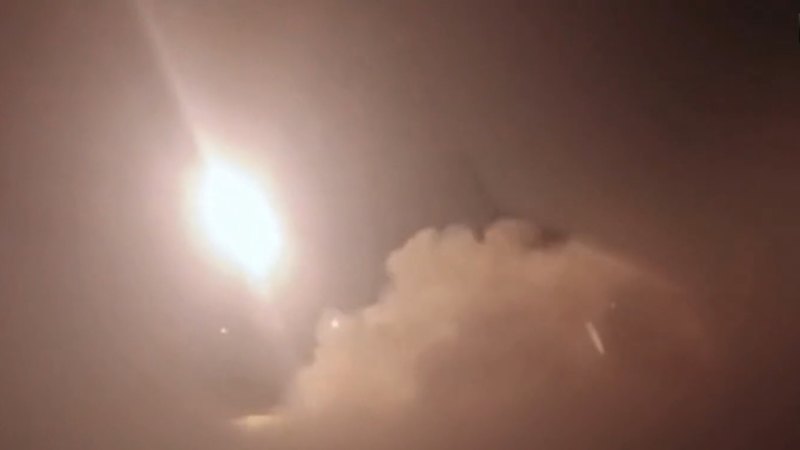
The fragile peace didn't even last a month. When an Iranian ballistic missile and drone salvo slammed into the Muwaffaq Salti Air Base in northeastern Jordan, it did more than shatter the temporary ceasefire between Washington and Tehran. It changed the entire calculus of this war. For months, politicians talked about containing the regional spillover. That illusion is officially dead.
Two US troops are dead. One remains missing in action. Four others had to be rushed to Jordanian hospitals after the July 17 attack. While the Pentagon spent weeks describing the conflict through sanitized press releases about intercepted drones and infrastructure damage, this direct hit brings the human cost straight to the forefront. It marks the first time serving American personnel have been killed by direct Iranian fire since the initial days of the war that broke out back in February.
If you think this is just another minor skirmish in a distant desert, you're missing the bigger picture. The situation has shifted from a low-intensity gray-zone conflict into a direct, high-stakes confrontation. The diplomatic options are vanishing. Both sides are digging in for a long, painful fight.
The Sudden Collapse of a Fragile Ceasefire
The diplomatic breakdown happened fast. Just weeks ago, there was a tentative memorandum of understanding signed in June. It was supposed to create a path toward a permanent ceasefire. Instead, the agreement fell apart completely, and the blame game started immediately.
Iran's Supreme Leader, Mojtaba Khamenei, broke his silence via state television to declare President Donald Trump's signature "worthless and invalid." Tehran claimed Washington violated the agreement first, prompting them to suspend all commitments. Trump fired back during a radio interview, stating the interim deal was merely a "test" to see if Tehran was actually willing to negotiate. It clearly wasn't. Following the breakdown, the White House announced it was reinstating the total Iranian blockade, with Trump boldly declaring the United States as the "Guardian of the Hormuz Strait."
The retaliation was swift and severe. The Iranian strike on the base near Azraq wasn't an isolated event. It was part of a coordinated, multi-front salvo executed by the Islamic Revolutionary Guard Corps. Munitions didn't just rain down on Jordan. They simultaneously targeted a US fuel pier at Kuwait’s al-Ahmadi port and the Sheikh Isa Air Base in Bahrain. Air raid sirens screamed across the Gulf, forcing nations like Kuwait to briefly shut down their airspace and scramble commercial flight schedules.
Jordanian air defense systems tried to manage the onslaught. They reportedly knocked down ten incoming missiles, but the defensive screen failed to catch everything. At least one heavy munition breached the perimeter at Muwaffaq Salti, turning a routine deployment into a lethal combat zone.
What Centcom's Numbers Tell Us About the War
We need to look at the numbers to understand how we got here. The two deaths in Jordan bring the total US military death toll to 16 since hostilities kicked off on February 28. Over 430 American service members have been wounded.
The conflict has been expanding steadily, even when the headlines paid little attention. The war began brutally when an Iranian drone hit a civilian port facility in Kuwait, killing six American soldiers from an Iowa-based supply unit who were working in an unprotected shipping container. Days later, another soldier died from injuries sustained during an attack on Saudi Arabia’s Prince Sultan Air Base. In March, six more personnel died when a KC-135 refueling tanker crashed in Iraq during an unspecified mid-air incident. Just weeks ago, a Navy helicopter pilot died following a crash in the Arabian Sea.
US Military Fatalities Since Feb 28
- Kuwait Port Strike: 6 personnel
- Prince Sultan Air Base Strike: 1 personnel
- KC-135 Tanker Crash (Iraq): 6 personnel
- Arabian Sea Helicopter Crash: 1 personnel
- Jordan Base Attack: 2 personnel (1 missing)
Total Fatalities: 16
The US military has answered these losses with overwhelming firepower. US Central Command launched its eighth consecutive night of retaliatory airstrikes using a combination of carrier-based fighter jets, surface warships, and long-range attack drones. The Pentagon claims these missions specifically target surveillance nodes, logistics networks, underground weapons caches, and maritime launch capabilities inside Iran. Yet, the continuous bombardment hasn't stopped the IRGC from launching fresh salvos. It raises a serious question about whether deterrence is working at all.
The Economic Stranglehold at the Strait of Hormuz
This isn't just a military crisis. It's a massive economic threat that could hit your wallet next time you fill up your gas tank. The conflict is increasingly centering on the Strait of Hormuz. That narrow channel of water handles roughly 20% of the world's total oil supply. Traffic through the waterway has slowed to a crawl. Insurance rates for commercial shipping lines have skyrocketed, and global energy markets are responding with high volatility.
The tactics have turned messy. The IRGC claimed that two oil tankers operating under the direction of American intelligence agencies exploded after striking sea mines in the strait. The US military flatly denied the claim, calling it blatant disinformation. However, Iran has successfully used its naval forces to stop multiple commercial vessels trying to transit the channel. The shipping bottleneck is real, and the economic fallout is spreading far beyond the Middle East.
The geographical reach of the latest strikes demonstrates how vulnerable regional infrastructure truly is. Kuwaiti authorities reported significant damage to vital oil, power, and water facilities after drone strikes sparked massive fires. The Gulf Cooperation Council explicitly accused Iran of committing war crimes by deliberately targeting civilian utilities. Desert nations rely heavily on large-scale infrastructure to survive. A sustained campaign against these facilities threatens the basic living conditions of millions of civilians.
Inside Iran, the damage is equally severe. US airstrikes hit critical infrastructure throughout the southern Hormozgan province. The official Iranian news agency confirmed the complete destruction of the Bonji desalination plant, cutting off drinking water for roughly 10,000 residents. Another major water facility on Qeshm Island suffered heavy damage. For the first time, Iran's Energy Ministry publicly acknowledged the crisis, begging citizens in southern provinces to slash their electricity usage as extreme summer heat gripped the region. US munitions also destroyed multiple bridges and highway tunnels leading to Bandar Abbas, effectively choking off Iran's primary commercial port.
How Washington and Tehran Failed to Prevent Escalation
The strategic miscalculations on both sides are glaring. Washington believed that economic sanctions combined with precision airstrikes would force Iran back to the negotiating table. That approach underestimated Tehran's willingness to absorb economic pain and strike back through its regional proxies. Conversely, Iran believed its asymmetric capabilities and threats to global oil supplies would force the US to back down. Instead, the death of American service members has locked the White House into a position where backing off is politically impossible.
The regional dynamics are complicating matters further. Countries hosting American installations find themselves trapped in the crosshairs. The IRGC issued a direct warning on state television, telling neighboring countries that host US forces to prepare for immediate retaliatory strikes. Iraq reported intercepting attack drones over Erbil, while air raid sirens have become a regular occurrence in parts of Saudi Arabia. The diplomatic insulation that once protected these neutral states is wearing incredibly thin.
The rhetoric coming from military leaders suggests the worst is yet to come. Major General Mohsen Rezaee, a senior adviser to Iran's Supreme Leader, warned that Tehran would transition to full-scale offensive operations if the US strikes continue. Meanwhile, US Defense Secretary Pete Hegseth made America's stance clear, stating the sacrifice of the fallen troops only stiffens US resolve. The political rhetoric has created an escalatory loop that neither side knows how to exit.
Real Steps to Navigate the Growing Crisis
The escalation alters security protocols across the globe. If you have operations, supply chains, or personnel tied to the Middle East, passive monitoring won't cut it anymore.
First, businesses must immediately reroute maritime freight away from the Strait of Hormuz. Relying on standard transit routes through the Gulf is currently an unacceptable risk. Utilize alternative overland corridors across Saudi Arabia or opt for longer, safer maritime paths around the Cape of Good Hope despite the increased transit times.
Second, multinational organizations must update their corporate emergency evacuation plans for personnel stationed in Kuwait, Bahrain, and Jordan. The shift toward targeting base infrastructure means civilian airfields and nearby logistics hubs face real threat profiles. Ensure communication redundancies are active and separate from standard local cellular networks.
Finally, energy-dependent sectors need to hedge against prolonged oil price spikes. The targeting of desalination plants and power grids ensures that regional energy production will face domestic diversions. Secure long-term supply contracts now to protect against the inevitable market volatility that follows a hot war in the world's most critical energy corridor.