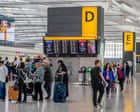
Geopolitics just caught up with Europe’s busiest aviation hub. If you thought global air travel was on an unstoppable upward trajectory after the pandemic years, Heathrow’s latest investor report is a sharp reality check.
The airport just slashed its passenger and profit forecasts for 2026, pointing squarely at the ongoing conflict involving Iran. It turns out that when critical airspace closes and fuel costs tick upward, even an airport located thousands of miles away feels the financial shrapnel.
Heathrow expects total passenger numbers to drop by 1.1% this year, dragging the full-year total down to 83.6 million from last year's record of 84.5 million. That might sound like a minor dip on paper. In reality, it represents hundreds of thousands of canceled or avoided trips. The profit hit is worse. Adjusted earnings are now projected to plummet by £147 million year-on-year, landing at £1.88 billion instead of the comfy £2.03 billion banked in 2025.
The Domino Effect of Closed Airspace
Why does a war in the Middle East slice millions of pounds from a London airport? It comes down to geography and network connectivity.
When the conflict kicked off at the end of February, Gulf airports that usually handle a third of all traffic between Europe and Asia were essentially knocked out of action for weeks. Airlines had to radically reroute flights. Flying around Iranian airspace adds hours to journeys, burns significantly more jet fuel, and spikes operating expenses.
Heathrow confirmed that its Middle East routes saw a massive 25% plunge in passenger volumes. Travelers are opting out of regional flights, and airlines are adjusting schedules to avoid high-risk zones. While an interim peace deal signed by Iran and the US last week offers a glimmer of hope, the damage to the crucial summer peak season is already done. Vacationers and corporate travelers are simply shifting where they spend their money.
A Strange Surge in Connecting Traffic
The numbers reveal an interesting paradox. Heathrow actually started 2026 on a high note, with passenger volumes up 0.7% to 32.8 million through the end of May.
How do we square that growth with a downgraded forecast? It is all about the type of traveler passing through the terminals. Heathrow saw an influx of connecting passengers who used the London hub to bypass alternative international airports that were more exposed to the Middle Eastern airspace disruptions. Airlines also deployed larger aircraft to maximize efficiency.
But that connecting traffic is a double-edged sword. Connecting passengers do not generate the same level of retail and parking revenue as those starting or ending their journeys in London. They grab a quick coffee, change gates, and leave. Since April and May numbers have lagged behind last year's levels, management is prepping for a much weaker second half of the year.
Rising Internal Costs and Lower Aeronautical Revenue
The revenue side is taking a beating. Heathrow expects aeronautical revenue—the fees it charges airlines to land and use the facilities—to be £49 million lower than previous estimates due to the sluggish traffic outlook.
At the exact same time, running the airport is getting pricier. Employment expenses are climbing, and business rates have increased, creating a classic margin squeeze. Heathrow is spending more to operate while taking in less from the carriers.
The airport’s balance sheet remains stable enough to weather the storm, with liquidity covering the next 18 to 24 months, but the equity market reacted instantly. Shares in International Consolidated Airlines Group (IAG), the parent company of British Airways, dropped following Heathrow's announcement. If the hub struggles, its primary tenants suffer too.
The Third Runway Problem Gets Muddy
This financial downturn hits right when Heathrow is locked in tense debates with the Civil Aviation Authority (CAA) over its controversial third runway.
The timing could not be worse. The airport has been trying to pass early expansion costs onto consumers via higher gate fees. But a newly surfaced Department for Transport (DfT) report just gutted the economic argument for expansion. The government's fresh analysis indicates the third runway would only boost UK GDP by a tiny 0.05%. That is a staggering 90% lower than the original 0.5% projection.
Add in environmental and health assessments warning that the construction and added noise could negatively impact the well-being of up to 3 million local residents, and the project looks incredibly fragile. Heathrow’s leadership claims the government's model is deeply flawed and ignores £150 billion a year in potential trade benefits, but a weaker profit outlook makes funding a massive private infrastructure project a much harder sell to investors.
Navigating Flight Disruptions and High Fares
If you are a traveler or an industry observer, do not expect ticket prices to drop to lure you back. Airlines are paying premium prices for jet fuel and dealing with extended flight times, meaning high airfares are here to stay through the summer.
If you are currently booking international travel, take these specific steps to insulate your plans from the ongoing network volatility:
- Look at secondary European hubs: Since Heathrow is experiencing shifting flight schedules and handling higher volumes of connecting traffic, look at direct flights out of secondary UK or European airports to avoid bottleneck delays.
- Audit your travel insurance: Ensure your policy specifically covers airline schedule changes and airspace closures related to geopolitical events, as standard cancellation clauses often exclude acts of war.
- Book Western routes early: With traffic shifting away from the Middle East, demand for North Atlantic and Asia-Pacific routes that avoid the conflict zone remains incredibly intense, keeping load factors high and seat availability low.