A U.S.-brokered ceasefire is supposed to mean silence. Instead, in southern Lebanon, it sounds like the whistle of an incoming missile and the shattering of an ambulance windshield.
The latest data from the Lebanese Health Ministry tells a grim story. Ten people were killed in a 24-hour window across southern Lebanon. Among the dead were six paramedics and a young Syrian girl. These aren't just numbers on a ledger. They represent the systematic erosion of a rule we used to take for granted: you don't shoot at the people wearing yellow vests or driving vehicles with flashing lights.
If you think this is just another blip in a distant conflict, you're missing the bigger picture. The ongoing violence despite a formal truce shows how fragile international agreements have become. More importantly, it highlights a terrifying shift in modern warfare where first responders find themselves directly in the crosshairs.
The Anatomy of the Attacks
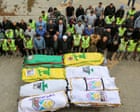
The violence struck multiple locations in quick succession, proving that these weren't isolated mishaps. The first blow landed in the village of Hanouiyeh. An airstrike targeted a position belonging to the Islamic Health Association, killing four paramedics on the spot and wounding two others.
Hours later, a second strike tore through Deir Qanoun al-Nahr, a coastal town in the Tyre province. That attack claimed six lives, including a Syrian child and two rescuers from the Al-Rissala Scouts Association, an emergency group linked to the Amal movement.
The Lebanese Health Ministry released a video capturing the raw horror of the Deir Qanoun al-Nahr strike. In the footage, two men wearing bright yellow vests stand by the roadside, trying to help an injured person. As an ambulance pulls up to assist them, a sudden flash blinds the camera, followed by a deafening boom. When the smoke clears, the rescuers are lying motionless on the asphalt. Journalists verified the footage by matching the surrounding buildings and road layout with archival imagery. The horror was real, documented, and entirely unavoidable.
The Defense vs. The Reality on the Ground
The Israeli military has a standard response for these incidents. They claim they are targeting Hezbollah infrastructure and fighters, not civilians. In the case of Hanouiyeh, officials stated they hit a spot where militants were actively operating. In Deir Qanoun al-Nahr, the military reported tracking and striking two Hezbollah members riding a motorcycle. They maintain that they take extensive steps to minimize civilian casualties, including issuing evacuation notices.
But there is a massive disconnect between military jargon and what's actually happening to the medical infrastructure. Consider these numbers provided by the World Health Organization and local officials:
- 169 confirmed attacks on healthcare workers and facilities in Lebanon since this phase of the war began on March 2.
- 123 medics killed while attempting to do their jobs.
- 16 hospitals damaged or completely knocked out of service, leaving entire districts without emergency care.
Just a day before these fatal drone strikes, an attack hit right next to the Tebnine Hospital. The blast ripped through all three floors of the building. It shattered the emergency room, tore up the intensive care unit, wrecked the surgical ward, and incinerated the ambulances parked outside.
When you look at the sheer scale of the destruction, the "collateral damage" defense starts to wear incredibly thin. International humanitarian law explicitly protects frontline responders and medical facilities. When those protections fail, the entire system of wartime rules collapses.
Why the Ceasefire Isn't Holding
You might wonder why bombs are still falling if a ceasefire is active. The current conflict reignited on March 2, triggered by a complex web of regional escalations involving Israel, the United States, and Iran. While a U.S.-mediated truce was put on paper, the enforcement mechanisms are practically nonexistent.
Both sides blame each other for constant violations. Israel continues to launch what it calls preemptive strikes against Hezbollah infrastructure, while militant groups keep targeting troops near the border. The violence isn't even contained to the south anymore. Late-night airstrikes hit the eastern mountainous area of Brital near the Syrian border—a region that hadn't seen a single bomb since the truce was signed.
Compounding the chaos is a political crisis inside Beirut. The U.S. Treasury Department recently dropped a hammer of sanctions on Hezbollah-aligned Lebanese legislators and state security officials, accusing them of using state institutions to block disarmament. The Lebanese army quickly issued statements insisting its officers remain loyal only to the state, but the political foundation is crumbling beneath them.
What Needs to Happen Next
The weaponization of medical access isn't a problem that cures itself. If international observers and global powers continue to look the other way, the precedent becomes permanent.
- Demand Independent Verification: Human rights organizations must push for immediate, neutral investigations into the video evidence and data provided by the WHO. Military forces cannot be the sole judges of their own conduct when hospitals are ruined.
- Enforce Real Penalties for Truce Violations: A ceasefire without consequences for violations is just a piece of paper. International bodies need to tie diplomatic and financial leverage directly to the safety of humanitarian corridors.
- Protect the Protectors: Emergency response units in southern Lebanon need secure, monitored channels to operate without fear of being tracked by drones. If paramedics cannot move, the civilian survival rate drops to zero.
The situation in Lebanon is a warning sign for global conflict. When ambulances become targets and ceasefires offer no protection, the concept of humanitarian law loses all meaning. It's time to stop treating these strikes as routine news updates and start treating them as the systemic failures they truly are.