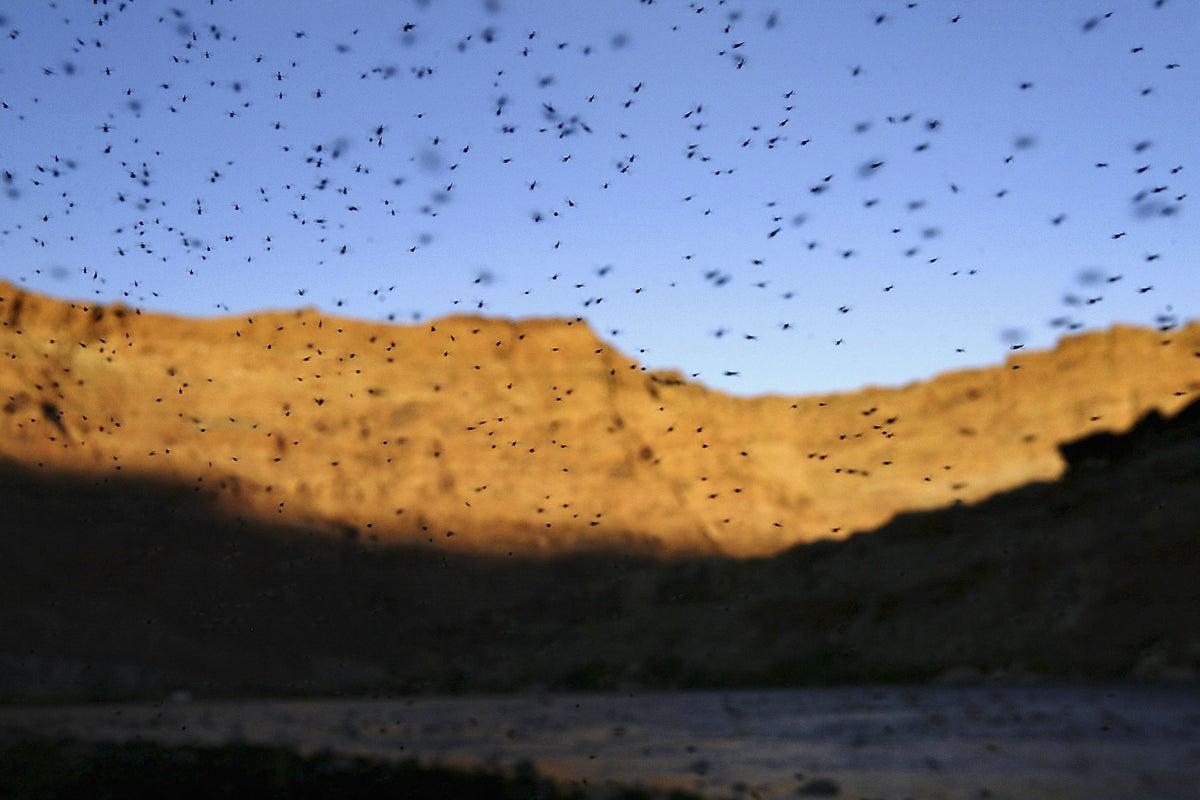
The air in the high desert of the American Southwest has a specific weight to it. It smells of baked sage, ancient stone, and a dryness so profound it catches in the back of your throat. For most, this is the scent of freedom, of open roads and wide horizons. But for those who track the microscopic shifts in our ecosystem, that dry air carries a ghost.
A few decades ago, a young man in the Four Corners region—an athlete in peak physical condition—collapsed. He couldn't breathe. Within hours, he was gone. It wasn't a heart attack. It wasn't a known flu. It was something pulled from the very dirt he walked on, a pathogen hidden in the lungs of deer mice, waiting for a seasonal shift to find its way into a human host. We call it Hantavirus.
When news cycles pick up the scent of a "viral outbreak," the collective pulse of the world quickens. We have been conditioned by recent history to expect the worst—to see every localized infection as the first domino in a global collapse. So, when reports surfaced recently of hantavirus activity, the familiar shiver of dread returned. But to understand the truth of this virus, we have to look past the headlines and into the quiet, dusty corners where it actually lives.
The Biology of a Bottleneck
Hantavirus is a specialist. Unlike the viruses that jump from person to person through a cough in a crowded elevator or a shared surface in a subway station, hantavirus is remarkably bad at being a social climber. It doesn't want us. It wants rodents.
It lives in the saliva, urine, and droppings of specific mice and rats. When those droppings dry out and are disturbed—perhaps by a broom sweeping out a long-closed summer cabin or a hiker setting up camp in an old barn—the virus becomes airborne. You breathe in the dust. You breathe in the virus.
The World Health Organization (WHO) recently addressed the ripples of concern regarding a potential larger outbreak. The Director-General’s message was clear, though delivered with the measured caution of a scientist: there is no sign of a broader threat to the public.
Why? Because the virus is trapped by its own biology.
[Image of hantavirus structure]
In the vast majority of cases, hantavirus is a dead-end street. It enters a human host, causes devastating respiratory or hemorrhagic symptoms, and then... it stops. It lacks the molecular "key" to unlock the door between one human and the next. While a rare strain in South America has shown limited person-to-person transmission, the versions we typically see in North America and Eurasia are solitary predators. They strike once and vanish.
The Rains and the Rodents
If the virus doesn't spread between people, why do we see "outbreaks" at all? The answer lies in the sky.
Consider the "Sin Nombre" strain. Its prevalence is dictated by the El Niño Southern Oscillation. When heavy rains hit the desert, the vegetation explodes. More seeds mean more food. More food means a population boom for the deer mouse. Suddenly, the statistical probability of a human crossing paths with an infected rodent's nest skyrockets.
It is a tragedy of ecology, not a failure of public health.
We often think of diseases as malicious entities with a plan. They aren't. They are opportunistic shadows. The "outbreak" isn't a wildfire jumping from house to house; it's more like a series of individual lightning strikes hitting the same forest during a particularly dry summer. Each strike is independent, even if they happen at the same time.
The Weight of the 38 Percent
To say there is "no sign of a larger outbreak" is a relief for the global economy and the travel industry, but it offers cold comfort to the individual. This is where the dry facts of a WHO briefing meet the jagged reality of human life.
Hantavirus Pulmonary Syndrome (HPS) carries a mortality rate of roughly 38 percent.
Think about that number. It is nearly four out of ten. If you were standing in a room with ten people and told four of them they wouldn't see the end of the month, the air would leave the room. This is why the fear persists. The stakes are localized but absolute.
The symptoms begin with a deceptive simplicity. A fever. A dull ache in the thighs and lower back. Fatigue that feels like you’ve just worked a double shift. It looks like the flu. It feels like a common cold. But then comes the "leak." The virus causes the capillaries in the lungs to become permeable, flooding the air sacs with fluid. You aren't just sick; you are drowning from the inside out.
Modern medicine can intervene, but only if the clock is on our side. Oxygen therapy and intensive care can bridge the gap while the body fights back. But there is no "cure" in a vial. There is only the support we can give to the patient as they navigate the storm.
The Myth of the Modern Plague
The reason the WHO chief has to stand before a microphone and de-escalate the narrative is that we are currently living in an era of "Pathogen Paranoia." We have forgotten how to distinguish between a localized ecological event and a systemic global threat.
When we hear "virus," we think "pandemic."
But Hantavirus reminds us that nature has many different ways of interacting with us. Some viruses are like a thick fog that blankets an entire continent. Others are like a trapdoor in a dark room. Hantavirus is the trapdoor. It is avoidable. It is manageable. But it is not a global tsunami.
The data gathered by global health monitors suggests that the recent clusters are well within the expected fluctuations of seasonal rodent cycles. There is no mutation. There is no mysterious shift in how the virus behaves. The world is not ending; the mice are simply having a busy season.
Living With the Shadow
So, how do we coexist with a shadow that lives in the dust?
Awareness is the only real shield. We talk about "eradicating" diseases, but you cannot eradicate a virus that lives in the wild animal population without destroying the ecosystem itself. We cannot kill every mouse in the world. Instead, we change how we move through their world.
We learn to air out the cabin before we enter. We use wet mops instead of brooms to keep the dust—and the virus—grounded. We wear masks when we clean the attic. We stop treating the natural world as a sterile playground and start respecting it as a complex, sometimes dangerous, neighbor.
The fear of a "larger outbreak" is often a fear of the unknown. By shining a light on the specific, limited nature of Hantavirus, we strip it of its mythological power. It is a terrifying, lethal, and tragic illness for those it touches. It is a reminder of our vulnerability. But it is not a shadow that will darken every door.
The wind continues to blow across the high desert, carrying the scent of sage and the fine, invisible powder of the earth. The mice go about their business in the dark, and the scientists keep their eyes on the data. The boundary between us and them remains thin, but for now, it is holding.
Reality is rarely as cinematic as a disaster movie. It is usually much quieter. It is a lab technician looking at a slide, a doctor checking a pulse, and a global health official telling a worried world to take a deep breath.
The air is clear. The dust has settled. We are still here.