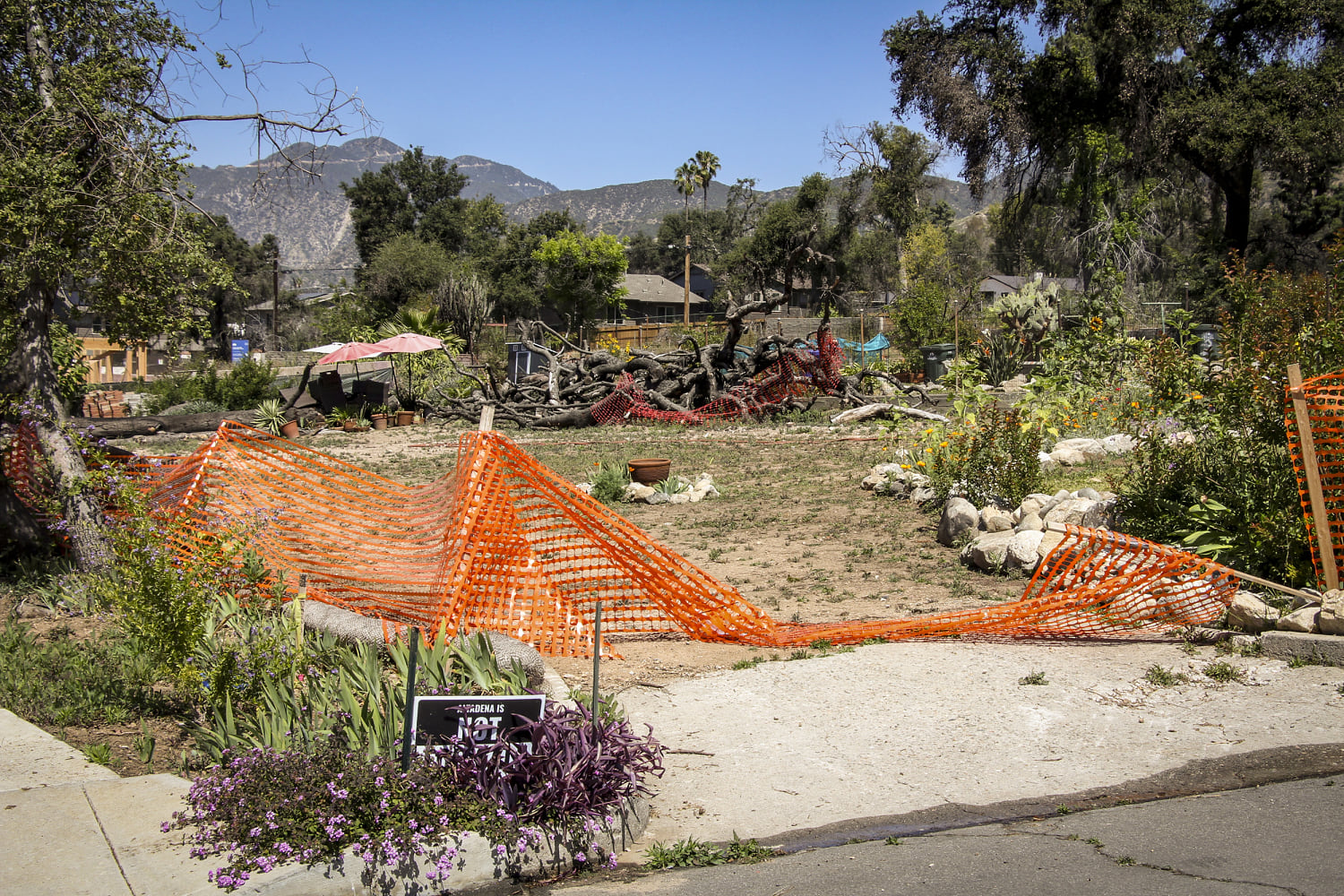
The smoke has cleared from the ridgelines of the Santa Monica and San Gabriel mountains, but the real danger to Southern California is just beginning. While news cameras focus on the charred skeletons of luxury homes and the heroic efforts of brush-clearing crews, a more insidious crisis is settling into the lungs and floorboards of millions of residents. The ash left behind by modern urban wildfires is not the organic wood soot of the past. It is a concentrated cocktail of industrial chemicals, pulverized heavy metals, and synthetic polymers that creates a long-term public health disaster far more complex than a simple fire.
When a residential neighborhood burns, we aren't just looking at burning trees. We are witnessing the incineration of the modern American lifestyle. Every refrigerator, every PVC pipe, every lithium-ion battery, and every square inch of chemically treated drywall transforms into a fine, toxic particulate matter. This isn't just an environmental tragedy. It is a massive failure of urban planning and public health communication that leaves families living in a chemical fallout zone without a roadmap for recovery.
The Chemistry of a Modern House Fire
To understand why the aftermath of an L.A. fire is so dangerous, you have to look at what exactly is being vaporized. Wildfires in the Wildland-Urban Interface (WUI) consume materials that were never meant to be burned. In a typical forest fire, the primary byproduct is carbon. In a Southern California brush fire that leaps into a gated community, the byproduct is a nightmare of inorganic toxins.
PVC piping releases hydrogen chloride gas and dioxins when burned. Modern furniture, packed with flame retardants (ironically), breaks down into polybrominated diphenyl ethers (PBDEs). Lead-based paint in older homes and chromium from metal fixtures are pulverized into dust particles small enough to bypass the human body’s natural filtration systems. These particles, categorized as PM2.5, are so tiny they enter the bloodstream directly through the lungs.
The health implications are not theoretical. We see immediate spikes in respiratory distress, but the chronic effects—heavy metal poisoning, neurological issues, and increased cancer risks—take years to manifest. The state’s current response focuses on "clearing debris," but you cannot shovel a microscopic chemical layer off a three-county area.
The Remediation Myth and the Dust in Your Vents
There is a dangerous misconception that once the "All Clear" is given, a good vacuuming and a window fan will fix the problem. This is a fallacy that could cost lives. In fact, standard household cleaning often makes the situation worse.
Using a regular vacuum cleaner without a HEPA filter acts like a toxic leaf blower. It sucks up the heavy metal-laden ash from the carpet and sprays it back into the air at eye level, where it remains suspended for hours. Many residents returning to their homes in Malibu or the San Fernando Valley are effectively turning their living rooms into chambers of concentrated pollutants.
Professional remediation is the only viable path, yet it is prohibitively expensive and largely unregulated. We are seeing a "wild west" of cleaning contractors who claim to specialize in fire restoration but lack the equipment to handle hazardous materials. True decontamination requires a microscopic approach.
- Negative pressure environments must be established to prevent dust migration.
- HEPA-vacuuming must be followed by wet-wiping every horizontal and vertical surface.
- HVAC systems must be professionally cleaned, as the cooling coils and ductwork act as reservoirs for toxic ash that will redistribute every time the air conditioner kicks on.
The Regulatory Gap in Air Quality Standards
The South Coast Air Quality Management District (SCAQMD) and the EPA provide real-time air quality maps during a fire, but their utility drops off the moment the flames are out. The problem is that our current monitoring infrastructure is designed to measure outdoor ambient air, not the chemical composition of the dust settling inside your home.
There is no federal "indoor ash" standard. If you find a layer of grey soot on your kitchen counter, there is no government agency that will come test it for arsenic or lead. You are on your own. This lack of oversight creates a massive disparity in health outcomes. Wealthier homeowners hire industrial hygienists to certify their homes as safe. Renters and middle-class families simply wipe down the counters with a damp rag and hope for the best.
This gap in data leads to a false sense of security. We celebrate when the "Air Quality Index" returns to green, ignoring the fact that the soil in our backyards and the dust in our attics now contains concentrations of heavy metals that would trigger a Superfund cleanup if found on an industrial site.
The Soil Contamination Crisis No One Is Discussing
While we obsess over air quality, the ground beneath our feet is changing. The ash that settles on the hillsides doesn't just disappear. The first post-fire rain wash carries this chemical sludge into the groundwater and the ocean. But before that happens, it sits in the gardens and playgrounds of L.A.
Children are the most vulnerable. They play in the dirt. They have a higher respiratory rate relative to their body mass. They are closer to the ground where the heaviest particles settle. When we allow schools and parks to reopen without deep-soil testing in fire-impacted zones, we are conducting a massive, uncontrolled experiment on the next generation of Californians.
Historical data from the 2018 Camp Fire and the 2017 Tubbs Fire showed elevated levels of antimony, cadmium, and lead in the ash. Los Angeles, with its higher density of older structures and industrial pockets, likely faces an even more complex chemical profile. Yet, there is no mandate for soil remediation in residential zones following a fire. We treat it as a cosmetic issue rather than a toxicological one.
Insurance Companies and the Fight for Clean Air
The battle for a healthy home after a fire is increasingly being fought in the claims department. Insurance companies are notorious for covering "fire damage" while balking at the cost of "smoke and ash remediation." They will pay to replace a charred wall, but they will fight a $15,000 bill for professional deep-cleaning of an entire home’s interior.
This creates a perverse incentive for homeowners to ignore the invisible threats. If the insurance company won't pay for it, most people won't do it. We need a fundamental shift in how insurance policies define "habitability." A home is not habitable if the air inside it contains levels of pulverized particulates that exceed industrial safety limits.
The burden of proof currently rests on the homeowner. You have to prove your house is toxic. It should be the other way around. In a declared fire disaster zone, the presumption should be that every structure within a certain radius of the burn path has been contaminated until an independent lab certifies otherwise.
The Failure of Urban Planning in the WUI
We have to stop treating these fires as "natural" disasters. They are the predictable result of building flammable suburban sprawls in regions designed by nature to burn every twenty years. By continuing to permit high-density housing in the Wildland-Urban Interface, we are essentially building "fuel packages" for future toxic events.
Every time we rebuild, we use the same materials that created the toxic plume in the first place. We are stuck in a cycle of burn, pollute, and rebuild. If we were serious about the toxic aftermath of these fires, we would mandate the use of non-combustible building materials—not just for the sake of the house, but for the sake of the air quality of the entire basin.
Instead, we see a rush to return to "normalcy." But normalcy is exactly what is killing us. The "toxic aftermath" isn't a temporary state; it's the new baseline for Southern California life.
Immediate Steps for the Exposed
If you are currently living in a fire-impacted area, do not wait for a government handout or an insurance check that may never come. Your immediate priority is the mechanical removal of particulates from your personal environment.
- Upgrade to MERV-13 or HEPA filters in your home's HVAC system immediately. Change them every two weeks for the first two months after a fire.
- Dispose of any unsealed food or medications that were in the home during the smoke event. Plastic packaging is permeable to many of the gasses released in a house fire.
- Wipe, don't sweep. Use microfiber cloths and mop heads that can be laundered or disposed of. Moving a broom across a dusty floor simply re-suspends the toxins you are trying to remove.
- Test your soil. If you have a vegetable garden or a play area, spend the $100 to send a soil sample to a private lab to check for heavy metals. It is the only way to know if your backyard is a hazard.
The reality of living in Los Angeles in the 21st century is that the fire season never truly ends. The flames are just the visible phase of a much longer, much deadlier chemical event. We can no longer afford to be surprised by the soot on our windowsills. It is a warning written in ash, and it is time we started reading it.