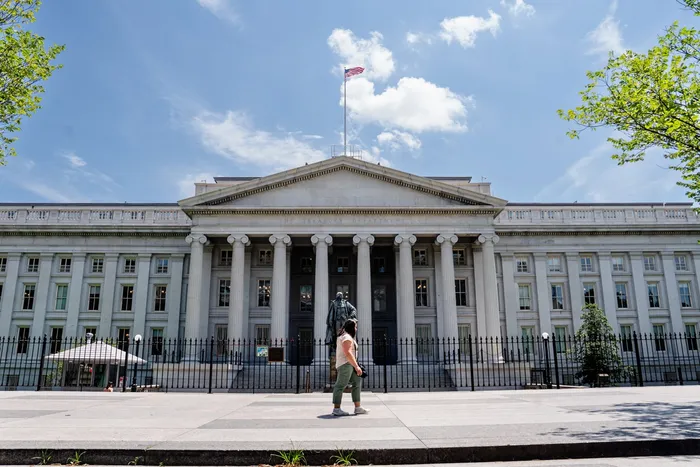
The U.S. Treasury Department just issued an urgent alert to the American banking sector, warning that the Iranian Revolutionary Guard Corps (IRGC) is aggressively exploiting "shadow banking" networks to move billions of dollars through the global financial system. According to the Financial Crimes Enforcement Network (FinCEN), these networks use a complex web of front companies, exchange houses, and third-party intermediaries to mask the origin of oil revenues and procure sensitive technology.
This is not a theoretical threat. In 2024 alone, FinCEN identified approximately $9 billion in financial activity linked to these Iranian shadow operations. The alert signals a significant escalation in the "Economic Fury" campaign, a maximum-pressure strategy aimed at severing Tehran’s access to the U.S. dollar and international markets.
The Mechanics of the Shadow Fleet
To understand how a sanctioned nation moves $9 billion under the nose of global regulators, one must look at the "shadow fleet." This is a collection of aging, poorly maintained oil tankers that operate outside standard maritime regulations. These vessels often disable their transponders or engage in ship-to-ship transfers in the middle of the ocean to hide the Iranian origin of their cargo.
Once the oil is sold—frequently to buyers in China—the payment process begins its journey through the shadow banking system. Because oil is typically settled in Chinese yuan, Iran relies on foreign currency exchange houses to convert these funds into more usable currencies. These exchange houses operate as the central nervous system of the operation, controlling a sprawling network of front companies in jurisdictions with weak oversight.
The Front Company Shell Game
The IRGC doesn't just open a bank account in Tehran and try to wire money to New York. Instead, they use facilitators like Opal Exchange or Radin Exchange to establish shell companies in third-country jurisdictions. These shells exist only on paper. They have no employees, no physical offices, and no legitimate commercial purpose other than to hold bank accounts.
By using foreign citizenship documentation—often obtained through illicit means or specialized facilitators—the IRGC’s agents can open accounts at legitimate international banks. To a compliance officer in Dubai or Hong Kong, the transaction looks like a standard payment for "textiles" or "construction equipment" between two private firms. In reality, it is the lifeblood of the Iranian military being laundered into the global economy.
Why Traditional Sanctions are Failing
The sheer scale of the $9 billion identified in 2024 suggests that traditional "whack-a-mole" sanctions are struggling to keep pace. When the U.S. Treasury designates one shell company, the IRGC can spin up three more within forty-eight hours. The infrastructure is designed to be disposable.
Furthermore, the introduction of digital assets has added a new layer of complexity. FinCEN’s latest alert specifically mentions the use of stablecoins. These digital assets provide the liquidity and exchange rate stability of the U.S. dollar without the need for a direct gatekeeper. Iran-based digital asset service providers (DASPs) act as the bridge, allowing the regime to move funds across borders with a speed that traditional wire transfers cannot match.
The Chinese Connection and Secondary Sanctions
A significant portion of the laundered funds—roughly $5 billion—moves from China to the United Arab Emirates before entering the wider system. This corridor is the primary target of the Treasury’s current offensive. Treasury Secretary Scott Bessent recently confirmed that warning letters have been sent to Chinese financial institutions, threatening secondary sanctions if they continue to facilitate these flows.
Secondary sanctions are the ultimate "nuclear option" in financial diplomacy. They essentially tell a foreign bank: "You can do business with Iran, or you can do business with the United States, but you cannot do both." For a major bank in Beijing, losing access to the U.S. dollar clearing system is a catastrophic risk.
Red Flags for US Financial Institutions
The FinCEN alert provides a roadmap for compliance officers to detect these hidden networks. It isn't just about looking for "Iran" on a wire transfer. The red flags are more subtle:
- Unusual Shipping Activity: Payments involving shipping companies with no history in the energy sector or vessels that have recently changed names or flags.
- Nested Digital Assets: Transactions involving unregistered peer-to-peer (P2P) exchangers or "nested" digital asset services that operate within larger platforms.
- Third-Party Intermediaries: Excessive use of exchange houses for what should be routine corporate payments.
- Document Discrepancies: Inconsistent trade documentation where the goods listed do not match the known business profile of the sender or receiver.
The High Stakes of Compliance
For U.S. banks, the message is clear: the era of "willful blindness" regarding middle-market exchange houses is over. The Treasury is no longer just targeting the Iranian state; it is targeting the facilitators who provide the plumbing for the regime’s money.
The IRGC uses these funds not just for domestic governance, but to fuel regional proxies and advance ballistic missile programs. Every dollar that slips through a shell company in the UAE or a stablecoin wallet in Tehran represents a failure of the global financial "firewall." The Treasury's latest move isn't just a warning—it is a demand for a total systemic audit of how the West's financial infrastructure is being rented out to its adversaries.
FinCEN issues alert to stop money laundering by Iranian Revolutionary Guard Corps
This video provides an expert breakdown of the specific warnings issued by the U.S. Treasury regarding Chinese banks and the IRGC's illicit financial flows.