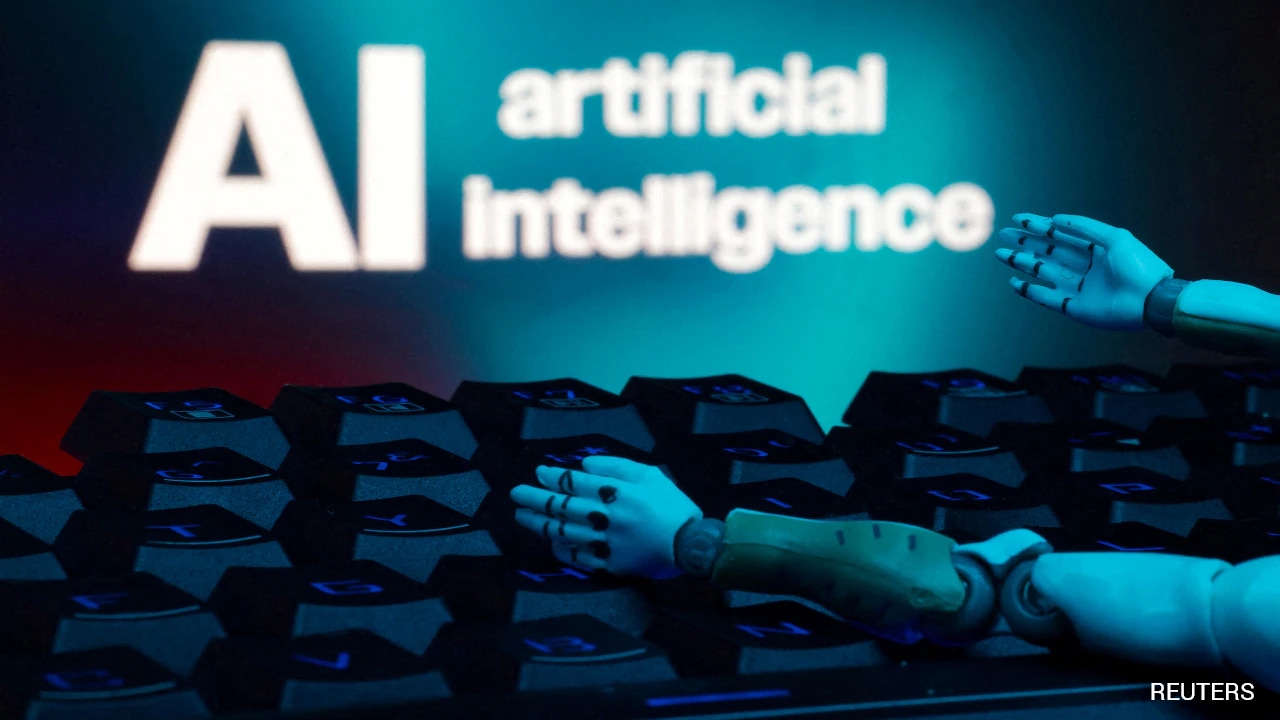
Late evening. The blue glow of a screen cuts across the dark room, reflecting in the eyes of a developer who has spent fourteen hours trying to make an artificial intelligence model understand the nuance of a single sentence. On the desk sits a smartphone, its sleek aluminum frame cool to the touch. It is locked. It is silent. Yet it holds a profound, unspoken advantage over every server farm humming in the distance.
Trust.
We talk endlessly about parameters, neural weights, and inference speeds. We measure progress in gigabytes and tokens. But the real currency of our technological epoch is not compute. It is belief.
Consider Sarah, a fictional graphic designer who represents millions of professionals navigating this strange new era. (This scenario, while personalized, mirrors the documented behavior of modern creative workflows.) Sarah does not care about the underlying transformer architecture of the large language model sitting inside her operating system. She cares about whether the machine is going to hallucinate a complete fabrication into her client's financial report. She cares about whether her proprietary sketches are going to be vacuumed up to train a competitor's algorithm.
When technology becomes invisible, trust is the only interface that matters.
For decades, the technology sector operated on a simple contract: faster chips for more money. You bought the upgrade because the clock speed doubled. But somewhere around the arrival of ubiquitous machine learning, that hardware-driven treadmill began to wobble. Consumers stopped upgrading their phones every two years. The incremental gains in camera lenses and screen refresh rates were no longer enough to justify the expense.
Enter the artificial intelligence gold rush. Every corporation rushed to stuff chatbots and predictive engines into every conceivable product. The result was predictable chaos. Features were shipped half-baked. Data privacy policies read like digital hostage negotiations. Users felt less like empowered operators and more like unwitting lab rats in a massive, uncontrolled behavioral experiment.
Except for one company in Cupertino.
Apple approach this era with a characteristic, almost stubborn conservatism. While competitors raced to fling maximalist, cloud-dependent artificial intelligence at everything, Apple waited. They whispered a single word that changed the strategic landscape: privacy.
This is not a defense of corporate benevolence. Corporations are not your friends. Apple is a multi-trillion-dollar enterprise driven by margin protection and shareholder return. But they understood a fundamental psychological truth about human beings that Silicon Valley often forgets: we are biologically wired to fear the unknown, and a black-box algorithm operating on a remote server is the ultimate unknown.
By anchoring their intelligence strategy—branded as Apple Intelligence—to on-device processing and dedicated silicon like the Neural Engine, they engineered a masterclass in risk mitigation. They looked at the consumer anxiety surrounding data harvesting and offered a sanctuary.
Private Cloud Compute.
Think of it as a digital vault with glass walls that you are allowed to inspect. When an AI request requires more heavy lifting than the local chip can handle, the data goes to a dedicated server running custom silicon, processes the request, strips the identifier, and burns the record behind it. Independent security researchers verified the architecture. The code was made auditable.
That is how you manufacture trust at scale.
The market response was immediate, though quiet. It did not manifest as an overnight surge in stock price, but as a stubborn, resilient consumer stickiness. While Android manufacturers scrambled to patch together fragmented AI partnerships with search giants and cloud providers, Apple positioned itself as the custodian of personal context.
Your phone knows your flight time, your mother's birthday, the name of the cafe where you left your umbrella, and the tone of the email you draft when you are stressed. If an artificial intelligence is going to parse that deeply personal ecosystem, you do not want it living in a data center in Ohio. You want it locked inside the physical device resting in your palm.
That distinction is the core of the Apple trust premium.
It is easy to dismiss this as clever marketing, but history suggests otherwise. In the early days of personal computing, operating systems were notoriously insecure. Viruses, spyware, and adware turned the web into a digital badland. Apple survived and thrived by branding the Mac as the safe harbor. Later, during the smartphone boom, they weaponized end-to-end encryption against competitors who relied on ad-tracking revenue models.
They have played this exact hand before. The stakes are simply higher now.
When artificial intelligence transitions from a novelty parlor trick into the operating system of human thought, the company that controls the interface of trust controls the future. If you believe your device is protecting your cognitive labor from exploitation, you stay within the ecosystem. You buy the services. You accept the walled garden.
Yet, there is a dark side to this quiet dominance.
When one company defines the boundaries of safe artificial intelligence, they also define the boundaries of permissible innovation. By prioritizing extreme privacy and localized processing, they risk choking off the wild, messy, open-source experimentation happening in university labs and garage startups. Trust can easily curdle into stagnation. When safety becomes the ultimate corporate virtue, risk-taking goes to die.
We are standing at a peculiar inflection point. The race for artificial intelligence supremacy is no longer about who has the smartest model. It is about who has the permission of the user to enter their life.
The developer back in the dark room closes his laptop. The screen goes black. Outside, the city hums with the invisible frequencies of millions of connected devices, all whispering data back and forth across the ether.
Tomorrow morning, millions of people will wake up, reach for their phones, and hand over their schedules, their thoughts, and their work to invisible algorithms. They will do it without a second thought. Not because the technology is flawless, but because someone managed to convince them that they are safe.
That is the true premium. Everything else is just math.