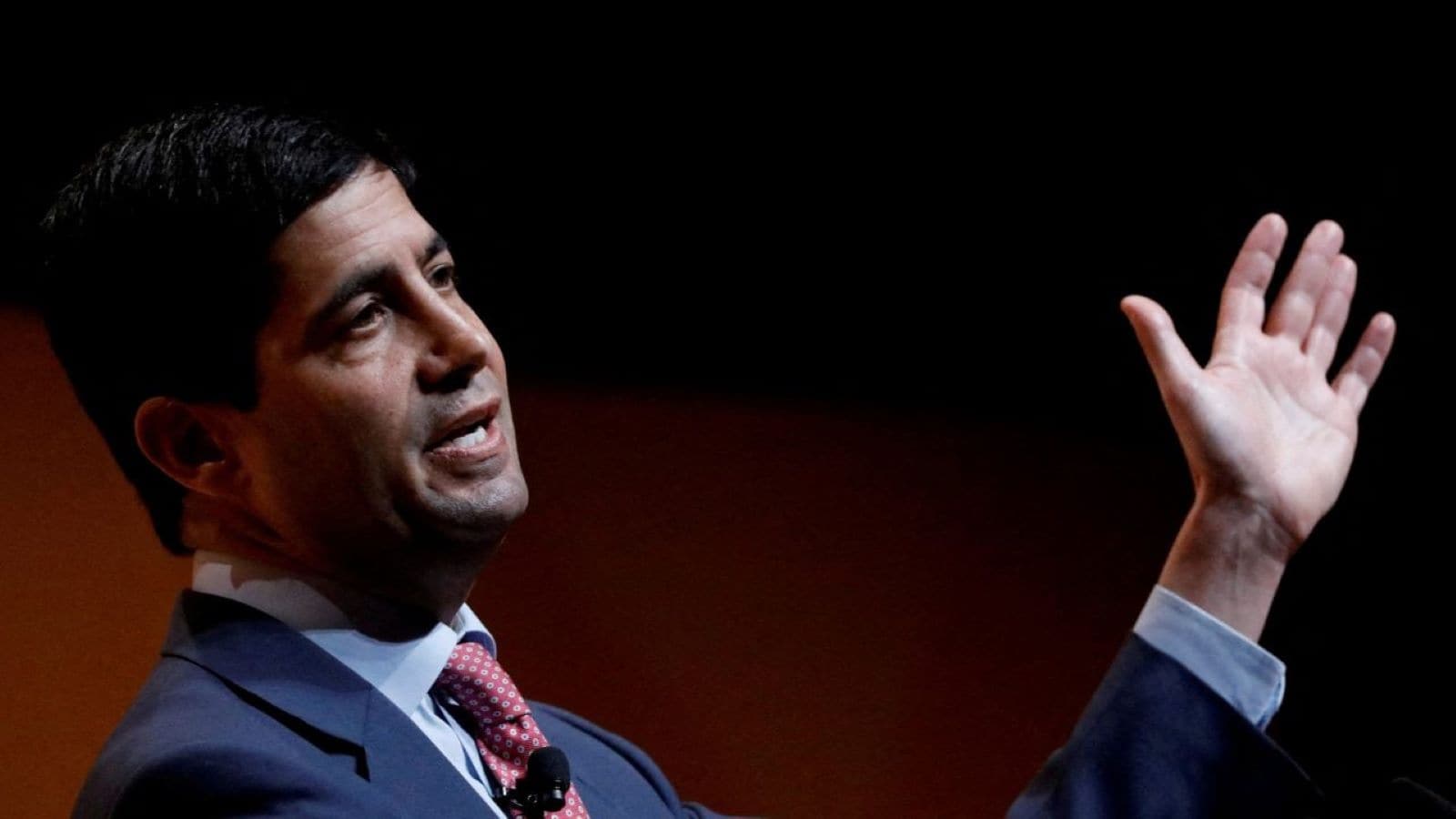
Wall Street hates a vacuum. Right now, Federal Reserve Chair Kevin Warsh is filling that vacuum with total silence, and investors are losing their minds.
As central bankers and economists gather in Wyoming for the annual Jackson Hole symposium, the real tension has nothing to do with mountain air. Everyone wants to know if Warsh has an actual plan to crush stubborn inflation or if his tough talk is just empty noise. Since taking the helm in May, he has refused to spoon-feed the markets. He won't give forward guidance, he won't detail his economic models, and traders are left guessing whether a rate hike is coming in September. If you enjoyed this post, you might want to read: this related article.
If you are trying to position your portfolio right now, this ambiguity is a nightmare.
The Core Conflict Behind Closed Doors
The core problem is that Warsh sits at the center of a massive policy collision. On one side, you have inflation lingering well above the Fed's two percent target. On the other side, long-term Treasury yields are climbing aggressively, with the ten-year yield hovering near 4.65% and the thirty-year pushing past five percent. Borrowing costs are hurting parts of the consumer sector, yet the White House keeps public pressure on the central bank to lower rates. For another angle on this event, see the recent coverage from Forbes.
Treasury Secretary Scott Bessent has already scaled up long-term bond buybacks to pull borrowing costs down. That creates an awkward contradiction. The Treasury wants cheaper debt, but the Fed needs tight financial conditions to finish off inflation.
Warsh has previously criticized the central bank for distorting asset prices by hoarding government bonds during past crises. Yet, his refusal to outline how he plans to balance these forces leaves markets flying blind. Economists note that his approach feels like magic realism. You cannot claim you will beat inflation without telling anyone the mechanism.
What Markets Are Getting Wrong
Most retail investors assume Jackson Hole is where sudden monetary shifts happen. It is not. Historically, the Kansas City Fed's conference is a seminar for academic debates, not an emergency FOMC meeting where interest rate cuts or hikes get announced on the spot.
The mistake is expecting Warsh to drop a definitive roadmap for the autumn meetings. Given his background at the Hoover Institution and his skepticism toward traditional central bank hand-holding, he is far more likely to lean into structural, high-altitude themes. He might talk about worker productivity, financial innovation, or how automation alters employment data.
If he spends his entire keynote talking about abstract economic theory while ignoring immediate market stress, algorithmic traders will punish risk assets. A dovish interpretation of a structural speech could trigger a sharp sell-off. Conversely, a rigid, Volcker-esque defense of price stability might reassure bond vigilantes while crushing consumer-facing equities.
Positioning Your Portfolio Through the Noise
You cannot trade on hope when the central bank chair refuses to drop hints. Smart positioning right now requires accepting that volatility is here to stay through the mid-September FOMC vote.
Ignore the daily headlines shouting about political interference or sudden policy pivots. Instead, watch the short end of the yield curve and actual incoming consumer price data. If Warsh refuses to provide clarity at Jackson Hole, the data will dictate the Fed's hand whether the chairman wants it to or not. Keep cash ready, avoid over-leveraging into long-duration bonds, and prepare for a bumpy ride once the committee actually meets in September.