A federal lawsuit filed by the Public Integrity Project aims to halt "UFC Freedom 250," a professional mixed martial arts event scheduled to take place on the White House South Lawn. While critics and the media focus heavily on the spectacle of cage fights occurring outside the Executive Mansion, the legal challenge exposes a far more complex knot of corporate interests, executive overreach, and the privatization of federal land. The litigation, brought on behalf of two Virginia residents, contends that the event constitutes an unlawful commercial exploitation of public parklands that bypasses environmental reviews and explicit congressional approval.
This conflict is not merely a dispute over an unconventional birthday party or a raucous entry into America’s semiquincentennial celebrations. It is a collision between institutional norms and a highly calculated brand alignment that stretches from the West Wing to the boardrooms of Wall Street.
The Monetization of the Executive Mansion
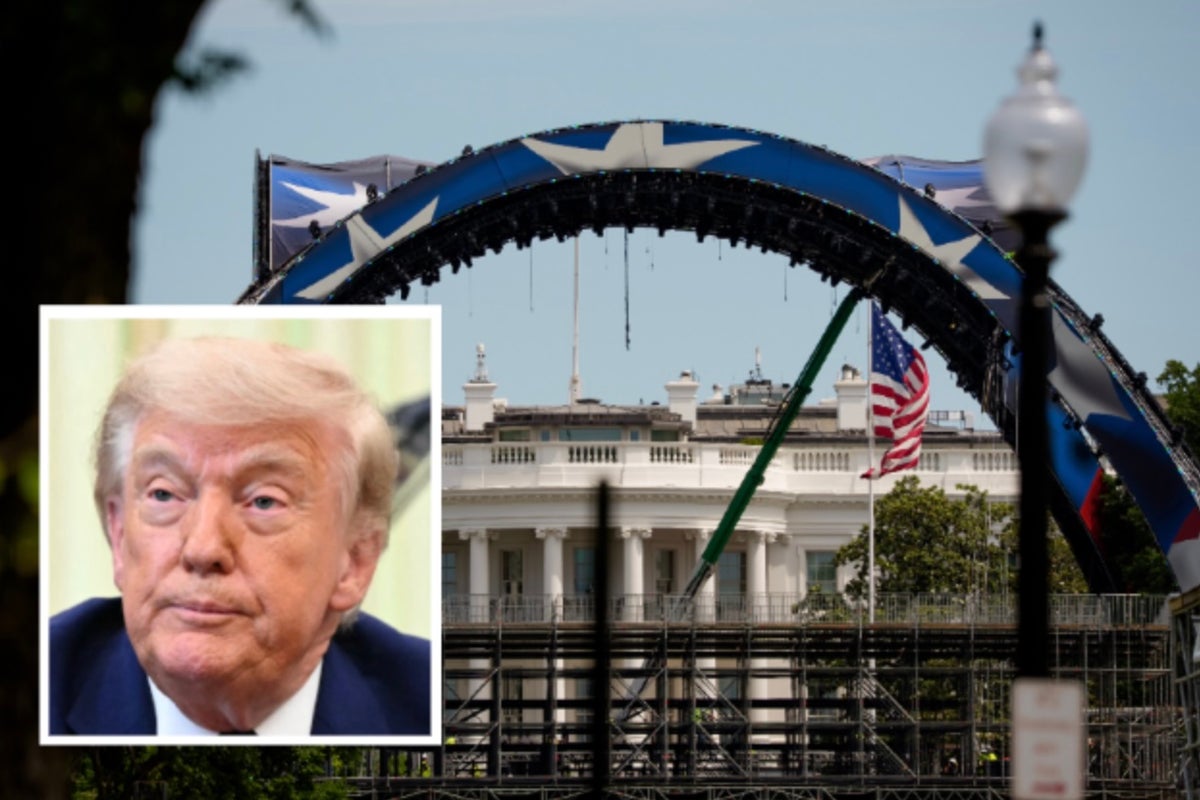
The physical footprint of the event is already reshaping the historic grounds. Crews have spent weeks erecting a massive, 90-foot steel arch structure dubbed "The Claw" alongside a temporary 5,000-seat arena surrounding an octagon cage. President Trump has publicly mused about making the installation permanent, drawing a comparison to the Eiffel Tower.
The financial architecture behind the event reveals why watchdog groups are sounding alarms. The corporate parent of the UFC, TKO Group Holdings, is reportedly spending upwards of $60 million to produce the card, including a projected $700,000 just to restore the South Lawn turf afterward. TKO executives state the event itself will not turn a profit.
The real value lies in the unprecedented promotional equity.
UFC Freedom 250: Key Corporate Entities
+---------------------+-----------------------+-------------------------+
| Entity              | Role                  | Financial Relationship  |
+---------------------+-----------------------+-------------------------+
| TKO Group Holdings  | UFC Parent Company    | $60M+ Production Cost   |
| Paramount SkyDance  | Broadcast Partner     | Exclusive Live Streaming|
| Crypto.com          | Presenting Sponsor    | Global Brand Placement  |
| Ram Trucks          | Presenting Sponsor    | National Ad Campaign    |
+---------------------+-----------------------+-------------------------+
By staging a pay-per-view caliber sporting event on the South Lawn, the administration is granting private corporations exclusive access to the ultimate symbol of American sovereign power. The lawsuit alleges this arrangement directly enriches the president’s allies and corporate entities associated with his portfolio, noting that the broadcast rights belong to Paramount SkyDance, with prominent advertising space sold to global brands like Crypto.com.
The Statutory End-Run Around National Parks
To understand how a cage match can legally be staged outside the Oval Office, one must look at the specific statutory workarounds deployed by the administration. The South Lawn is technically part of the President’s Park, administered by the National Park Service. Under long-standing federal regulations, commercial sporting events are strictly prohibited on these specific parklands.
The administration’s legal defense hinges on framing the event as an official federal commemoration of the nation’s 250th anniversary.
The Public Integrity Project’s filing attacks this exact designation. The lawsuit notes that the event was not planned, organized, or executed through standard federal commemorative channels, but was instead coordinated directly between UFC Chief Executive Dana White and the White House. Plaintiffs argue that the timing of the card—June 14, precisely three weeks before Independence Day but exactly on the president’s 80th birthday—betrays its true purpose.
Legal experts point out that the construction of the massive steel arena lacked both the congressional authorization required for permanent or semi-permanent monuments on federal grounds and the necessary environmental impact reviews. A project of this scale usually requires months of environmental assessments to gauge its impact on historic landscapes and local infrastructure. By utilizing executive declarations to bypass these hurdles, the administration has established a precedent where the commercial use of public landmarks can bypass statutory oversight completely.
The Authoritarian Theatre of Populist Sport
Historically, presidents have used the South Lawn to welcome foreign dignitaries, host state dinners, or honor championship sports teams. Welcoming a team of athletes for a five-minute photo opportunity is fundamentally different from permitting a private media conglomerate to construct a corporate stadium on the grass.
The shift is deliberate.
Combat sports carry a unique currency in modern political rhetoric. By anchoring the nation's milestone anniversary to an event defined by physical dominance and unfiltered outcomes, the administration shifts the narrative of the American experiment away from constitutional systems and toward a raw meritocracy of strength. The imagery of fighters competing beneath a giant American flag with the executive mansion illuminated in the background serves as a potent vehicle for populist messaging.
The White House has dismissed the legal challenge as "baseless and dilatory," arguing that the event is no different from permitted gatherings on the nearby Ellipse. The Ellipse, however, is a designated public forum accustomed to large-scale demonstrations and festivals. The South Lawn is not.
A Gray Area in Public Trust
The defense maintains that because the event is funded entirely by private donors and TKO Group Holdings rather than taxpayer dollars, it represents no burden to the public. They point to the allocation of tickets, which are primarily being distributed to military service members and their families rather than being sold to the general public.
This argument creates a difficult gray area for traditional ethics frameworks. If an event costs the taxpayer nothing directly and provides entertainment to service members, where is the harm?
The harm lies in the valuation of the platform itself. The White House is a non-monetizable asset belonging to the public. When its likeness and physical space are integrated into a corporate broadcast package, the line between public service and private enterprise dissolves. The true cost is not measured in the dollar value of the lawn restoration, but in the erosion of the principle that public property cannot be leveraged for private corporate gain.
The federal court’s decision on whether to grant an injunction before June 14 will do more than decide if a fight night occurs. It will define whether the executive branch possesses the unilateral authority to transform historic public architecture into a commercial soundstage. If the project continues unchallenged, the precedent is set. Future administrations will have an established blueprint to treat national monuments not as shared heritage, but as premium retail real estate.