President Donald Trump announced his intent to meet with North Korean leader Kim Jong Un later this year, dropping an unverified inventory of 57 nuclear warheads into public view during a White House press appearance. This sudden diplomatic pivot follows his directive to curtail joint military exercises with South Korea, labeling them hostile and unnecessary. Washington is chasing a replay of the 2018 and 2019 photo-ops, ignoring the starkly altered geopolitical machinery of East Asia. The White House wants a foreign policy victory. Pyongyang holds a much stronger hand than it did during the Hanoi breakdown, backed by a robust trade and military partnership with Moscow and renewed engagement from Beijing.
The mechanics of statecraft have shifted beneath the feet of American negotiators. When Trump walked away from the negotiating table in Vietnam, North Korea remained isolated under strict international sanctions regimes. That architecture has since eroded. Moscow's vetoes at the United Nations security apparatus dismantled the official panel monitoring compliance. Pyongyang now funnels munitions, artillery, and laborers to support Russian military efforts, pulling billions in return. Meanwhile, China has strengthened economic ties, expanding infrastructure and tourism commitments. Kim no longer needs American concessions to survive economically.
State Department veterans look at these developments with profound skepticism. Past diplomacy operated on the assumption that economic strangulation would eventually force Pyongyang to trade its nuclear program for survival. That assumption expired years ago. By openly citing a specific, albeit unconventional, warhead count, Trump attempts to frame the issue as an accomplished reality rather than a negotiable violation. He states that North Korea holds 57 powerful weapons and argues that the situation should have been handled differently by his predecessors. Yet admitting the permanence of their nuclear arsenal undermines the foundational premise of American policy, which has formally demanded complete denuclearization for decades.
Seoul watches these announcements with mounting anxiety. Truncating joint defensive drills removes vital deterrence posture to appease a regime that views every American concession as a sign of operational fatigue. South Korean leadership fears a bilateral deal that bypasses their security concerns while freezing a nuclear threat directly in their backyard. Trump insists his personal rapport with Kim remains an asset, dismissing institutional guardrails in favor of summit-level personal diplomacy.
The proposed venue discussions point toward a late autumn encounter, potentially aligning with the Asia-Pacific Economic Cooperation meetings. Logistics are moving faster than policy formulation. Advisers are scrambling to invent a framework that satisfies the presidential desire for a grand bargain without demanding the impossible surrender of North Korean fissile material. If a meeting materializes, it will not be because Pyongyang seeks denuclearization. It will happen because Kim can use an American president to validate his nuclear status on the global stage while maintaining his strategic alignment with Russia and China.
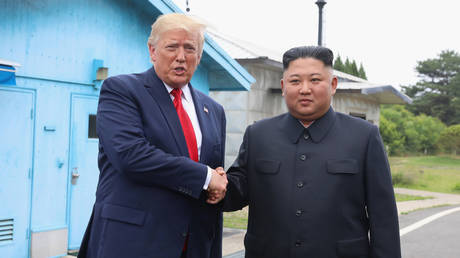
Foreign policy is rarely solved by charisma when the structural incentives favor defiance. The architectural flaws of the first-term summits are well-documented. Lavish ceremonies produced striking images at the Demilitarized Zone and Singapore, but zero structural rollback of uranium enrichment facilities or missile assembly plants. Repeating the cycle with an emboldened nuclear state ignores the lessons of recent history. The diplomatic machinery grinds forward anyway, driven by an administration convinced that personal chemistry can rewrite the nuclear balance of power.