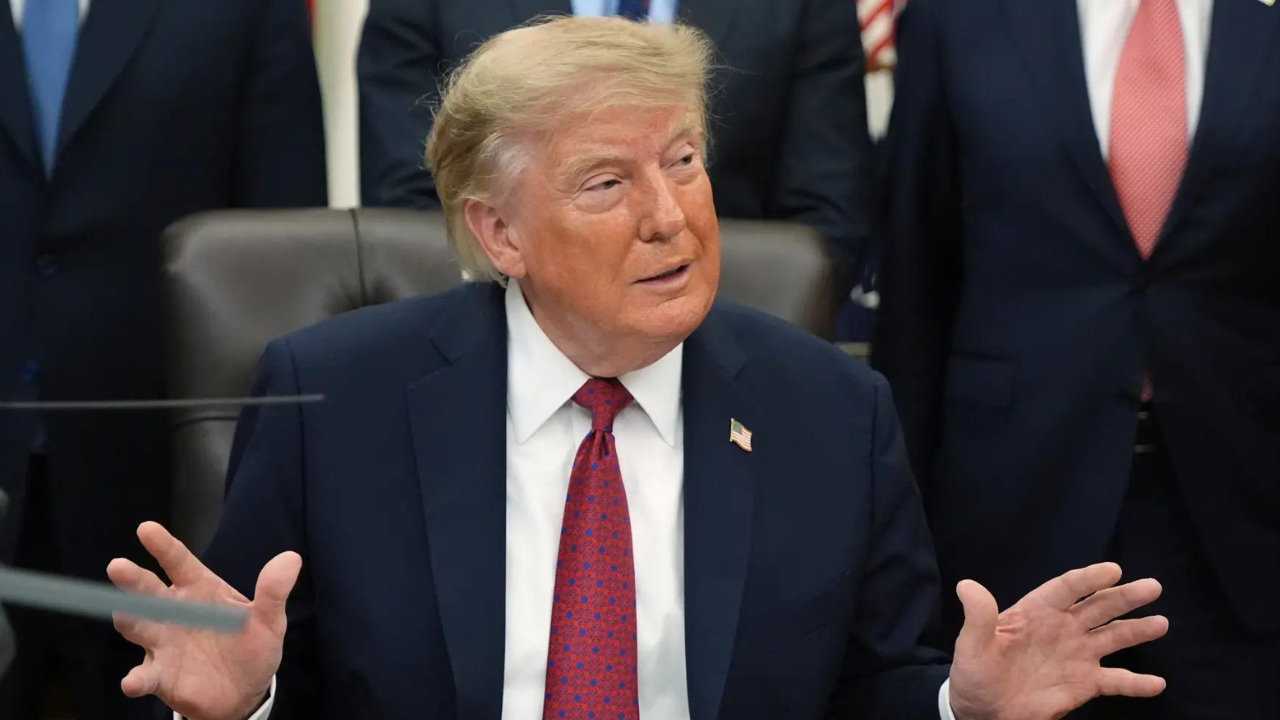
US President Donald Trump recently declared that the ongoing military conflict with Iran will end immediately following the November midterm elections, asserting that Tehran is desperately trying to influence the vote by holding out against punishing American economic pressure. Speaking to reporters before boarding Air Force One for the Republican midterm convention in Dallas, Trump claimed that the Iranian government expects a favorable shift in domestic American politics. Democratic challengers are campaigning heavily against the cost-of-living crisis and the prolonged military campaign, creating a high-stakes electoral environment where foreign policy has collided directly with domestic survival.
The arithmetic of the current political landscape tells a stark story. Benchmark Brent crude futures have pushed past the one-hundred-dollar threshold, dragging gasoline prices upward and triggering voter fatigue across key swing districts. Presidential approval ratings have felt the sting, sliding toward historic lows as the public registers mounting frustration over a conflict that has dragged on past its initial projections. When an administration binds its foreign policy timeline to an internal electoral calendar, it invites deep skepticism from foreign policy analysts and economic observers alike.
Attributing the trajectory of an international military engagement entirely to the domestic calendar of a target nation ignores the internal calculus of the regime in Tehran. Iran faces severe economic strangulation, currency depreciation, and a crippled export market following naval skirmishes in the Strait of Hormuz that have cost the country numerous oil tankers. Yet, expecting a collapse synchronized precisely with the closing of American ballot boxes misreads how authoritarian systems manage prolonged state crises. Governments under terminal siege rarely surrender on an adversary's preferred timeline simply because a legislative election is looming.
The White House strategy relies heavily on maintaining a posture of uncompromising strength. Trump dismissed the prospect of returning to nuclear negotiations anytime soon, signaling that the administration's goals extend far beyond a traditional diplomatic accord. Energy Secretary Chris Wright and other key officials have maintained that kinetic strikes against infrastructure and maritime assets will continue until Washington achieves total deterrence. This hardline stance resonates with the base gathered in Dallas, but it collides with a restless Capitol Hill where bipartisan friction over war powers has periodically boiled over into open confrontation.
Voters casting ballots on November third will weigh these competing narratives against their monthly household budgets. Oil markets are notoriously sensitive to geopolitical friction, and the promise that energy prices will tumble downward immediately after the midterms serves as a precarious anchor for economic messaging. History suggests that commodity prices do not reset out of sheer political convenience once the ballots are counted.
As the campaign enters its final stretch, the administration has doubled down on the premise that maximum pressure will yield a sudden, definitive break once the electoral incentive for Tehran disappears. Whether that prediction holds up against the messy realities of Middle Eastern geopolitics remains the central question hanging over the remaining weeks of the congressional campaign. The conflict continues to test the limits of executive authority, the resilience of global energy supplies, and the patience of an electorate demanding relief.