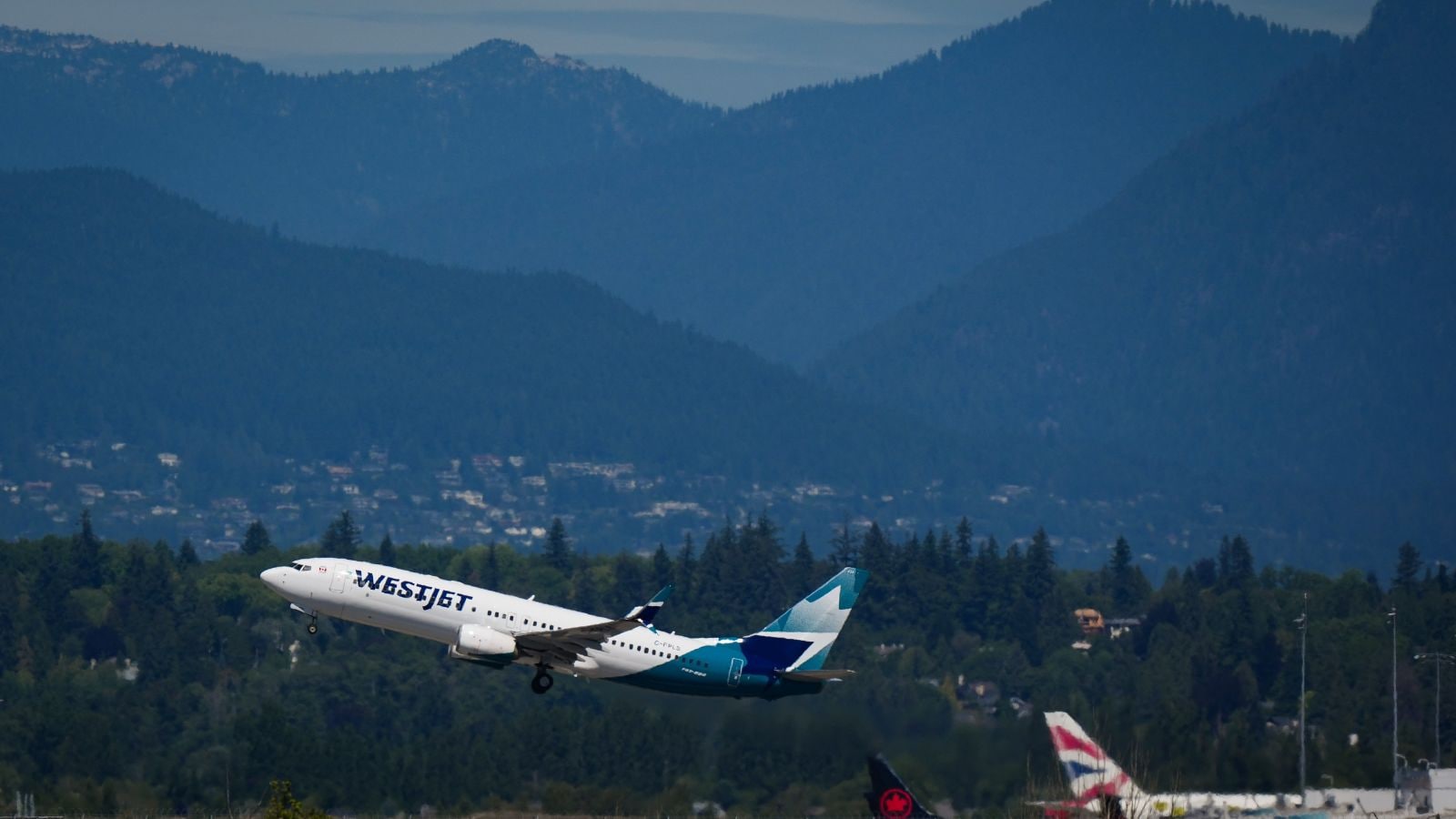
The cabin door seals. The aircraft pushes back from the gate. Only at that precise mechanical moment does the clock start ticking for the people responsible for your safety at thirty thousand feet.
For decades, the global aviation industry has relied on a foundational architecture that defines working hours strictly by wheels-up and wheels-down. On August 2, 2026, that architecture fractured completely across Canada's skies.
Four thousand four hundred flight attendants represented by the Canadian Union of Public Employees walked off the job at WestJet, grounding more than three hundred flights on a critical long weekend and stranding thousands of passengers.
At the center of this bitter stoppage is not just a standard squabble over cost-of-living adjustments, but an existential reckoning over unpaid labor during ground operations. Boarding passes are scanned, luggage is stowed, safety demonstrations are performed, and medical emergencies are handled on the tarmac—all while the crew technically earns zero dollars under traditional calculation models.
Understanding how an entire airline network ground to a halt requires looking past the surface press releases and examining the mechanics of modern aviation compensation.
The Mathematics of the Tarmac
To grasp why WestJet cabin crew members chose disruption over dialogue, one must dissect the traditional credit hour system.
Airlines have historically compensated flight attendants based on block time, which measures the duration from the moment an aircraft pushes away from the departure gate until it parks at the arrival gate. Every minute spent preparing the cabin before pushback, managing boarding gate chaos, coordinating passenger seating disputes, and executing post-flight safety checks has traditionally been treated as an unpaid operational overhead.
The union argues that flight attendants are effectively working for free during these critical pre-flight and post-flight windows. A typical workday might span twelve hours from initial airport check-in to final hotel transfer, yet yield only six hours of credited, compensable flight time.
Management views this differently. WestJet executives defend their compensation structures by pointing to aggregate credit hour guarantees and minimum monthly baselines. Chief Executive Officer Alexis von Hoensbroech maintained that the carrier offered a transformative package featuring a double-digit wage increase in the first year alongside structural shifts designed to set a new national standard.
Yet, the core philosophical chasm remained unbridled. The company argued that its blended credit system factored in ground duties implicitly, while the union demanded explicit, hour-for-hour accounting for every minute spent under employer direction.
The Domino Effect Across North American Skies
This standoff does not exist in a vacuum. Labor militancy across the aviation sector has reached a boiling point following years of post-pandemic travel surges, persistent inflation, and corporate profitability that contrasts sharply with stagnant front-line wages.
Last summer, a parallel crisis unfolded at Air Canada, where flight attendants threatened and ultimately averted major disruptions through compressed negotiations that similarly zeroed in on ground compensation. Major carriers in the United States, including Delta, American, and United, have faced intensifying pressure to alter historical pay models, with several moving toward partial boarding-pay models to stave off similar revolts.
When WestJet management locked horns with the Canadian Union of Public Employees through months of federal conciliation, the writing was on the wall. The expiration of the previous collective agreement set a statutory clock ticking, culminating in a mandatory cooling-off period and the ultimate expiration of patience on a peak summer weekend.
Travelers caught in the crossfire faced immediate cancellations on Boeing 737 and 787 mainline routes, while regional turboprop services via WestJet Encore largely escaped the immediate fallout. Passengers were left scrambling for refunds, re-accommodations, and alternative transit options as the operational core of Canada's second-largest airline froze.
The Future of Frontline Compensation
The resolution to this dispute will establish a formidable precedent for the entire commercial aviation industry. If major carriers are forced to abandon block-hour pay in favor of comprehensive door-to-door hourly rates, ticket prices will inevitably reflect the structural shift.
Airlines operate on razor-thin net margins, where labor represents one of the few variable costs management can aggressively manipulate to protect quarterly balance sheets. Absorbing the true cost of ground duties alters the economic blueprint of low-cost and ultra-low-cost carrier models alike.
Negotiating tables remain active as both sides signal a theoretical willingness to talk. But the fundamental question lingers in the terminal air, far beyond the immediate chaos of canceled flights and stranded travelers.
The industry must decide whether the invisible labor that keeps commercial aviation safe and operational will finally be counted on the ledger.
The Reason WestJet Flight Attendants Voted to Strike
This video provides an inside look at the core grievances behind the WestJet strike, breaking down the specific mechanics of unpaid ground duties and block time.
http://googleusercontent.com/youtube_content/1