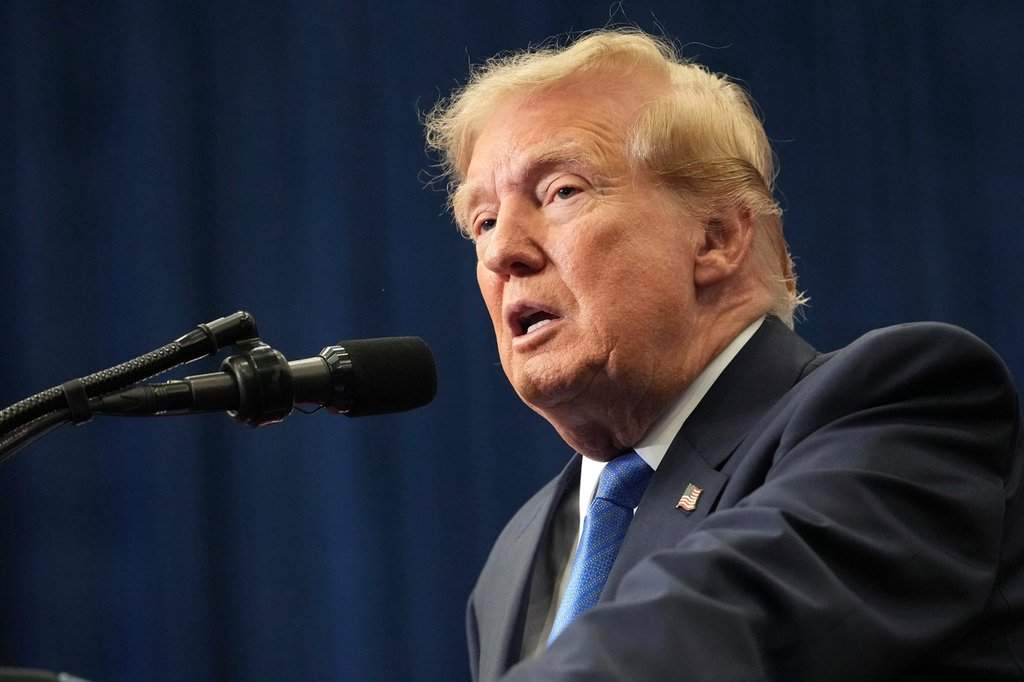
The announcement out of Washington landed like a seismic shock across global energy markets. President Donald Trump declared that the United States had secured majority control over 65 billion barrels of proven Venezuelan oil reserves. Billed as the largest oil deal in history, this arrangement aims to bypass traditional geopolitical roadblocks, refill a depleted Strategic Petroleum Reserve, and force domestic gasoline prices downward.
Yet beneath the triumphant social media posts and high-level declarations lies a grinding, complex reality. Decades of institutional rot, crumbling pipelines, and deep-seated legal anxieties threaten to turn this grand ambition into a prolonged operational quagmire.
The Mechanics of the Arrangement
Publicly, the architecture of the agreement sounds deceptively straightforward. Through a newly formed partnership between Washington and Caracas—now steered by interim President Delcy Rodríguez—the United States reportedly captures an effective 55 percent stake in a massive private joint venture. This stake combines direct equity ownership with guaranteed at-cost off-take rights for the U.S. government.
Seventeen designated oil fields sit at the center of this pact. These locations contain heavy crude deposits that require specialized extraction and refining techniques. For Washington, the motivation is transparent. Domestic political pressures are mounting as prolonged conflicts in the Middle East choke critical chokepoints like the Strait of Hormuz, leaving American reserves hovering dangerously below historical averages.
Grabbing control on paper is vastly different from pumping oil into a tanker. Venezuela holds roughly 303 billion barrels of crude in total, representing the largest conventional deposits on earth. However, turning those subterranean assets into functional energy requires a staggering infusion of capital and engineering prowess that has been absent for a generation.
The Infrastructure Mirage
Decades of mismanagement, corruption, and international sanctions have left the Orinoco Belt looking like an industrial graveyard. Pipelines leak, upgraders sit rusted and dormant, and qualified technicians have fled the country in droves.
Major American energy executives remember past nationalization campaigns under Hugo Chávez. That institutional memory breeds profound hesitation. When ExxonMobil leadership previously labeled the region un-investable, they were not speaking in hyperbole. They were referencing the hard truth of asset seizures and broken contracts.
To turn 65 billion barrels into a steady stream of exportable crude, participating firms must spend billions upfront on basic rehabilitation. Even with 100-year concessions reportedly handed down to private operators, the timeline for meaningful production increases stretches across years, not months. Physical infrastructure cannot be willed into existence by executive decree.
The Geopolitical Fallout
Critics outside the administration have not minced words. Some regional observers view the arrangement as a raw exercise in resource dominance, comparing the mechanism unfavorably to historical instances of imperial extraction.
By forcing a post-regime Caracas into deep structural concessions following the military operation that removed Nicolás Maduro, Washington has effectively tied its own economic security directly to the internal stability of a fractured nation. If domestic unrest flares up or if future local administrations challenge the constitutional validity of these long-term concessions, the entire legal framework could evaporate overnight.
Furthermore, global competitors are watching closely. State-backed firms from nations locked out of the hemisphere are evaluating how international maritime law and sovereign asset rights apply when a superpower rewrites the rules of engagement in real-time.
The Road Ahead
The administration insists that this maneuver will reshape American energy independence and provide Venezuela with billions in revitalization funds. Gas prices remain a potent political weapon, and any mechanism that promises relief at the pump carries immense short-term utility.
Yet the friction between political timelines and engineering realities remains absolute. Pumping heavy Venezuelan crude demands specialized processing units that domestic refineries must adapt to handle. The math of the deal relies on variables that have yet to be tested in a stable market environment.
The tankers may eventually line up along the coast, but the path from a signed proclamation to a functional energy lifeline is littered with rusted iron and unresolved legal risk.