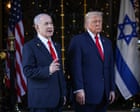
The 2026 midterm elections delivered a severe political shock to the US-Israel relationship, driven by voters angry over the Iran war, surging fuel prices, and massive outside lobbying money. Yet reading November's results purely as a wholesale collapse of Washington's pro-Israel consensus misses how power actually operates in Congress. Voters rejected endless Middle Eastern entanglement and costly outside spending in high-profile races, but hundreds of incumbents backed by pro-Israel networks still survived across both parties.
Anyone who has covered Washington long enough knows how easy it is to confuse a loud protest wave with a total rewrite of Capitol Hill's operating system. Candidates lose big races. Lobbying groups burn tens of millions of dollars on marquee targets and still walk away with a working majority of sympathetic lawmakers. What shifted in November 2026 was not a single ideological switch flipping off overnight. It was a collision between kitchen-table economics, war fatigue, generational shifts, and campaign finance math.
Why War and Pump Prices Turned Voters Against the Status Quo
Foreign policy rarely decides a midterm on its own until it shows up on a credit card statement or a gas station sign. That is precisely what happened in 2026. After the United States and Israel entered open conflict with Iran in late February, crude oil prices spiked from roughly $67 per barrel on February 27 to near $99 per barrel by March 1, remaining elevated near triple digits through much of the year.
For working families already squeezed by stubborn living costs, the Iran war stopped looking like an abstract geopolitical chess match. Every fill-up at the pump and every trip to the grocery aisle felt like a tax on a Middle East conflict voters never asked for. Candidates who defended open-ended military escalation or unconditional backing for Benjamin Netanyahu's government found themselves defending a foreign policy that felt divorced from domestic survival.
When a foreign conflict pushes oil toward $100 a barrel and strains household budgets for eight months straight, voters do not treat it as a niche diplomatic debate. They treat it as a bill coming due.
Even so, analysts who claim Israel alone drove every swing in November are overstating the case. Polling after the election showed that for many voters, cost-of-living pressures, frustration with the Trump administration, and a desire to pull back from foreign wars sat right alongside or ahead of attitudes toward Israel. The US-Israel relationship took heavy collateral damage because it was fused to a wider war and an affordability squeeze that voters punished across the board.
Money Spent Versus Seats Held
One of the sharpest contradictions of the 2026 cycle is that high-profile defeats and broad institutional survival happened in the very same election. Headlines focused on prominent losses where massive pro-Israel spending failed to stop challengers.
Consider Michigan's open U.S. Senate race. Abdul El-Sayed, a vocal critic of unconditional U.S. military aid to Israel who campaigned on universal health care and curbing outside money, defeated Representative Haley Stevens in the August primary despite heavy pro-Israel outside spending opposing him, and then went on to beat Republican Mike Rogers in November. Out east in Maine, five-term Republican Senator Susan Collins, a major recipient of pro-Israel PAC and bundled contributions, lost her seat to Democrat Troy Jackson.
- High-visibility losses drew national attention: Prominent defeats in races like Michigan and Maine proved that money alone cannot guarantee victory when voters demand change.
- Bipartisan donor reach kept broad coverage alive: Unlike single-party PACs tied strictly to labor or fossil fuels, pro-Israel networks have long courted donors in both parties, allowing them to fund hundreds of incumbents and winners across chambers even while absorbing painful losses.
- Headline upsets do not erase committee math: Losing a handful of marquee contests stings and reshapes political narratives, yet legislative influence still depends on who holds gavels, votes on appropriations, and shapes committee amendments.
Here is a hypothetical example to show how two observers can look at the same midterm map and reach opposite conclusions. Suppose a lobbying group puts $40 million into three high-profile races and loses two of them, while quietly backing 120 lower-profile winners in safe or competitive districts. A reporter covering the upset wins will call the strategy broken. A legislative strategist counting floor votes will say the losses were expensive speed bumps rather than a total wipeout. That tension sits at the heart of the 2026 post-mortem.
Generational Cracks Inside Both Parties
A deeper look at the electorate shows why the US-Israel relationship faces structural strain rather than just a temporary midterm hangover. Recent polling highlights a stark generational divide: younger voters in both major parties express far greater skepticism or hostility toward Israel than older cohorts, while growing shares of Democrats view Jerusalem's government unfavorably or even as an adversary.
| Voter Segment | Primary Midterm Pressure Point | Impact on US-Israel Policy |
|---|---|---|
| Cost-conscious swing voters | High gas and living costs tied to regional conflict | Demands for restraint, lower energy prices, and fewer foreign entanglements |
| Younger Democratic and GOP voters | Skepticism of unconditional aid and foreign wars | Growing pressure to condition aid and question traditional alliances |
| Bipartisan institutional donors | Protecting friendly incumbents in competitive seats | Continued financial presence in Congress despite high-profile defeats |
For decades, older Democrats and traditional Republicans held enough common ground on Middle East policy to keep unconditional military aid insulated from ordinary campaign turbulence. That insulation is thinning. Younger activists and voters who came of age after the post-9/11 wars treat foreign interventions with suspicion and judge alliances by tangible domestic returns.
At the same time, critics of the anti-war narrative point out a real complication for Democrats now holding congressional power. Winning a midterm wave on affordability and frustration with the White House is one thing; governing a divided country amid Middle East instability, volatile energy markets, and an executive branch still willing to act on military matters is another. Lawmakers who promise to curb foreign entanglement will soon face hard choices over regional deterrence, shipping security, and alliance commitments.
Ripples in Jerusalem and the Road Ahead
The midterm shockwave did not stop at the Potomac. Inside Israel, the Democratic sweep and sharp American backlash against war and Netanyahu's coalition immediately reverberated through domestic politics. Opposition figures such as Yair Lapid pointed to the need to repair trust with Washington, while Israeli commentators warned that closer identification with a politically vulnerable U.S. administration carried steep strategic risks.
Still, writing off the alliance as finished would be premature. Defense ties, intelligence cooperation, and entrenched congressional habits do not vanish in a single election cycle. What changed in November 2026 is the price of ignoring voter fatigue. Any politician or foreign government that treats American voters as a blank check for costly regional wars or unexamined aid packages is now betting against a much harder crowd. Watch how the incoming Congress handles war-powers oversight, defense appropriations, and energy relief over the next six months—that is where the real test of the US-Israel relationship will play out.