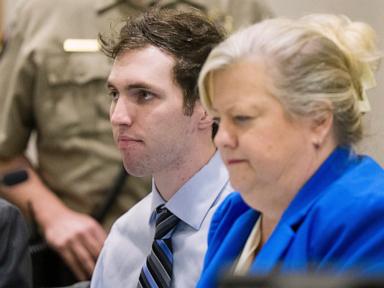
Utah District Judge Tony Graf Jr. is poised to rule on whether sufficient probable cause exists to bind Tyler Robinson over for trial in the high-profile assassination of conservative activist Charlie Kirk. The landmark preliminary hearing in Provo has laid bare a mountain of physical evidence, including DNA linking the 23-year-old defendant to a sniper's perch and the alleged murder weapon. As the court weighs whether the state has met the remarkably low threshold required to advance a capital murder case, the proceedings have evolved into a complex legal stress test examining media contamination, capital punishment boundaries, and the mechanics of modern political violence.
State prosecutors are aggressively pursuing the death penalty, arguing that the shooting did not merely claim a prominent public life during an event at Utah Valley University, but intentionally endangered dozens of bystanders in the surrounding crowd. This specific aggravating circumstance forms the legal bedrock of the state's capital case. Investigators have methodically introduced ballistic reports, digital forensics, and physical items recovered from a nearby rooftop that served as an elevated firing platform.
The defense has countered not by denying the physical trail, but by aggressively challenging the state's application of capital punishment. Attorneys representing Robinson have argued that the shooter hit his intended target without random collateral casualties in the crowd, attempting to peel away the aggravating factors necessary for the death penalty. Furthermore, the defense has navigated a turbulent pretrial landscape marked by prosecutorial missteps, including a previous civil contempt finding against a prosecutor for public commentary regarding ballistics evidence, and an unsuccessful bid to disqualify the county attorney's office due to a familial conflict of interest.
Beyond the courtroom battles in Utah County, the case carries deep symbolic weight. Charlie Kirk was a polarizing figure who commanded massive audiences of young conservatives, and his public execution triggered immediate national shockwaves and downstream conspiracy theories. Judge Graf's methodical pace throughout the preliminary hearings reflects an explicit judicial effort to construct an airtight legal record that inoculates the eventual trial against external political pressures and appeals based on pretrial publicity.
The evidentiary presentation showcased a meticulous, if agonizingly slow, assembly of facts. Testimonies from former campus law enforcement officers detailed the geography of the rooftop sniper pad, while digital investigators mapped out the communications and notes left behind by the suspect. Robinson surrendered to authorities a day after the shooting, aided by family members who recognized him from surveillance stills disseminated by law enforcement.
As Judge Graf prepares to issue his determination on the trial's progression, the legal teams are bracing for a prolonged journey through the state district court. The fundamental question in Provo is no longer just whether Robinson pulled the trigger, but whether the state of Utah can execute a flawless prosecution under the unblinking glare of nationwide scrutiny.
Charlie Kirk's accused killer, Tyler Robinson, is back in court
This broadcast recording provides a direct look at the courtroom proceedings and media presence surrounding Tyler Robinson's preliminary hearing in Utah.


