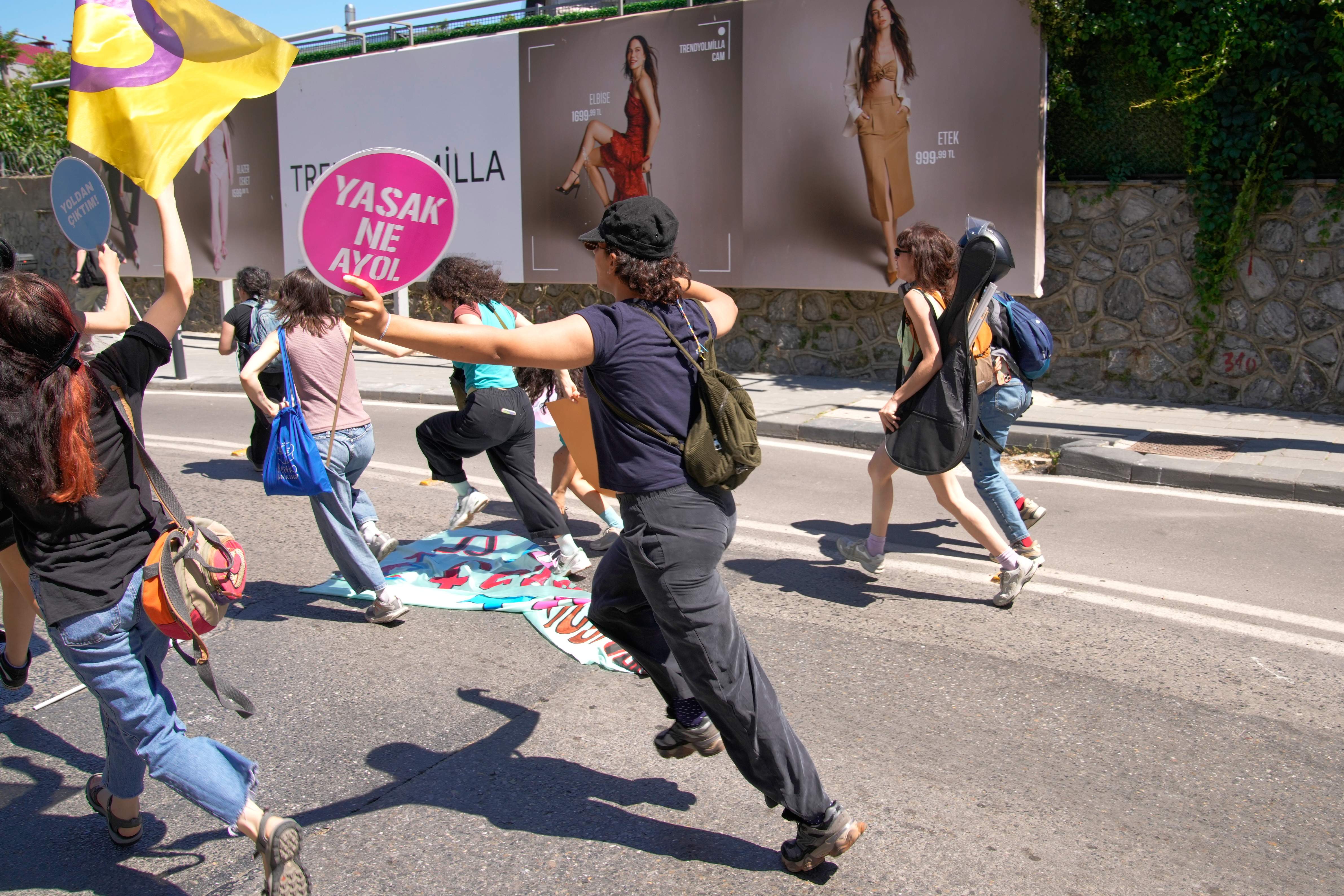
For over a decade, civil society survival in Turkey operated within a precarious grey zone. Advocacy groups, legal aid clinics, and community health centers functioned under tightening administrative pressure, yet they managed to keep their doors open. That fragile tolerance evaporated overnight. Under the banner of the so-called "My Family is Safe" operation, Turkish authorities launched a sweeping, coordinated crackdown targeting the organizational backbone of the country's LGBTQ communities and public health networks. This is not merely an escalation of traditional political rhetoric; it is a systematic dismantling of institutional infrastructure designed to isolate vulnerable populations and silence independent oversight.
The operation began before dawn, striking multiple associations, community spaces, and private homes simultaneously. More than one hundred individuals faced immediate detention, with dozens subsequently placed in pre-trial custody. Unlike previous crackdowns that focused primarily on breaking up street demonstrations or pride marches, this campaign targets the operational apparatus of civil society. Among those swept up in the raids are founders, staff members, and human rights defenders associated with seven major LGBTQ organizations alongside two prominent groups dedicated to supporting individuals living with HIV. Meanwhile, you can find related stories here: The Urban Displacement Loop Systemic Failure in Municipal Housing Architecture.
By targeting HIV support networks alongside queer advocacy groups, the state's actions carry profound public health implications. Organizations like Pembe Hayat and others have long filled critical gaps left by state health systems, offering confidential counseling, testing resources, and medical navigation for stigmatized groups. Conflating HIV status with sexual orientation and criminalizing the entities that provide life-saving care creates an atmosphere of fear. People requiring medical support, testing, or treatment adherence counseling now face a terrifying calculus: seek help through official channels monitored by an increasingly hostile state apparatus, or go without. Public health experts warn that driving these services underground guarantees a resurgence in untreated infections and preventable health crises.
The state's legal justification relies heavily on weaponized morality. Shortly after the initial raids, the Ministry of Justice issued a sweeping directive to chief public prosecutors across all eighty-one provinces. The circular instructed authorities to aggressively investigate activities deemed harmful to families, youth, and public morals, explicitly targeting anything perceived as encouraging "genderlessness". This broad mandate gives local prosecutors carte blanche to treat routine human rights advocacy, psychological counseling, and informational publishing as criminal acts. Courts swiftly moved to block access to the digital domains of major advocacy groups, independent news sites, and archival projects, cutting off vital communication lifelines and erasing years of public documentation. To see the bigger picture, we recommend the excellent analysis by NBC News.
The financial squeeze mirrors the legal assault. In several instances, authorities leaked or exposed the identities of private donors and international grant-makers supporting Turkish civil society groups. This tactic aims to dry up financial streams by exposing supporters to state harassment, administrative audits, and social retribution. International bodies, including United Nations human rights experts and European monitoring organizations, have issued urgent condemnations, characterizing the measures as an unprecedented blow to freedom of association and expression. Yet, domestic political calculations inside Turkey point toward a hardening stance, with officials doubling down on protectionist family rhetoric to rally conservative constituencies ahead of upcoming political cycles.
The grey zone is officially gone. What remains is an open confrontation between an authoritarian administrative apparatus determined to enforce uniform social conformity and a civic network forced to adapt to clandestine survival strategies. As digital archives vanish behind state-mandated blocklists and human rights defenders sit behind bars awaiting trial, the broader fabric of Turkish democracy frays a little more, leaving marginalized populations to weather the storm in deepening isolation.