The joint statement issued from the U.S. State Department on Wednesday evening looked, on the surface, like a standard diplomatic breakthrough. Israel and Lebanon had agreed to renew a fragile, buckling ceasefire, sketching out a series of "pilot" security zones south of the Litani River where the Lebanese Armed Forces are supposed to replace Hezbollah operatives.
But the formal text completely obscures the brutal geopolitical reality that transpired behind closed doors over the preceding forty-eight hours.
This renewed truce was not born out of sudden bilateral goodwill. It was hammered together under extreme duress after an unprecedented, profanity-laced explosion from U.S. President Donald Trump directed straight at Israeli Prime Minister Benjamin Netanyahu.
For decades, the alliance between Washington and Jerusalem has operated under a strict code of public unity, regardless of private friction. That veneer has shattered.
The real story behind this latest diplomatic maneuver is an intensifying strategic clash between a U.S. administration determined to freeze its broader war with Iran, and an Israeli leadership that views the current regional chaos as a once-in-a-generation window to permanently alter the balance of power. By forcing Netanyahu’s hand, Washington has bought temporary quiet on the Lebanese border, but it has also exposed a structural rift that threatens to upend the entire architecture of Middle Eastern security.
The Phone Call That Broke the Alliance
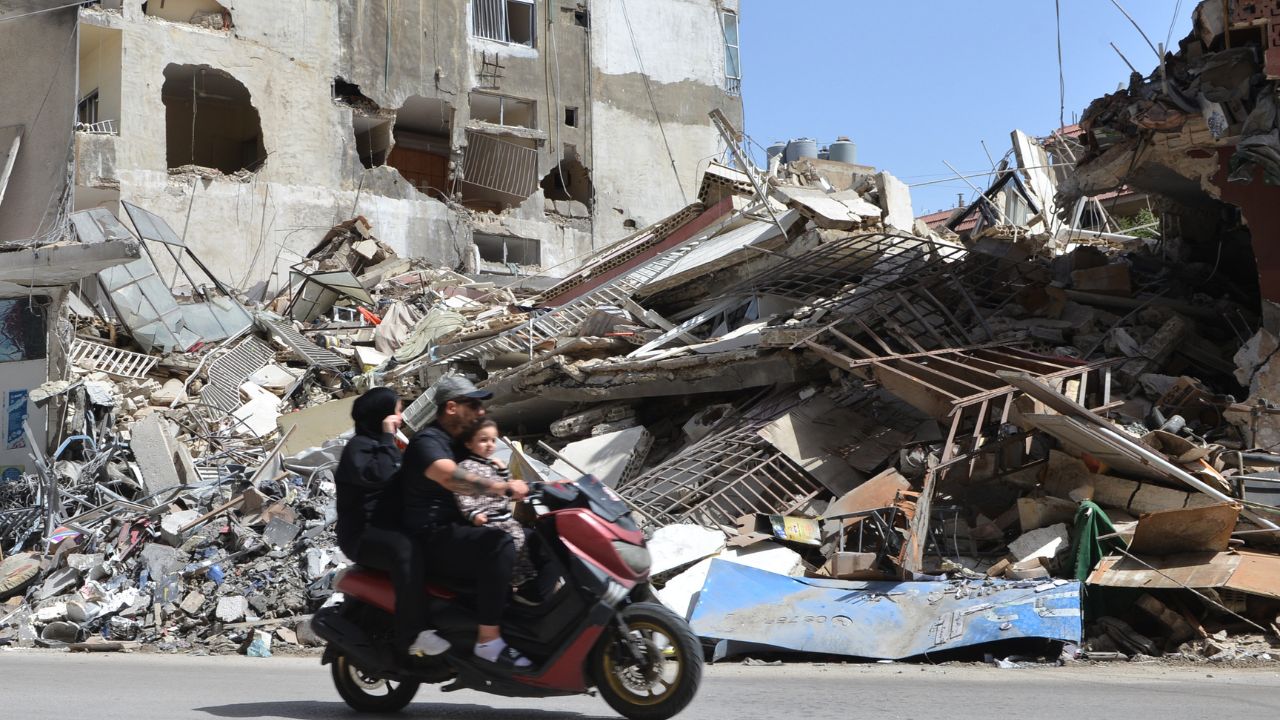
The catalyst for the sudden diplomatic rush to Washington was an Israeli military directive issued early Monday. Prime Minister Netanyahu had ordered the Israel Defense Forces (IDF) to prepare for a massive, punitive campaign of airstrikes targeting Hezbollah strongholds in the southern suburbs of Beirut.
The rationale in Tel Aviv was straightforward. Despite a nominal ceasefire initially brokered in mid-April, Hezbollah had kept up a steady drumbeat of rocket and drone fire into northern Israel. Netanyahu, facing severe domestic political pressure and an upcoming election cycle this fall, wanted to send an unmistakable message that Israel would not tolerate a war of attrition.
The response from Washington was immediate, furious, and highly personal.
Trump called Netanyahu directly. According to detailed accounts of the conversation later confirmed by the U.S. President himself during an appearance on the New York Post’s "Pod Force One" podcast, the American leader did not mince words.
Trump berated the Israeli Prime Minister, calling his strategy "crazy" and accusing him of actively sabotaging American grand strategy.
"What the fk are you doing?" Trump demanded, according to administration sources. "You’re f*ing crazy. You’d be in prison if it weren’t for me. I’m saving your a. Everybody hates you now. Everybody hates Israel because of this."
The extraordinary venom of the exchange reflects a fundamental misalignment of priorities. Netanyahu viewed the Beirut strikes as a localized tactical necessity to protect Israeli citizens and maintain deterrence. Trump viewed them as a reckless provocation that risked destroying his administration’s highest-stakes foreign policy objective: a comprehensive, multi-front grand bargain with Tehran.
The Strategic Trap of Linked Fronts
To understand why a localized escalation in Lebanon caused such panic in Washington, one must look at the broader, highly volatile regional landscape. Since the outbreak of direct hostilities between the United States, Israel, and Iran in late February, the White House has been engaged in painstaking, indirect negotiations with Iranian diplomats to establish a stable exit ramp.
The blueprint for that deal is fragile. Iran’s Foreign Minister, Abbas Araqchi, has repeatedly stated that Tehran will not sign a comprehensive truce with Washington unless the fighting in Lebanon is completely halted.
In the eyes of the Iranian regime, Hezbollah is its primary external deterrent. If Israel is permitted to systematically dismantle Hezbollah's leadership and infrastructure under the cover of a general regional pause, Iran loses its most valuable strategic asset. Therefore, Iran conditioned the continuation of the broader peace talks on an absolute cessation of hostilities in Beirut and southern Lebanon.
When Israel ordered the evacuation and bombardment of Beirut's suburbs on Monday, the Iranian delegation promptly walked away from the negotiating table.
This was the exact scenario the White House feared. Trump’s political brand is built on his self-proclaimed ability to deliver historic deals; a collapse of the Iran negotiations due to Israeli unilateralism was viewed in Washington as a direct betrayal.
The U.S. President countered Netanyahu by immediately taking to social media to announce a unilateral ceasefire before the details had even been finalized by the parties on the ground. Trump claimed that he had spoken with representatives of Hezbollah and that an agreement was set.
It was a classic muscle move designed to box Netanyahu in. It forced the Israeli government into a corner where continuing the strikes would mean openly defying the American president who had, until that moment, provided Israel with vital diplomatic cover and military resupply.
The Flawed Logic of the Pilot Security Zones
The resulting joint statement negotiated in Washington is an attempt to paper over this massive diplomatic crack. The centerpiece of the renewed agreement is the creation of "pilot" security zones south of the Litani River. Under the terms of the deal, Hezbollah operatives are required to evacuate these sectors, turning exclusive administrative and military control over to the Lebanese Armed Forces (LAF).
It is a neat solution on paper. In reality, it is built on a foundational premise that has failed repeatedly for two decades.
The Lebanese Armed Forces are chronically underfunded, politically fractured, and utterly incapable of projecting sovereign authority against an entrenched, heavily armed non-state actor like Hezbollah. The LAF does not possess the domestic political mandate or the military firepower to disarm or forcibly expel Hezbollah from its ancestral heartland in southern Lebanon.
Furthermore, Hezbollah was not even a direct signatory to the Washington talks. The group operates as a state within a state, answering to its own high command and its patrons in Tehran, rather than the formal government in Beirut. While Hezbollah has signaled a tactical willingness to observe a temporary lull to regroup, its leaders have made it clear that any permanent Israeli presence or oversight inside Lebanese territory will be met with armed resistance.
The structural weakness of the deal became apparent within hours of its announcement. Even as diplomats signed the paperwork in Washington, rocket sirens were sounding again in the Israeli border town of Metula. Meanwhile, the broader regional conflict continued to bleed outward, highlighted by a devastating Iranian drone and missile strike targeting Kuwait International Airport that killed an Indian national and wounded dozens.
The architecture of the ceasefire is inherently unstable because it asks an incapable actor (the Lebanese state) to police an unwilling actor (Hezbollah) on behalf of two deeply distrustful adversaries (Israel and the United States).
Netanyahu’s Domestic Trap
The fallout from the Trump-Netanyahu confrontation has triggered a severe political crisis within Israel. For years, Netanyahu has sold himself to the Israeli electorate as the ultimate statesman—the only leader capable of managing the vital relationship with Washington without compromising on Israel’s core security doctrines.
That narrative has taken a devastating hit.
The details of the phone call leaked almost immediately to the Israeli press, leading to widespread public condemnation from across the political spectrum. Netanyahu’s right-wing coalition partners, who favor an aggressive, uncompromising military campaign to permanently push Hezbollah away from the northern border, were furious. National Security Minister Itamar Ben-Gvir publicly demanded that the Prime Minister tell Trump "no" and resume the strikes on Beirut.
Concurrently, centrist and opposition figures lambasted Netanyahu for allowing Israel’s strategic independence to erode to the point where the country is being treated like a vassal state. Opposition politicians openly mocked the Prime Minister for preaching about the necessity of standing up to Washington, only to fold immediately under a wave of profanity from the White House.
Netanyahu attempted to save face by issuing a defiant Hebrew-language statement shortly after Trump’s initial announcement, insisting that Israel reserved the right to strike Beirut if rocket fire continued. But the damage was done. The IDF postponed its planned operations, and the Prime Minister’s office was forced to send a delegation to Washington to sign an agreement they clearly disdained.
With an election looming in the autumn, Netanyahu is trapped. If he adheres to the ceasefire terms dictated by Trump, his right-wing base will desert him for failing to secure the northern border. If he breaks the truce to launch the delayed offensive on Beirut, he risks a total rupture with an American administration that has shown it is entirely willing to use its leverage to force compliance.
The Illusion of a Grand Bargain
The fundamental mistake driving current U.S. policy is the belief that the various conflicts intersecting in the Middle East can be resolved through a single, top-down diplomatic transaction with Iran.
Washington’s strategy relies on the assumption that if a grand bargain can be struck over Iran’s nuclear program and regional posture, the proxy conflicts in Lebanon, Yemen, and Iraq will naturally de-escalate. This perspective fails to account for the local dynamics that drive these wars.
Israel’s conflict with Hezbollah is no longer just a proxy skirmish. It is an existential border crisis. Tens of thousands of Israeli citizens have been displaced from their homes in Galilee for months, transformed into internal refugees within their own country. No Israeli government, regardless of who wins the upcoming elections, can allow that situation to become the permanent status quo.
By forcing a premature, structurally flawed ceasefire onto Israel to protect the broader Iran talks, the United States has not resolved the underlying drivers of the war. It has merely compressed the spring. The pilot security zones are highly unlikely to achieve the complete evacuation of Hezbollah operatives, and the Lebanese army will not initiate a civil war to enforce them.
The strategic split between Washington and Jerusalem is now out in the open. Trump has demonstrated that his patience with prolonged military operations is limited, and that he will ruthlessly prioritize American diplomatic objectives over the tactical goals of his closest regional ally. Netanyahu has demonstrated that he can be bullied, but his domestic political survival depends on eventually defying that bullying.
This renewed ceasefire is a holding action, a temporary pause dictated by a furious American president and accepted by a reluctant Israeli prime minister. The underlying structural contradictions remain untouched, meaning the next escalation is not a matter of if, but when.