Tehran has issued a stark 48-hour ultimatum regarding the Strait of Hormuz, signaling a willingness to restore unrestricted maritime transit within two days—provided Washington immediately halts naval escorts, lifts targeted energy sanctions, and withdraws carrier strike groups from immediate perimeter waters. While surface-level headlines treat this conditional offer as a sudden diplomatic breakthrough, maritime intelligence and energy market mechanics reveal a far more calculated maneuver. Iran is not backing down from a blockade; it is weaponizing the clock to extract maximum economic concessions while attempting to avoid a devastating kinetic retaliation from coalition naval forces.
The Mechanics of a 48-Hour Chokehold
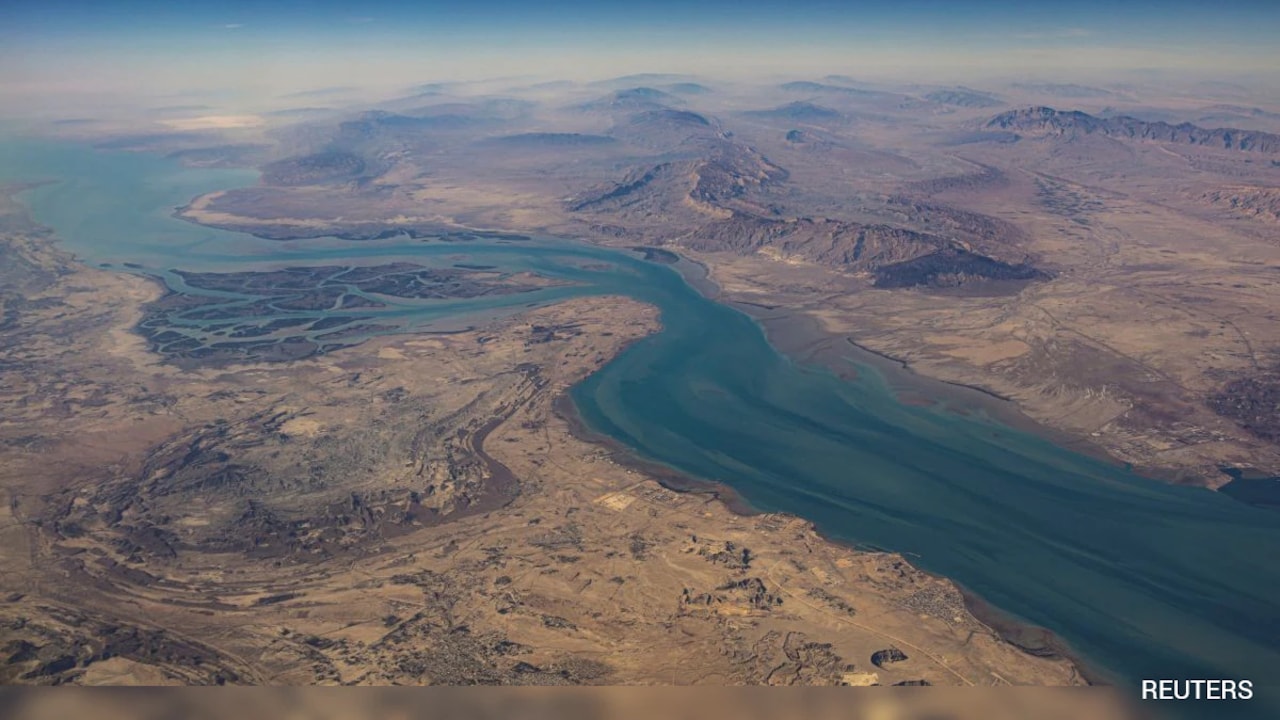
The Strait of Hormuz is not merely a waterway. It is the jugular vein of the global energy economy, measuring just 21 nautical miles wide at its narrowest point, with designated shipping lanes only two miles wide in either direction. Roughly 20 percent of the world’s daily petroleum liquids consumption—averaging over 20 million barrels per day—and nearly a third of global liquefied natural gas (LNG) trade must pass through this narrow corridor between Oman and Iran.
When Tehran attaches a 48-hour countdown to reopening or normalizing traffic, it is exploiting a very specific logistical reality in global commodities trading. Oil markets do not operate on physical delivery alone; they run on paper contracts, maritime insurance underwriting, and refinery scheduling. A disruption lasting less than 72 hours creates immediate price spikes and tanker backlogs, yet stops just short of triggering catastrophic, irreversible refinery shutdowns across East Asia and Europe.
By offering a two-day window for resolution, Iranian military planners are walking a tightrope. They want the immediate financial shockwave—forcing Brent crude futures upward and squeezing Western inflation metrics—without crossing the threshold that forces the United States Navy and its allies to physically clear mines, destroy coastal missile batteries, and dismantle Iran’s naval infrastructure.
Decoding the Condition Placed on Washington
The condition attached to the 48-hour timeline targets the exact pressure points that have crippled Iran’s domestic economy over the past decade. According to diplomatic readouts and regional security briefings, Tehran’s core demand centers on the immediate suspension of secondary financial sanctions on Iranian crude buyers alongside the cessation of aggressive maritime interdictions of shadow-fleet tankers.
Washington faces an impossible binary choice under this framing.
If the White House accepts the condition, even quietly through back-channel de-escalation protocols, it effectively validates maritime coercion as a legitimate diplomatic tool. Every state actor sitting beside a critical maritime chokepoint—from the Bab el-Mandeb Strait to the South China Sea—will take immediate notes. Accepting a ransom demand to keep international waters open destroys the foundational doctrine of freedom of navigation that the United States Navy has enforced since the end of World War II.
Conversely, rejecting the condition outright invites a dangerous escalation cycle once the 48-hour window expires. The Pentagon has spent years shifting assets to deter regional aggression, yet clearing the Strait of Hormuz under active fire remains one of the most difficult operational challenges in modern naval warfare. Iran does not need a blue-water navy to close the strait. It relies on asymmetric area-denial tactics:
- Fast-attack swarming craft operated by the Islamic Revolutionary Guard Corps Navy (IRGCN)
- Mobile, truck-mounted anti-ship cruise missiles hidden inside hardened mountain tunnels along the Zagros range
- Smart naval mines capable of sitting dormant on the seabed until triggered by specific acoustic or magnetic signatures
- One-way attack drones launched in saturation waves to overwhelm shipboard radar defenses
Why Insurance Markets Move Faster Than Destroyers
Most coverage of Persian Gulf crises focuses obsessively on warship deployments and fighter jet squadrons. That misses the real trigger. You do not need to sink a supertanker to stop oil from flowing through the Strait of Hormuz; you only need to make it uninsurable.
The maritime shipping industry relies on a concentrated network of Protection and Indemnity (P&I) clubs, primarily based in London and Oslo. The moment Tehran threatens conditional closure or imposes a 48-hour countdown, these underwriters immediately reclassify the Persian Gulf as a Listed Area for War Risk.
Within hours, war-risk insurance premiums skyrocket from a fraction of a percent of a vessel’s hull value to several percentage points per transit. For a Very Large Crude Carrier (VLCC) valued at $120 million carrying $150 million worth of crude, a sudden spike in war-risk premiums adds millions of dollars to the cost of a single voyage. Commercial shipowners simply refuse to order their captains into the strait until clarity returns.
This is the hidden brilliance of Tehran’s 48-hour timeline. It paralyzes commercial shipping through financial friction rather than kinetic strikes. No missiles have to hit a hull for dozens of tankers to drop anchor outside the Gulf of Oman, waiting out the clock. Iran achieves the economic impact of a physical blockade while maintaining plausible deniability that it has not yet fired a shot at global commerce.
The Myth of Alternative Pipeline Capacity
Whenever tensions flare in the Persian Gulf, analysts routinely point to overland pipelines as an escape valve that neutralizes Iran’s leverage. The reality on the ground is far bleaker for global consumers.
Saudi Arabia operates the East-West Pipeline (Petroline), which runs from the Abqaiq processing facility in the eastern province to the Red Sea port of Yanbu. The United Arab Emirates operates the Habshan-Fujairah pipeline, bypassing the Strait of Hormuz to terminate directly on the Gulf of Oman. Together, these pipelines represent the only meaningful bypass infrastructure in the region.
Even if both systems are pushed to their absolute maximum nameplate capacity, they can move roughly 6.5 million barrels per day. Against a baseline flow of 20 million barrels per day through the strait, that leaves a daily global supply deficit exceeding 13 million barrels.
| Bypass Infrastructure | Country | Terminal Port | Maximum Spare Capacity (Est.) |
|---|---|---|---|
| East-West Pipeline (Petroline) | Saudi Arabia | Yanbu (Red Sea) | ~3.5 - 4.0 million bpd |
| Habshan-Fujairah Pipeline | UAE | Fujairah (Gulf of Oman) | ~1.5 - 1.8 million bpd |
| Total Combined Bypass | Regional | N/A | ~5.0 - 5.8 million bpd |
To put a 13-million-barrel daily shortfall into perspective, the entire global supply shock during the 1973 Arab Oil Embargo was roughly 4 to 5 million barrels per day. Furthermore, liquefied natural gas has zero pipeline bypass options. Qatar, one of the world’s top three LNG exporters, relies entirely on specialized cryogenic tankers transiting the Strait of Hormuz to reach buyers in Europe and Asia. A prolonged closure does not just raise gasoline prices in the American Midwest; it shuts down industrial manufacturing in Germany, South Korea, and Japan within weeks.
Beijing’s Quiet Back-Channel Pressure
An overlooked factor in Tehran’s sudden willingness to set a two-day reopening window is the quiet, relentless pressure coming from Beijing rather than Washington. China is the single largest buyer of Persian Gulf crude, absorbing the vast majority of Iran’s sanctioned oil exports at steep discounts, alongside massive volumes of Saudi, Iraqi, and Emirati crude.
A sustained closure of the Strait of Hormuz is an existential economic threat to the Chinese Communist Party. China’s manufacturing sector and domestic fuel stability depend on uninterrupted maritime energy imports. While Beijing enjoys watching Washington squirm under geopolitical pressure, its tolerance evaporates the moment oil prices threaten Chinese GDP growth.
Diplomatic observers note that Tehran’s 48-hour conditional offer bears the unmistakable fingerprints of a compromise designed to appease Beijing. By signaling an intention to reopen the strait quickly—while shifting the public blame onto Washington for failing to meet a "reasonable" condition—Iran attempts to preserve its strategic partnership with China while demonstrating to its domestic hardliners that it is standing toe-to-toe with the United States.
Historical Precedent and the Danger of Miscalculation
History offers a grim warning about brinkmanship in these exact waters. In April 1988, during the final stages of the Iran-Iraq War, an Iranian naval mine struck the guided-missile frigate USS Samuel B. Roberts, nearly breaking the ship in half. Four days later, the United States launched Operation Praying Mantis. In less than 24 hours, American naval and air forces destroyed two Iranian surveillance platforms, sank a frigate, a gunboat, and three armed speedboats, and crippled another frigate.
Today’s operational environment is vastly more lethal than 1988. Iran’s coastal defense network is deeply layered, mobile, and backed by sophisticated electronic warfare suites designed to jam GPS signals and blind satellite reconnaissance. A single miscalculation during a 48-hour standoff—an overzealous IRGC boat commander locking fire-control radar onto an American destroyer, or a stray drone clipping a commercial vessel—can instantly collapse diplomatic off-ramps.
Furthermore, strategic petroleum reserves across Western economies are nowhere near the cushioned levels seen a decade ago. Following years of drawdowns to combat post-pandemic inflation and supply chain shocks, the U.S. Strategic Petroleum Reserve (SPR) sits at roughly half of its historical peak capacity. While the SPR can still inject millions of barrels per day into the domestic market for several months, it cannot single-handedly offset a multi-week closure of the Persian Gulf.
The Structural Reality Behind the Ultimatum
Strip away the diplomatic theater, and the 48-hour ultimatum exposes a fundamental shift in how maritime chokepoints are contested. Modern deterrence no longer requires closing a waterway permanently. It only requires demonstrating the credible capability to disrupt it at will, forcing global markets to price in a permanent geopolitical risk premium.
Washington’s naval planners know they can ultimately force the Strait of Hormuz open through overwhelming firepower. Tehran knows this too. The difference lies in the timeline and the political cost. Clearing mines and suppressing mobile missile batteries takes weeks of sustained combat operations, during which global energy markets would experience historic volatility and global equities would crater.
Iran is betting that an administration focused on domestic economic stability will choose quiet accommodation over a two-week war that sends crude oil past $130 a barrel. Whether Washington calls that bluff or quietly adjusts its sanctions enforcement over the next 48 hours will determine the security of global maritime trade for the next decade.