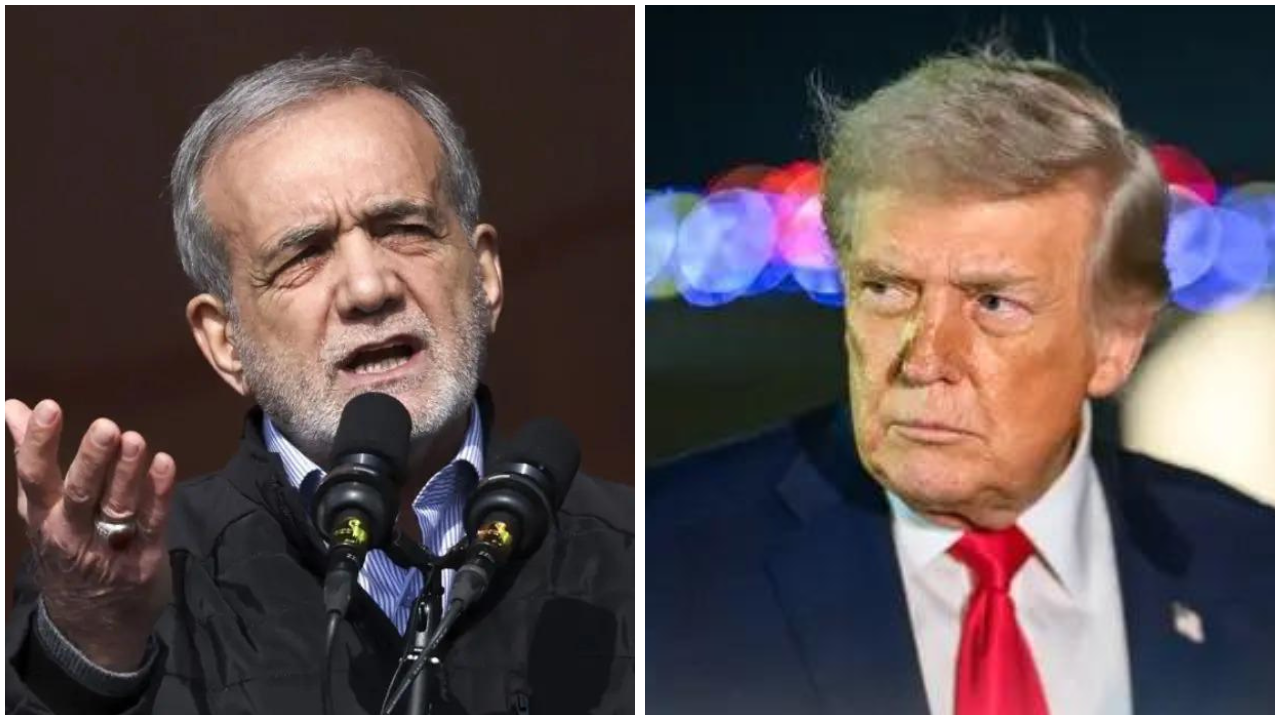
Iranian President Masoud Pezeshkian has maintained that Tehran wishes to avoid regional escalation while simultaneously asserting its right to self-defense against external threats, navigating a diplomatic high-wire act as pressure mounts following Donald Trump's return to the White House. Diplomacy moves at a snail's pace while military postures shift overnight. Bureaucrats in foreign ministries issue cautious statements about deterrence, yet the underlying mechanics of escalation remain primed by decades of mutual distrust. Look past the podium rhetoric and the social media warnings. The current diplomatic freeze is not merely a temporary standoff. It is a structural impasse driven by incompatible definitions of security.
The Calculus of Deterrence
When leaders talk about defense, they rarely mean the same thing. Washington views its maximum pressure strategy through the lens of economic containment and political coercion. Tehran interprets that exact same playbook as an existential assault designed to force regime collapse. This fundamental asymmetry explains why traditional de-escalation channels fail repeatedly.
Consider the mechanics of modern proxy networks. They operate with decentralized autonomy while relying on centralized ideological and logistical backing from the Islamic Revolutionary Guard Corps. When an American asset faces a drone strike in the region, the Pentagon calculates a proportional kinetic response to restore deterrence. Tehran calculates its response based on domestic political survival and the preservation of its forward defense perimeter.
- Economic strangulation leaves little room for diplomatic flexibility.
- Military posturing reinforces hardline factions inside Iranian domestic politics.
- Intelligence sharing among regional allies frequently misreads tactical repositioning as aggressive intent.
These dynamics create a dangerous feedback loop. Every defensive measure looks like offensive preparation to the opposing side.
The Domestic Pressure Cooker
Pezeshkian campaigned on a platform of economic reform and international engagement. That mandate faces a brutal reality check. Inflation runs rampant. The national currency continues its long-term slide against the dollar. Ordinary citizens bear the brunt of secondary sanctions that cut off access to vital pharmaceutical supplies and global financial markets.
Hardline elements within the political establishment use every external threat to consolidate internal control. They argue that opening up to Western overtures only invites subversion. Pezeshkian must walk a razor-thin line. If he appears too accommodating toward Washington, he loses the backing of the Supreme Leader and the security apparatus. If he appears too defiant, he shatters any remaining hope of economic relief through sanctions waiver negotiations.
This internal fracture means foreign policy pronouncements from Tehran often carry conflicting messages. One faction signals willingness to negotiate regional security frameworks. Another faction launches missile tests or enriches uranium closer to weapons-grade thresholds to establish bargaining leverage.
The White House Variable
The return of Donald Trump introduces a starkly transactional approach to foreign policy. Traditional diplomatic norms do not apply. The strategy relies on maximum unpredictability, sudden economic shocks, and direct demands for capitulation rather than negotiated compromise.
This approach carries immense hazard. When communication lines are degraded, miscalculation can trigger a rapid spiral from proxy conflict to direct military confrontation. Neither capital truly desires an all-out war that would devastate regional energy infrastructure and sink the global economy. Yet history shows that wars often start not from deliberate choice, but from a sequence of unmanaged reactions where both sides feel compelled to prove their resolve.
Sanctions enforcement has tightened significantly. Oil exports, the lifeblood of the state budget, face relentless tracking by Western intelligence agencies. Yet Tehran has adapted. Dark fleets of tankers, ship-to-ship transfers in clandestine waters, and heavy reliance on Asian buyers keep just enough revenue flowing to prevent total economic collapse.
The Regional Chessboard
Geopolitics rarely happens in a vacuum. The broader Middle East has transformed since the previous confrontation cycle. Gulf monarchies pursue independent diplomatic tracks, engaging directly with Iranian counterparts to secure their own infrastructure against potential fallout.
At the same time, regional armed groups possess more sophisticated hardware than ever before. Precision-guided munitions, loitering munitions, and advanced cyber capabilities mean that a localized skirmish can rapidly project power thousands of miles away.
Security analysts who focus exclusively on nuclear milestones miss the broader picture. The confrontation has shifted into the gray zone. Cyber warfare, maritime harassment, and proxy positioning define the new baseline of conflict. Deterrence is no longer about maintaining a massive standing army. It is about imposing asymmetric costs that make the opponent think twice before pulling the trigger.
The diplomatic horizon remains entirely obscured by mutual intransigence. Washington demands total surrender of regional influence and complete abandonment of the nuclear program before any meaningful sanctions relief occurs. Tehran views those demands as a demand for unconditional surrender, preferring the pain of isolation to the perceived humiliation of submission.
As both sides lock into their respective postures, the margin for error shrinks daily. A single stray projectile, a misread radar signature, or a miscalculated cyber attack could shatter the fragile equilibrium. Pezeshkian may speak of peace and self-defense, but the machinery of confrontation hums relentlessly in the background, waiting for a spark that neither side may be able to control.

.png?itok=1mb05mKJ)

