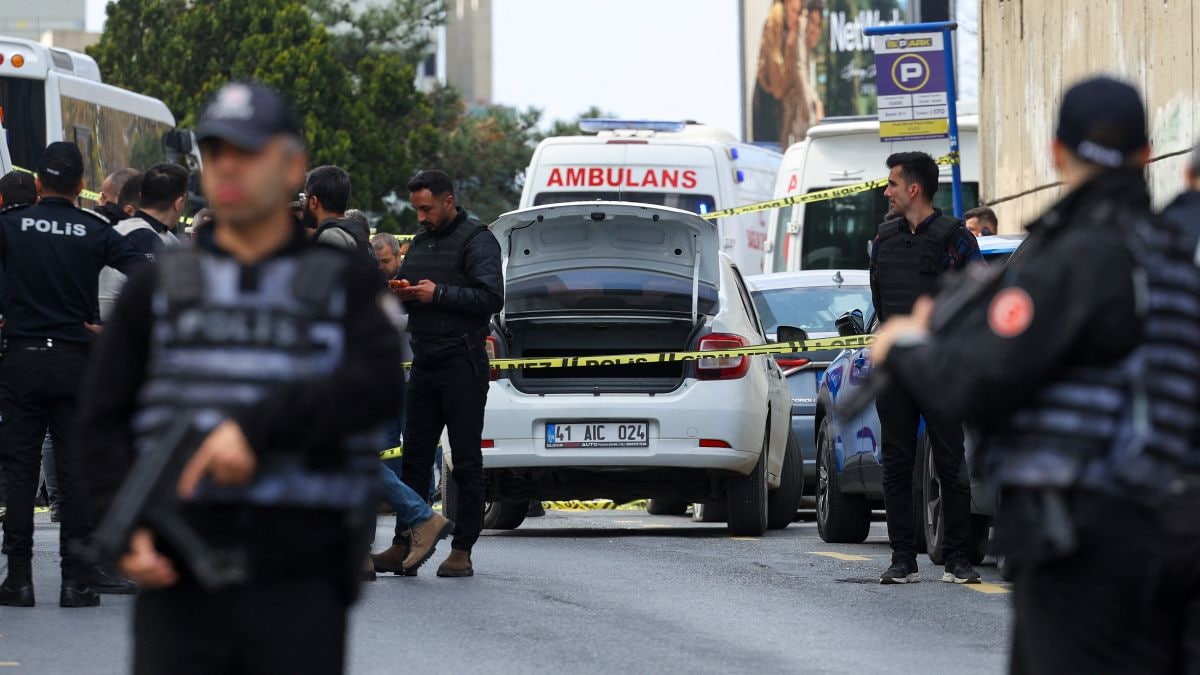
A 17-year-old gunman armed with a shotgun opened fire near the southern Turkish city of Mersin on Monday, killing four people and wounding eight others. The attacker struck a local restaurant near Tarsus, killing the business owner and an employee, before killing a truck driver and a young livestock herder elsewhere during a frantic escape. The rampage triggered a massive police manhunt involving helicopters and special operations units across the region. This bloodshed comes on the heels of two separate, devastating teenage shooting attacks that rocked the nation just one month prior, signaling a dangerous shift in Turkey's security reality.
The incident shatters the long-held domestic narrative that mass public shootings are a distinctly Western affliction. For decades, Turkish authorities pointed to strict firearm regulations as a shield against random public massacres.
The numbers tell a different story. Turkey is quietly grappling with a surge in youth radicalization, easy illegal firearm access, and copycat violence fueled by unmonitored digital spaces.
The Tarsus Rampage and the Spree Element
Local news agencies DHA and IHA reported that the assailant targeted the restaurant with deliberate speed, then fled in a vehicle to continue his violence elsewhere. This was not a localized dispute. It bears all the hallmarks of a modern active shooter profile.
Among the casualties were everyday citizens caught completely off guard. A truck driver passing through, a teenager tending to his family’s livestock, and service workers trying to finish a shift. The randomness of the targets indicates a desire for a body count rather than a specific vendetta.
The immediate deployment of helicopters and specialized tactical units highlights how seriously Ankara takes the threat. The state recognizes that public panic can spread faster than the violence itself.
The Ghost of Last Month's Classrooms
To view the Mersin tragedy in isolation is a profound analytical failure. Just four weeks earlier, a pair of back-to-back school shootings stunned the nation.
First, an 18-year-old former student carrying a shotgun entered a vocational high school in Siverek, wounding 16 people before turning the weapon on himself when cornered by police. Less than 24 hours later, a 13-grade student in Kahramanmaraş stole his retired police officer father’s service weapons, packed five pistols and seven magazines into his schoolbag, and killed four people inside a middle school.
Three major mass casualty events carried out by teenagers within 35 days. This is a pattern.
Turkish social media channels have been flooded with frantic questions from parents demanding to know how children and teenagers are acquiring high-powered firearms so easily. While the Kahramanmaraş shooter utilized a familial loophole by stealing a parent's service weapon, the shooters in Siverek and Mersin wielded shotguns that are increasingly simple to source through illicit online networks.
The Fiction of Strict Gun Laws
Turkey technically boasts rigorous background check requirements for handgun ownership. Applicants must undergo psychological evaluations, provide clean criminal records, and pay steep licensing fees.
The loophole lies in the parallel market for shotguns and modified blank-firing pistols.
Unlicensed manufacturing operations and black-market digital vendors have turned the purchase of hunting rifles and automatic shotguns into a frictionless online transaction. A teenager with an internet connection and a digital wallet can bypass the state's entire regulatory apparatus.
The Turkish Interior Ministry has been quietly studying restrictions on social media platforms popular among teenage gun enthusiasts. Yet, tracking decentralized sales via encrypted messaging applications remains an uphill battle for local cybercrime divisions.
Radicalization in the Digital Shadows
A veteran investigator looking at these cases will immediately notice the digital footprints left behind. Prior to the Siverek vocational school attack, the 18-year-old shooter openly broadcasted his violent intent on social media platforms.
The internet has democratized the aesthetics of mass violence. Isolated teenagers in Anatolian provinces are consuming the same extremist manifestos, nihilistic forums, and subcultural memes as their counterparts in Europe and North America. They glorify previous attackers, turning mass murder into a gamified pursuit of notoriety.
The state’s traditional security apparatus is poorly equipped to counter this specific threat. Police checkpoints and physical surveillance can do very little to intercept a quiet 13-year-old or 17-year-old who is radicalizing inside his bedroom.
The Structural Threat to Public Spaces
Ankara now faces a difficult policy crossroad. Increasing physical security at every restaurant, highway stop, and public school across the country is logistically impossible and economically ruinous.
The solution requires an aggressive overhaul of digital arms trafficking networks and a fundamental reassessment of how the state monitors youth mental health and online radicalization. Relying on the old rhetoric that gun violence is a foreign cultural disease will no longer suffice. The blood on the floor of a quiet restaurant near Tarsus proves the crisis has already arrived.