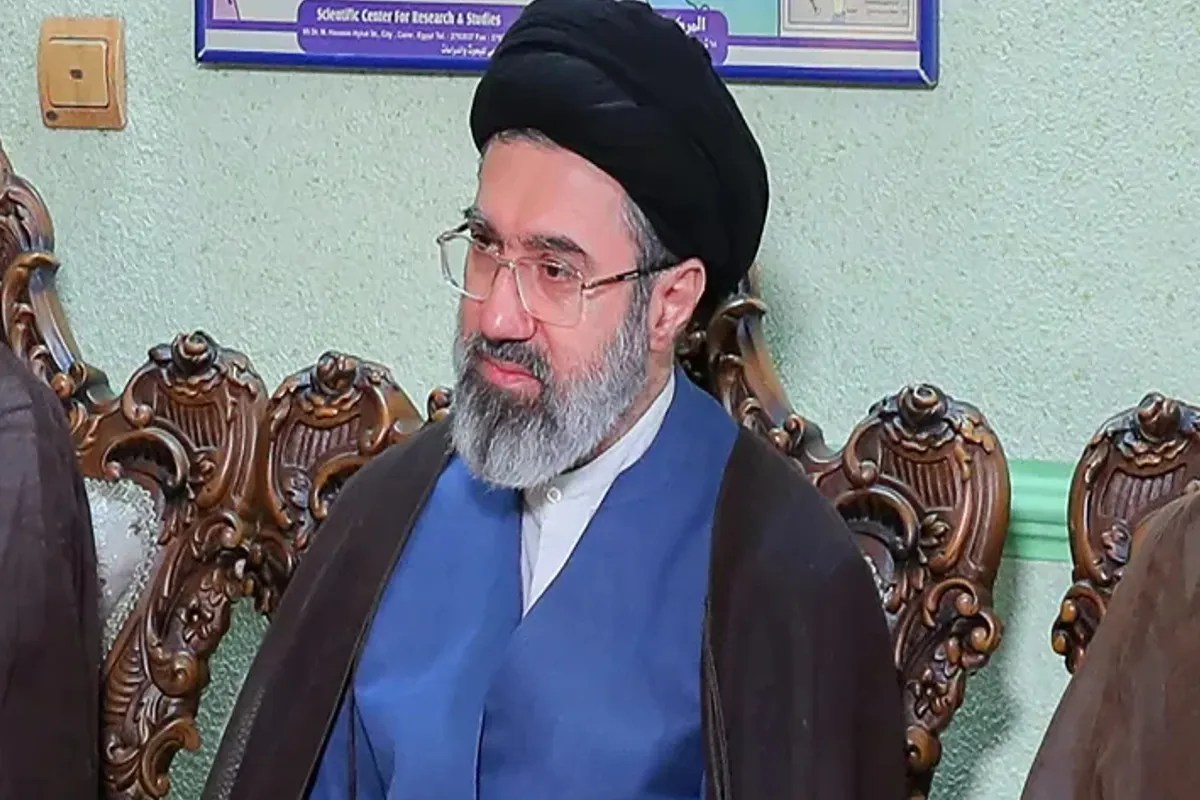
Rumors swirling across international intelligence channels suggest that Mojtaba Khamenei, the powerful cleric and son of Iran’s late Supreme Leader, survived an alleged targeted strike on a medical facility before vanishing from public view. Reports originating from foreign-based opposition outlets and unverified regional leaks point to a chaotic sequence of events inside Tehran's tightly controlled security apparatus. While official state media in Iran maintains radio silence on the survival claims or the hospital incident itself, the disappearance of a central figure in the succession architecture of the Islamic Republic sends immediate shockwaves through the region.
The mechanics of succession in Tehran have always resembled a high-stakes chess match played behind lead-lined curtains. When whispers of hospital attacks and clandestine evacuations surface, they expose the fragile fault lines running directly through the clerical establishment. This is not merely a tale of personal survival or medical emergencies. It is a stress test for a system that has spent decades consolidating power around a very narrow circle of ideological hardliners and military commanders.
The Architecture of Succession and Vulnerability
To understand why a reported strike on a medical facility housing Mojtaba Khamenei commands the attention of global capitals, one must examine how power is structured within the Iranian state. The Office of the Supreme Leader is not just an administrative desk; it is the nervous system of the regime. It coordinates patronage networks, religious foundations, intelligence operations, and the economic empire controlled by the Islamic Revolutionary Guard Corps.
For years, analysts treated Mojtaba Khamenei as the most logical successor to his father, Ali Khamenei. His influence extended far beyond his religious credentials. He cultivated deep institutional ties with security commanders and managed key financial assets that keep the regime afloat under heavy sanctions. Yet, being the heir apparent in an authoritarian structure makes an individual both powerful and intensely vulnerable.
When regional tensions spike and covert operations breach the perimeter of high-security zones, the vulnerability of the top tier becomes glaringly apparent. A hospital attack—if verified by independent forensic or diplomatic channels—represents a profound intelligence failure or a calculated escalation designed to decapitate or destabilize the command chain before a transition of power can be finalized.
The Fog of War and Regional Implications
Information vacuum is the primary weapon of authoritarian governance. When a prominent figure disappears from public sight following an alleged military strike, the resulting silence is rarely accidental. Tehran's media blackout serves a dual purpose. It prevents panic among the regime's loyalist base and denies adversaries a clear assessment of operational success or failure.
However, silence also breeds instability. Within the corridors of power in Tehran, competing factions within the security apparatus and the clergy are likely scrambling to secure their positions. If Mojtaba Khamenei is indeed incapacitated, injured, or forced into deep concealment, the carefully laid plans for succession are thrown into immediate disarray.
Regional adversaries watch these developments with intense calculation. A weakened or fractured leadership in Tehran alters deterrence equations across the Middle East. Proxy networks that depend on centralized coordination and funding from the supreme office face immediate uncertainty regarding their future orders and resource streams.
Beyond the Headlines
The sensationalized reports of miraculous survivals and hospital bombings often obscure the grinding, unglamorous reality of bureaucratic survival in a militarized state. Leaders in Tehran do not rely on a single building or a single individual to maintain continuity. Redundancy is built into the apparatus, even if the sudden absence of a pivotal figure creates temporary paralysis.
As intelligence agencies sift through intercepted communications, satellite imagery, and diplomatic cables, the definitive truth of what happened inside that reported facility remains buried under layers of state secrecy. What is clear, however, is that the contest for the future of the Iranian state has entered a volatile new phase where the physical safety of top decision-makers is no longer guaranteed by state borders or fortress-like security protocols. The disappearance of Mojtaba Khamenei is not the end of the story; it is the opening salvo in a much wider struggle for the soul of the regime.


