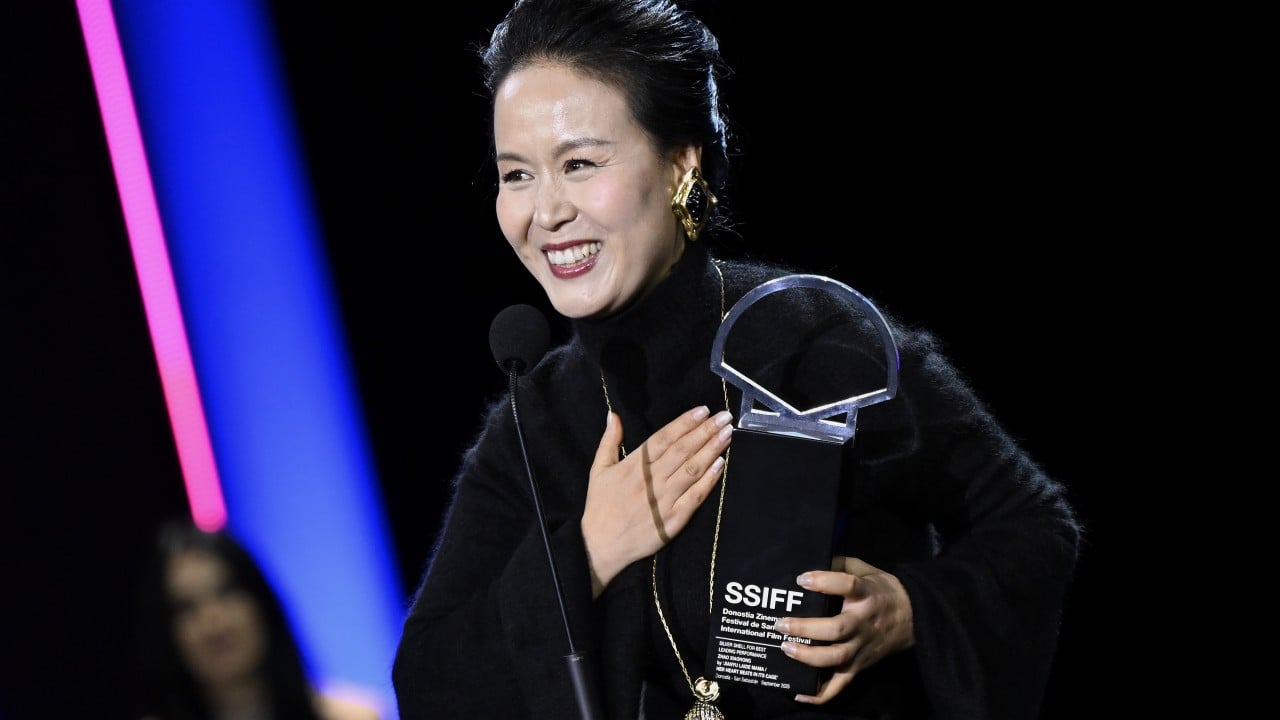
The theatrical cancellation of the award-winning feature Her Heart Beats in Its Cage (released in some markets as Mother from Prison) has shattered the fragile consensus between China’s independent filmmakers, international film festivals, and domestic audiences. Originally scheduled for a nationwide mainland release on May 30, 2026, the movie was abruptly pulled from the state release calendar following an unprecedented wave of public fury. This was not a standard case of bureaucratic state censorship. The backlash came from the ground up, driven by a domestic audience that weaponized official court records to dismantle the film's core promotional premise. Independent cinema in China has long used international accolades to shield itself from local scrutiny, but that strategy has officially collapsed under the weight of digital transparency.
The movie was marketed as a definitive, raw examination of domestic abuse. It told the harrowing story of Zhao Xiaohong, a woman who allegedly suffered years of systemic marital violence before killing her husband in an act of desperation. After a decade in prison, she emerges to rebuild her broken life, attempting to reconcile with her son and her former mother-in-law.
The production possessed an extraordinary hook. Zhao Xiaohong did not just inspire the screenplay; she played herself on screen. Her real-life son and her real-life mother-in-law were also cast to play themselves, staging their actual familial reconciliation for the cameras.
International critics were captivated by this hyper-realistic approach to true-crime adaptation. At the 73rd San Sebastián International Film Festival in September 2025, the film achieved prestige status when Zhao—a non-professional actress with an actual criminal record—won the prestigious Silver Shell for Best Leading Performance. For a brief moment, the project was hailed as a monumental triumph for Chinese social-issue cinema.
The international praise quickly soured when the film neared its commercial release in mainland China. Netizens and legal commentators bypassed the marketing copy and dug directly into the archives of the Intermediate People's Court of Xi'an City in Shaanxi province.
The legal reality established by the state archives flatly contradicted the cinematic narrative.
According to the official second-instance criminal ruling, Zhao was not a victim acting in self-defense during a cycle of severe abuse. In 2009, she engaged in a verbal altercation with her husband, Zhang Bo, over trivial household matters. The dispute escalated, and Zhao actively wielded a fruit knife, delivering a single, highly forceful stab directly into her husband’s chest. The blade ruptured his aortic root, causing near-instantaneous death.
Furthermore, witness testimonies from neighbors and family members preserved in the court documents painted Zhang Bo as a cooperative partner who performed the majority of the domestic labor. The couple had a normal relationship punctuated by occasional bickering. The judicial system found no evidence of systemic domestic violence. Zhao was convicted of intentional injury causing death and sentenced to 15 years in prison, serving 11 years before her early release.
When the public realized that an international film festival had crowned a convicted killer for a performance that effectively rewritten her own crime, the indignation was fierce. Internet users accused the production company of using the genuine social trauma of domestic abuse to whitewash a homicide.
The Illusion of the Untouchable Festival Prize
For decades, Chinese directors operating on the fringes of the state-approved studio system followed a familiar playbook. They shot low-budget, gritty dramas, smuggled them to European film festivals, collected critical accolades, and used that global prestige to negotiate a profitable, limited release back home. The assumption was that Western critical approval automatically translated to cultural authority.
Her Heart Beats in Its Cage proved that this formula is dead. The more the film was celebrated in Europe as a poignant testament to female endurance under patriarchy, the more it alienated the domestic public who felt Western juries were being actively deceived by manufactured trauma.
The fallout was immediate and systemic. High-profile figures who had lent their cultural capital to the film rapidly retreated. Acclaimed actress Yao Chen, who had initially championed Zhao’s performance on social media as one of the bravest pieces of acting she had ever seen, scrubbed her accounts of all promotional material. Her studio issued a swift statement admitting she had failed to fully investigate the background of the case before offering her endorsement. Producer Wang Han followed suit, offering a public apology, terminating his relationship with the film crew, and demanding his name be removed from the credits.
The Breakdown of Production Legality
The controversy expanded far beyond a debate over creative license. As legal scholars scrutinized the production timeline, they uncovered structural violations of Chinese law that point to an incredibly reckless production environment.
Zhao began filming scenes for the movie in 2019. At that exact time, she was still technically serving her criminal sentence under a day-release or community correction framework, and her political rights remained stripped by judicial order until 2023. Under China’s Prison Law, penal facilities and the activities of inmates cannot be utilized for commercial profit.
By employing an active convict to star in a commercial venture destined for international sales, the production company walked directly into a legal minefield.
Furthermore, the project violated the mandatory pre-inspection protocols established by China’s Film Industry Promotion Law. Principal photography commenced in 2019, but the film was not officially registered with film regulators until 2021. This deliberate circumvention of early oversight allowed the production to bypass the standard script-matching checks that would have immediately flagged the discrepancy between the screenplay and the Xi'an court records.
The State Cinema Administration of China stepped in following the online uproar. Zhao’s personal accounts were banned across major digital platforms including Weibo, cutting off her ability to defend the project or profit from her sudden digital fame. Regulators in Shanghai launched an official investigation into the film’s financing and approval pipeline.
The Ethics of True-Crime Exploitation
The collapse of the film has forced a long-overdue calculation within the industry regarding the boundaries of the true-crime genre. Documentaries and biopics frequently alter timelines for dramatic pacing. That is an accepted reality of adaptation.
The calculation changes entirely when an active perpetrator is handed the script, the camera, and the direct authority to write the history of their own victim. By casting the deceased man’s underage son and grieving mother alongside his killer, the film crossed from creative dramatization into psychological exploitation.
Domestic abuse remains an incredibly urgent, highly sensitive social issue in China. The implementation of the Anti-Domestic Violence Law signaled a institutional acknowledgment of the systemic harm women face within domestic spaces. Because public sympathy for genuine victims of domestic violence is incredibly high, the audience felt a deep sense of betrayal when they discovered that a real case of homicide had been retrofitted into a fashionable narrative of empowerment.
The film sought to elicit a sophisticated, high-minded response from its audience. It wanted viewers to grapple with the gray areas of rehabilitation, forgiveness, and maternal guilt. Instead, it ran aground on a much simpler principle. You cannot build a monument to truth on a foundation of altered public records.
The swift destruction of Her Heart Beats in Its Cage serves as a stark warning to the next generation of independent filmmakers seeking international prestige. The domestic market is no longer passive. It possesses the digital tools, the legal literacy, and the collective will to fact-check the art it consumes. If a film claims to tell a true story, it had better be prepared for the audience to read the court files.