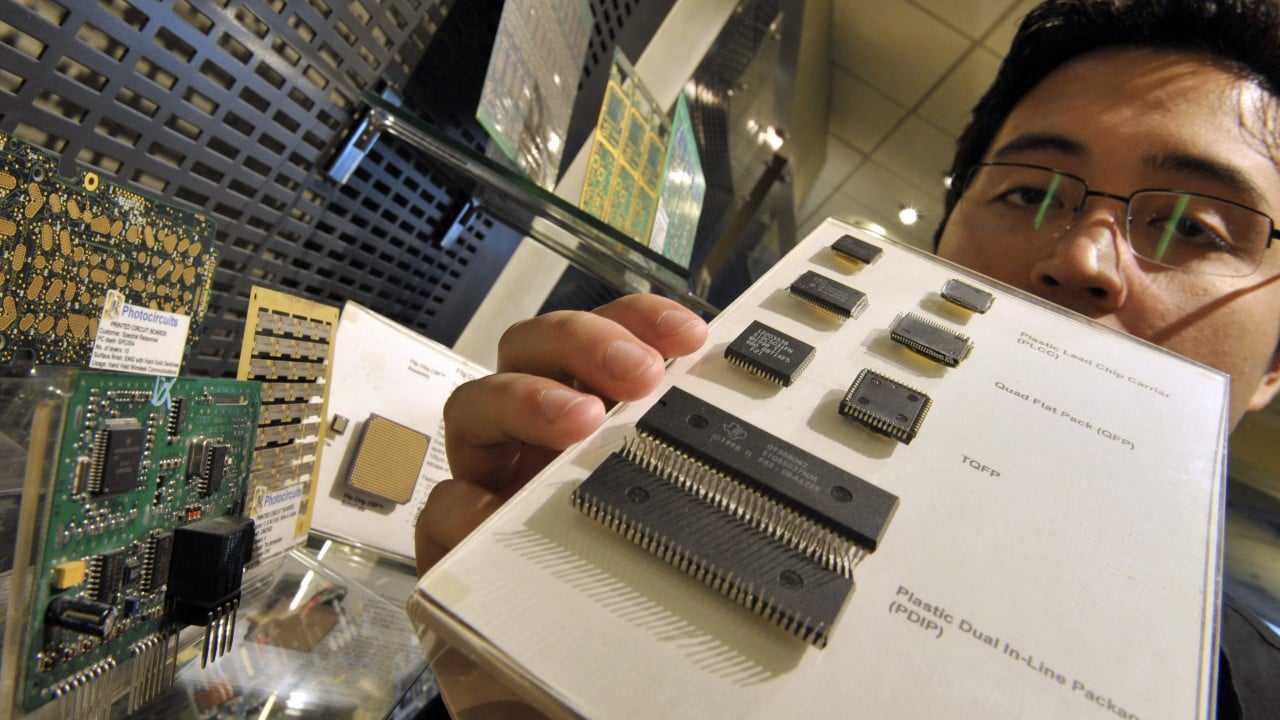
The Philippines wants its semiconductor and electronics exports to hit $110 billion by 2030, aiming to climb from basic assembly floors into the rarified air of integrated circuit design and wafer fabrication. It is a grand political aspiration backed by an advisory council and multi-year workforce roadmaps designed to train over 120,000 specialists. Yet the ground reality inside the economic zones tells a more complicated story of structural bottlenecks, punishing electricity tariffs, and regional competitors who have spent decades building deep upstream ecosystems.
For decades, the archipelago has functioned as a reliable workhorse in the back-end tier of the global microchip supply chain. Global giants like Texas Instruments, Analog Devices, and Amkor operate massive facilities here, specializing in Outsourced Semiconductor Assembly and Test operations. Chips carved out of pristine silicon wafers in Taiwan, South Korea, or the United States routinely find their way to Philippine plants. Here, they are diced, wire-bonded, packaged, and subjected to rigorous thermal and electrical testing before heading out to device manufacturers. If you liked this post, you might want to check out: this related article.
This backend dominance accounts for more than half of the country’s total merchandise export revenue. It is a multi-billion dollar engine. But it is also a low-margin corner of a high-stakes global trade. While fabrication plants command the lion's share of semiconductor profits through intellectual property and capital-intensive manufacturing, packaging facilities capture a much thinner slice of the financial pie.
To bridge this gap, state planners have mapped out a transition toward front-end activities. The strategy sounds compelling on paper. Move past simple wire-bonding. Capture a larger slice of integrated circuit design. Build local capability for mature-node wafer fabrication. Transform the country from a mere assembly subcontractor into an end-to-end semiconductor powerhouse. For another angle on this event, see the recent update from MarketWatch.
Execution, however, collides with the unyielding laws of economics and infrastructure.
Consider the raw cost of electricity. The Philippines sustains some of the highest industrial power tariffs in all of Southeast Asia. Semiconductor manufacturing does not pause. Cleanrooms require continuous, energy-intensive climate control, massive ventilation scrubbers, and uninterrupted power grids to maintain sub-micron precision environments. When an industrial facility faces erratic power pricing or steep monthly utility bills, profit margins evaporate before a single batch of chips clears quality assurance. Operating a modern fabrication facility demands immense amounts of stable, cheap power—a resource that remains scarce and expensive in the domestic grid.
Then examine the upstream vacuum. A functional semiconductor ecosystem resembles a dense, interconnected web of chemical suppliers, specialized equipment vendors, rare gas distributors, and precision component makers. In places like Taiwan or South Korea, a fabrication plant can source specialized photoresists, ultra-pure chemicals, and replacement parts within hours. In the Philippines, the supply chain remains largely linear rather than clustered. Most raw materials, chemical precursors, and intermediate components must be imported from external regional hubs. This dependence introduces inherent vulnerabilities, prolonged lead times, and exposure to international shipping bottlenecks.
Workforce development presents yet another steep climb. While the country produces a steady stream of capable engineering graduates, specialized semiconductor design and advanced process engineering require years of targeted, highly technical training. Government upskilling initiatives aim to bridge the gap, but private sector employers frequently note a wide chasm between general electrical engineering curricula and the hyper-specific software tools and automation languages used in modern integrated circuit design. Talented engineers often look toward remote work opportunities or migration to greener pastures abroad, lured by compensation packages that local firms struggle to match.
Regional rivalry compounds these domestic hurdles. Vietnam has captured massive market share in consumer electronics assembly by streamlining foreign investment and building massive manufacturing clusters. Malaysia has aggressively upgraded its Penang hub into an advanced packaging and testing center, drawing billions in multinational capital with specialized tax holidays and ready-to-plug-in industrial parks.
None of this implies that the 2030 target is entirely a phantom. The country holds distinct, defensible advantages in specific niches. Its deep institutional experience in automotive-grade chip packaging, medical device sub-assemblies, and power management integrated circuits gives it an established credibility that newcomers cannot easily replicate. Western multinational firms seeking geographical diversification away from geopolitical flashpoints view the political alignment and English-proficient technical workforce as significant operational assets.
Success will not be found by trying to outspend neighbors on multi-billion-dollar cutting-edge fabrication plants that require decades of subsidies to break even. Realizing a transformed export economy requires aggressive deregulation, localized power grid modernization, and targeted incentives that make domestic chemical and material suppliers want to set up shop next door to the assembly plants.
The roadmap has been printed, bound, and placed on executive desks. Whether the state can bend the stubborn realities of infrastructure and cost to match its ambitions remains the defining industrial question of the decade.