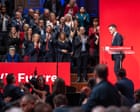
The myth of the modern Labor majority is unraveling in New South Wales, pinned between an insurgent right-wing populist wave and a mutinous progressive base. When Premier Chris Minns took the stage at Sydney Town Hall for the NSW Labor State Conference, he told delegates that the party faces a metaphorical "Everest" to retain power at the March 2027 state election. Minns is correct about the cliff face, but his public calculus deliberately misdiagnoses the terrain. The structural threat to his government is not merely a surging One Nation at 22 percent in the polls; it is the fracturing of Labor’s own working-class base as the administration attempts to manage internal warfare over civil liberties, housing, and the cost of living.
To understand why NSW Labor is suddenly panicking despite sitting ahead of a fractured Coalition in two-party terms, one must look at the math. The primary vote for Labor is hovering at a dangerous 32 percent. In a traditional two-party system, that number would spell disaster, but the collapse of the Liberal-National Coalition's primary vote to 26 percent has temporarily masked Labor's vulnerability. The vacuum is not being filled by centrist independents or the Greens, but by Pauline Hanson’s One Nation. Holding a staggering 22 percent in recent polling, the populist right has evolved from a rural fringe grievance into a suburban powerhouse capable of dictating the preferences that will decide the next government. For a different view, read: this related article.
Minns attempted to counter this threat by deploying classic industrial strategy, announcing a massive $12 billion, 15-year injection to bring train manufacturing back to the Hunter region. The plan promises 550 manufacturing jobs at state-owned, privately operated facilities in Teralba or Broadmeadow, coupled with 400 new government-funded apprenticeships. This is an explicit attempt to patch the leaks in Labor’s traditional blue-collar heartland, offering tangible economic security to areas hit hard by energy transitions and inflation. Yet, this manufacturing nostalgia cannot fully insulate the party from the cultural and economic anxieties that One Nation is successfully exploiting.
The premier used his address to attack One Nation's vision of an "Australian monoculture," urging his party to fight back at the ballot box against exclusionary populism. But this rhetoric ignores how Labor’s own policy choices created the vacuum. Working-class voters in the outer suburbs of Sydney and regional hubs are not defecting to the right solely because of cultural grievances. They are leaving because of systemic economic strain. Rents are soaring, the state's infrastructure is buckling, and recent budgetary measures—such as a modest $100 cut to car registration and targeted public transport fee relief—have felt like minor band-aids on deep financial wounds. When major parties fail to deliver structural relief, populist promises of border control and cultural protectionism become highly appealing alternatives. Further reporting regarding this has been provided by BBC News.
Simultaneously, Minns is fighting a secondary war against his own rank and file. The conference floor exposed a deep ideological chasm between the parliamentary leadership and the party’s activist base. Ahead of the gathering, 56 local Labor branches and the entire left faction backed motions demanding the immediate repeal or review of the state’s contentious anti-protest laws. These laws, originally passed by the previous Coalition government with Labor's backing and subsequently tightened under Minns, carry penalties of up to two years in jail for blocking major facilities.
The internal fury over these restrictions reached a boiling point after the NSW Supreme Court struck down recent legislation restricting demonstrations outside places of worship. Rank-and-file members are openly accusing Minns of autocratic governance. The leadership’s response was telling: the social justice and global affairs platforms—where these contentious debates on protest laws, gambling reform, and the AUKUS nuclear agreement were scheduled—were buried at the absolute bottom of the conference agenda.
This tactical suppression of debate backfired visually and politically. As Minns walked out to receive a choreographed standing ovation from union delegates, pro-Palestinian protesters unfurled a banner from the Town Hall balcony before being dragged away by NSW Police. Outside the venue, lines of police officers and heavy security fencing kept hundreds of demonstrators, including members of Labor Friends of Palestine, at bay. The optics were clear: a Labor Premier protected from his own constituents by the very police state apparatus his party units are fighting to dismantle.
The discontent extends heavily into social policy, particularly the government's sluggishness on gambling reform. Despite promises to curb the predatory influence of the poker machine lobby, advocates within and outside the party point to surging pokies revenue as proof that the administration has failed to mitigate systemic gambling harm. By prioritizing the financial interests of hospitality venues and clubs over the urgent welfare of vulnerable communities, the government has alienated the social justice wing that provides the party's ground-game volunteer energy.
Labor’s strategy for the 2027 election relies on a fragile gamble. Minns hopes that high-visibility infrastructure spending in the regions, combined with warning voters about a "dark, dystopic" right-wing future, will be enough to crawl over the line. But fear campaigns lose their potency when voters feel their present reality is already unmanageable. If the premier continues to dismiss the concerns of his rank-and-file members as mere background noise while offering only incremental fixes to an escalating cost-of-living crisis, the climb up Everest will not end in a tough victory. It will end in a devastating fall, leaving a highly volatile minority parliament in its wake.