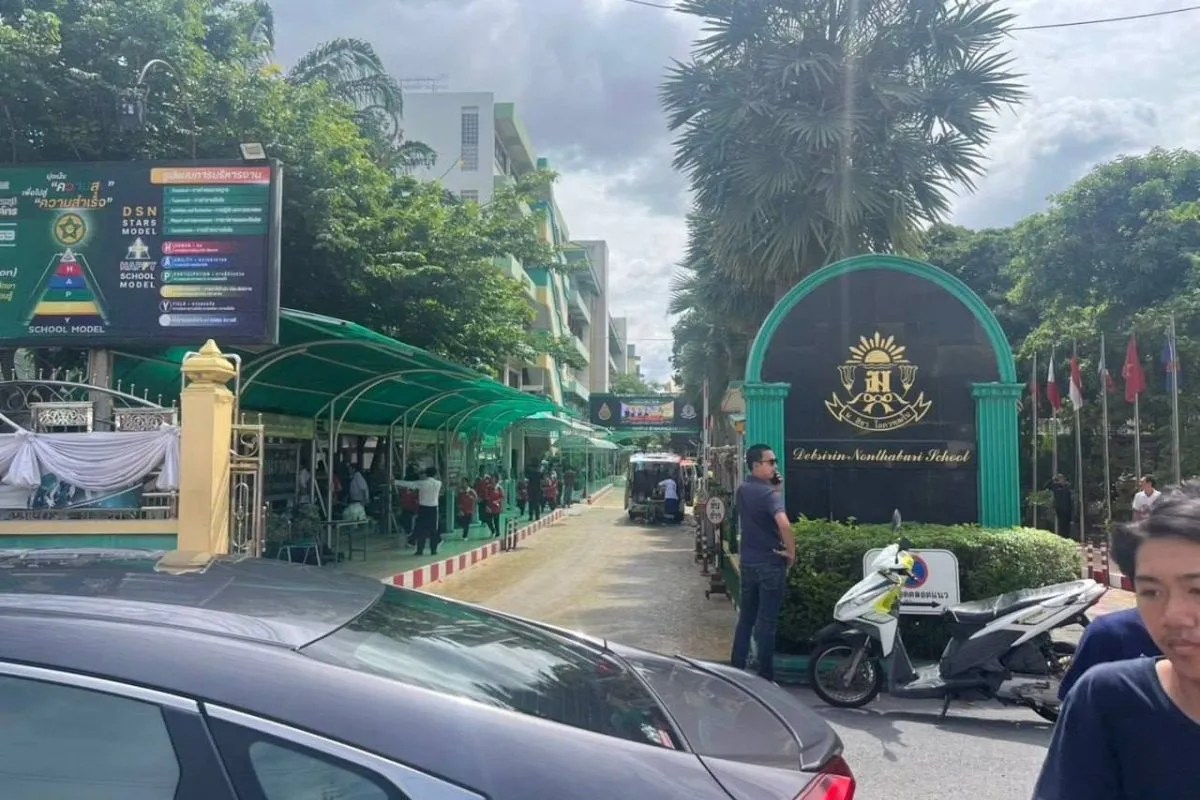
A 14-year-old student opened fire at Debsirin Nonthaburi School on the outskirts of Bangkok, killing multiple people and reigniting a harsh national conversation about firearms access and youth mental health. The tragedy, which left eight dead overall including the suspect's grandparents, shattered the illusion that mass violence in educational institutions remains an isolated anomaly in Southeast Asia.
The Anatomy of a Breaking Point
The timeline of the violence exposes a calculated progression. The teenage perpetrator initiated the rampage at a residential home, shooting and killing his grandparents with a nine-millimeter handgun that belonged to his grandfather. From there, the armed teenager traveled to the secondary school in Nonthaburi province. Wearing his school uniform, he entered the campus and discharged at least 26 rounds, targeting faculty and staff members.
Panic ensued. Students dove beneath desks, listening to the concussive reports of gunfire echoing through hallways. While initial local reports focused heavily on the physical carnage, subsequent official updates clarified that alongside those struck by bullets, over a dozen children suffered injuries—ranging from fractures to severe contusions—while scrambling to escape the chaos of the stampede. The suspect was later found dead at the scene from an apparent suicide, ending the immediate threat but leaving an institutional vacuum of answers.
The Overlooked Pressures of Academic Performance
Prime Minister Anutin Charnvirakul noted during initial briefings that the perpetrator was reportedly under intense academic stress and had carefully planned the assault. Yet, pointing simply to adolescent stress reduces a systemic failure to an individual pathology. Thailand's education system is notoriously hyper-competitive. High-stakes testing, relentless pressure from families, and a profound lack of accessible, destigmatized psychological support create a pressure cooker for youth.
When a child reaches for a firearm instead of a counselor, the failure extends far beyond domestic security. It points to a societal blind spot regarding adolescent mental health. Schools across the region are built for academic tracking, not for identifying behavioral crises. Teachers are educators, not psychiatric screeners. When emotional fractures go unnoticed, the results can turn catastrophic.
The Firearms Paradox
Thailand possesses one of the highest rates of civilian gun ownership in Southeast Asia, with millions of registered and unregistered firearms circulating within private hands. Despite statutory restrictions, obtaining a weapon via familial channels remains dangerously straightforward, as demonstrated by the ease with which a minor accessed his grandfather's weapon.
Politicians routinely promise sweeping legislative overhauls in the immediate wake of mass casualty events. Following previous atrocities, such as the horrific 2022 massacre at a rural day care center in Uthai Sawan, vows of stricter gun control echoed through government houses. Yet, enforcement mechanisms remain lax, and cultural attitudes toward private weapon ownership for self-defense change slowly. Stricter background checks and mandatory secure storage laws are frequently diluted by bureaucratic resistance and powerful lobby interests.
Institutional Blind Spots and the Path Forward
Security protocols at secondary schools across suburban Bangkok remain porous. Unlike commercial aviation or high-security government facilities, open-campus designs meant to foster a welcoming academic environment also render campuses vulnerable to determined intruders. Metal detectors and armed guards run contrary to the pedagogical philosophy of Thai public education, forcing administrators into a reactive posture.
Real reform requires moving past superficial security theater. Comprehensive crisis intervention training, reduced student-to-counselor ratios, and strict legal liability for gun owners who fail to secure firearms away from minors are foundational steps. Until systemic structural changes address both weapon accessibility and the psychological pressures crushing the younger generation, schools will remain fragile targets.
Sirens have faded outside the gates of Debsirin Nonthaburi, but the structural vulnerabilities that allowed a teenager to empty multiple magazines inside a hallway remain entirely intact