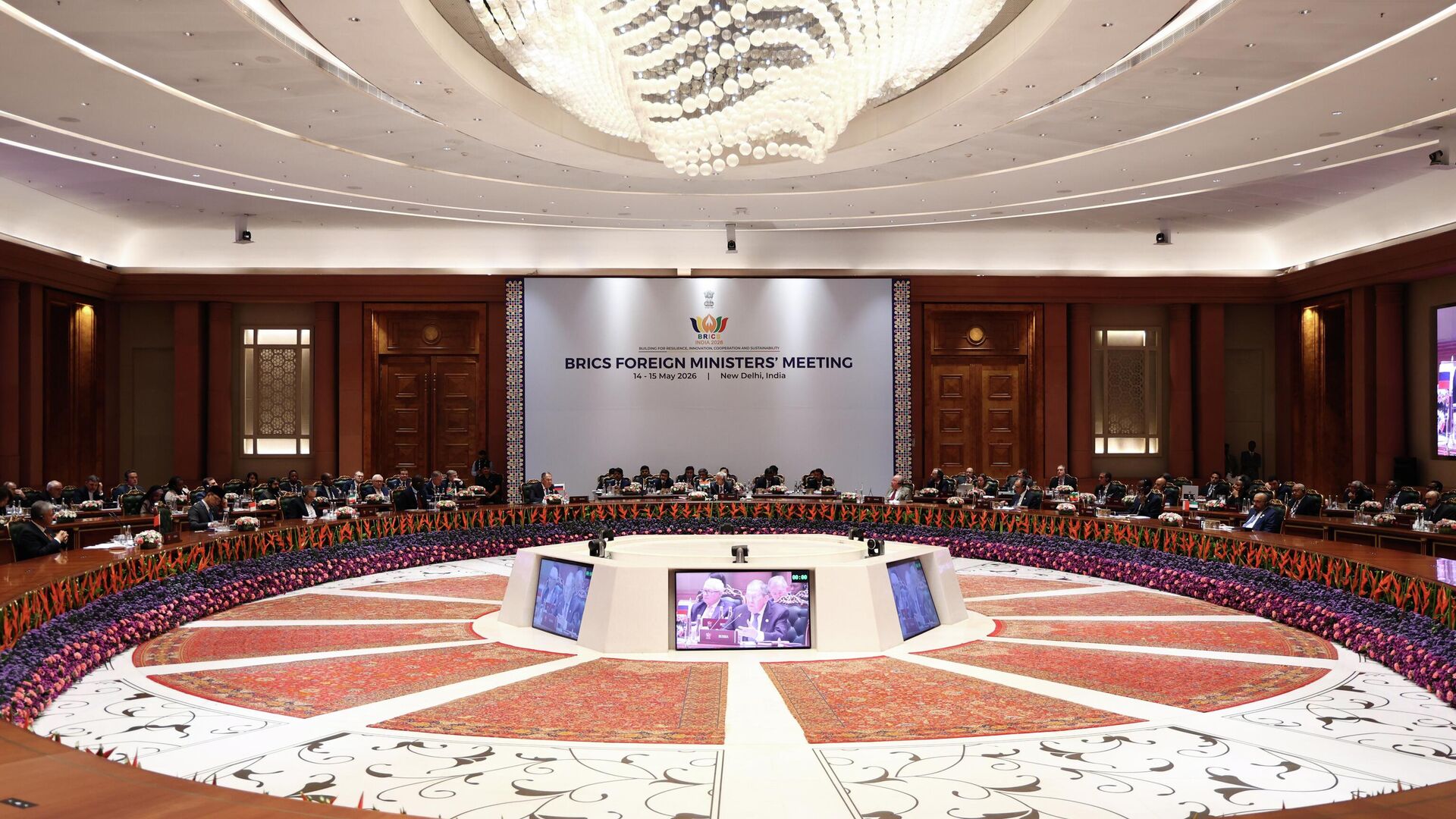
When Prime Minister Narendra Modi welcomed world leaders to New Delhi's Bharat Mandapam for the eighteenth BRICS summit, the geopolitical atmosphere carried a distinctly different weight than previous gatherings. Observers hunting for dramatic geopolitical fractures often miss the structural rewiring happening in plain sight. India's fourth tenure holding the rotating chairship of the bloc was never designed to be an exercise in loud defiance against Western-led institutions. Instead, New Delhi approached the expanded eleven-member coalition with an insistence on operational pragmatism, steering a massive economic bloc away from rhetorical posturing and toward institutional durability.
For decades, multilateral summits ran on a predictable script of communiqués filled with polite compromises that rarely survived the flight home. But the bloc that convened in New Delhi had evolved past a loose acronym coined by investment bankers. Following successive waves of expansion incorporating energy powerhouses like Saudi Arabia and the United Arab Emirates alongside regional anchors such as Egypt, Ethiopia, Indonesia, and Iran, the grouping accounts for a staggering share of global energy production, raw materials, and demographic momentum. Managing this heterogeneous coalition requires a delicate diplomatic balancing act, particularly when Western capitals watch closely for any sign of a unified anti-Western front.
India refused to let the summit devolve into a polarized theater. Under the framework of resilience, innovation, cooperation, and sustainability, New Delhi prioritized initiatives that directly address the vulnerability of emerging economies to supply chain shocks and currency volatility. The explicit push toward local currency settlements and interoperable financial messaging systems reflects a calculated hedging strategy rather than an overnight attempt to dismantle the global financial architecture. Nations burdened by heavy dependence on traditional dollar-denominated liquidity channels are quietly building alternative plumbing. This localized financial infrastructure provides a cushion against external monetary tightening, protecting domestic growth from decisions made thousands of miles away in central bank boardrooms.
The geopolitical tightrope was visible in the drafting rooms of the New Delhi Declaration. Analysts immediately zeroed in on what was absent from the text rather than what was included, noting that the document omitted specific references to certain ongoing European conflicts that had dominated previous declarations. This omission was not an oversight, but a deliberate diplomatic concession designed to prevent consensus from collapsing under the weight of irreconcilable regional positions. By narrowing the focus onto shared developmental bottlenecks—such as agricultural resilience, digital public infrastructure, and green transition financing—the host nation successfully forged a functional consensus among countries that frequently find themselves at odds on the bilateral stage.
Consider the pragmatic architecture behind India's promotion of digital public infrastructure. Rather than exporting proprietary software or ideological frameworks, New Delhi offered scalable, open-source technological models designed to build transparent state-to-citizen delivery systems in the developing world. When nations with vastly different governance models agree to harmonize customs procedures and establish joint research frameworks for artificial intelligence, they are laying down concrete tracks for long-term economic integration.
Bilateral diplomacy during the three-day summit mirrored this methodical approach. Behind closed doors, marathon sessions between Indian leadership and counterparts from key partner states bypassed public media narratives to focus on critical mineral supply chains, maritime security in the Indian Ocean, and counter-terrorism coordination. The inclusion of a firm stance against cross-border terror networks and illicit financing demonstrated that national security priorities remained front and center despite the broader economic mandate of the bloc.
Critics frequently argue that an expanded coalition of eleven sovereign states with competing territorial claims and economic ambitions will inevitably buckle under its own contradictions. That skepticism is grounded in historical precedent; large multilateral organizations often struggle with internal friction. Yet, dismissing the grouping as a mere talking shop underestimates the gravitational pull that collective market size exerts on global commerce. When major energy exporters and massive consumer markets institutionalize trade corridors independent of traditional Western pathways, the center of gravity shifts incrementally eastward and southward.
The success of the New Delhi summit will not be measured by the eloquence of its final declarations, but by whether the proposed mechanisms—from the expanded local currency credit facilities to the startup innovation networks—survive the transition to the next chairship. Prime Minister Modi’s administration succeeded in anchoring the bloc's agenda firmly within the practical concerns of the Global South, shifting the conversation away from abstract systemic confrontation and toward operational self-reliance. As these foundational agreements take root, the institutional machinery set in motion under Indian leadership will continue to shape global economic corridors long after the diplomatic delegations have departed.