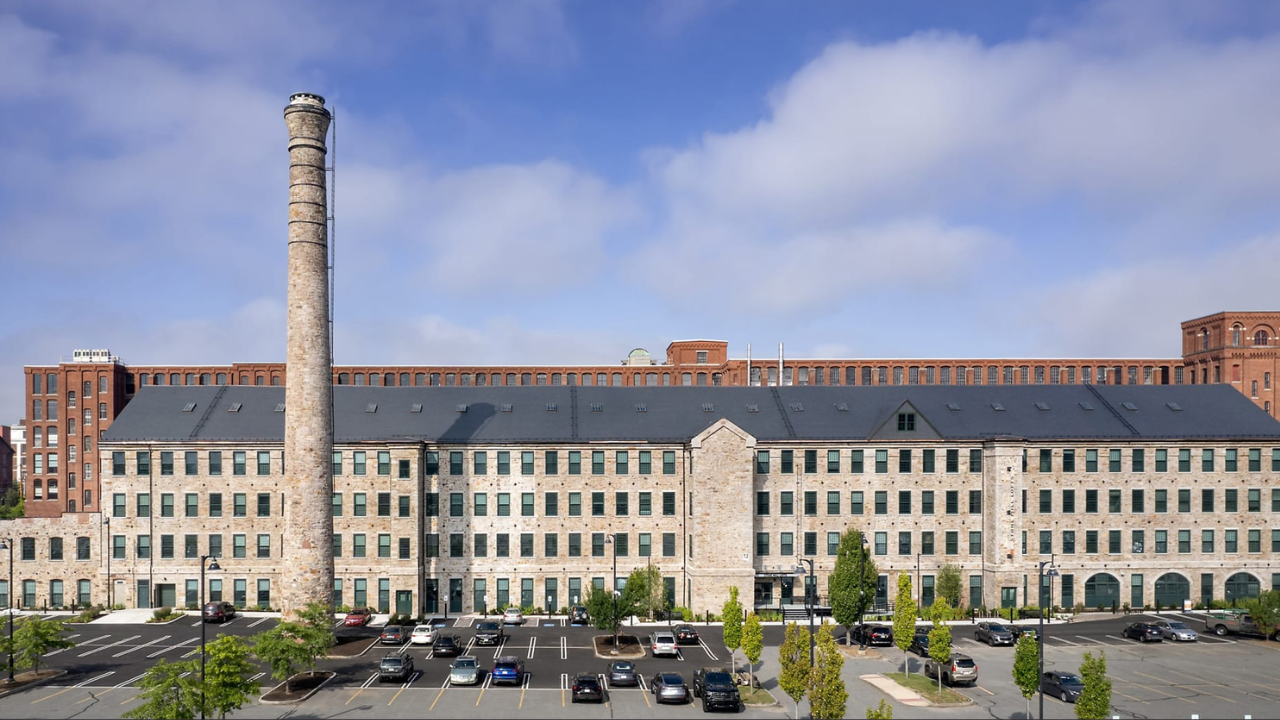
Turning an 1848 Massachusetts industrial mill into 86 apartments at a $53 million price tag works on paper only when public subsidies, historic tax credits, and restricted-rent financing carry almost the entire capital stack. That single equation sits at the heart of a wider housing reckoning across New England: adaptive reuse can rescue storied brick structures and put affordable homes on the market, yet the raw per-unit cost routinely rivals or exceeds ground-up construction without delivering market-rate profit on its own.
A headline touting a 19th-century factory reopening with dozens of income-restricted homes sounds like a clean triumph of preservation and social good. Spend twenty years watching real estate pro formas collapse under interest rates, environmental remediation, and construction inflation, and you learn to look past the ribbon-cutting banner. You look at the sources-and-uses sheet. When an 86-unit project costs $53 million, the headline math puts development cost at roughly $616,000 per apartment. For a building where 69 of those apartments carry affordability restrictions, the gap between what tenants can pay in rent and what debt service requires is wide enough to swallow a conventional developer whole.
Why Old Brick Costs So Much to Wake Up
Old industrial buildings seduce buyers with heavy timber beams, soaring windows, and ready-made urban grit. Then the contractors open the walls.
Historic mills were engineered for spinning frames, looms, and waterpower or early steam, not modern residential plumbing risers, HVAC duct runs, acoustic separation, or elevator cores. Cutting shafts through thick masonry and old-growth timber requires structural shoring that slows every trade on site. Labor moves slower inside tight, irregular floor plates than across an open suburban slab.
Environmental hazards add another layer of friction. Decades of industrial oils, lead paint, asbestos insulation, and contaminated soil beneath former boiler rooms or dye houses turn routine site work into regulated abatement. Even when remediation costs are known upfront, every discovery during demolition carries schedule risk, and schedule risk in real estate translates directly into construction loan interest.
The Illusion of Built-In Savings
Conventional wisdom says starting with an existing shell saves money compared to building from scratch. Sometimes it saves time on framing. Often it costs more in surprises.
Heavy timber and brick facades can reduce certain exterior material expenses, yet code upgrades for fire suppression, egress, energy efficiency, and accessibility frequently erase those savings. A mill built in 1848 was never designed around modern life-safety codes or contemporary insulation standards. Bringing a 178-year-old structure up to current expectations requires bespoke engineering rather than repeatable, cookie-cutter assembly.
To illustrate how debt and operating income interact on a heavily subsidized conversion, consider a hypothetical example. Suppose an 86-unit building generates an average monthly rent that blends market-rate units with income-restricted apartments capped at a fraction of area median income. Even before factoring in vacancy, property taxes, insurance spikes, and routine repairs, net operating income on a predominantly affordable rent roll cannot support a $53 million loan at commercial market interest rates. Without layers of soft debt, grants, and tax credit equity, the spreadsheet turns red before the first drywall sheet goes up.
How Capital Stacks Keep Affordable Conversions Alive
When a $53 million mill conversion reaches completion with 69 affordable apartments, it is rarely because private debt markets suddenly grew generous. It happens because multiple public and quasi-public programs align at the exact same time.
Historic preservation tax credits reward developers for rehabilitating certified historic structures according to strict architectural standards. Low-income housing tax credits—alongside state housing trust funds, municipal gap financing, and favorable long-term loans—supply equity or low-cost capital that does not demand immediate, high-yield cash payouts. That layered financing is the real architecture behind the building.
Subsidies Solve Viability, Not Speed
Putting that capital stack together is a feat of financial endurance. Every funding source brings its own compliance rules, audit cycles, prevailing-wage mandates, or affordability covenants that can stretch for decades.
Many developers spend years assembling awards before construction even begins. By the time financing closes, material prices or interest rates may have shifted again, forcing re-syndication or value engineering. When a project finally opens, the victory reflects years of bureaucratic persistence as much as construction execution.
- Capital Stack Complexity: Combining federal and state tax credits, municipal loans, and private financing requires legal and accounting precision that small builders rarely possess.
- Long-Term Covenants: Affordability restrictions typically lock rents below market levels for 30 years or longer, trading long-term upside for upfront capital.
- Operating Reality: Affordable housing still faces rising insurance premiums, utility costs, and maintenance bills, even when rents are capped by formula.
- Geographic Concentration: Older industrial towns often have strong preservation stock paired with softer baseline rent growth than prime metro cores.
What Affordable Mill Housing Actually Solves
For households earning modest wages in Massachusetts and neighboring states, the financing mechanics matter far less than having a safe, modern place to live. Turning vacant industrial property into 69 affordable homes adds real housing supply in communities where new construction faces fierce opposition or high land costs.
Adaptive reuse also keeps economic activity anchored in legacy mill towns. Former manufacturing hubs spent decades watching factories sit idle or burn down. Repurposing those landmarks restores street life, supports local businesses, and preserves physical memory without paving over untouched greenfields.
The Tradeoffs Critics Rarely Ignore
Celebrations around adaptive reuse sometimes gloss over hard questions of efficiency. Is spending roughly half a billion dollars across eight similar projects the fastest way to house low-income families, or does complex deal-making consume too much time and public subsidy per door?
There is also a tension between historic preservation rules and cost control. Preserving original sightlines, window profiles, or masonry details can add expense and constrain layout efficiency compared to cleaner, more utilitarian designs. Supporters argue those standards protect irreplaceable heritage; skeptics wonder how much housing was left on the table to keep every historic detail intact.
Where Industrial Reuse Goes From Here
Mill conversions are not a silver bullet for New England's housing shortage. They are too capital-intensive and too deal-specific to scale effortlessly across every vacant warehouse or factory floor.
Still, they prove something important about aging industrial towns. With enough patient capital and disciplined execution, nineteenth-century brick walls can still shelter twenty-first-century families, provided everyone involved is honest about who is paying the difference.
Track the gap between total development cost and permanent debt capacity on every new mill deal announced this year, because that single number tells you whether the model can replicate without ever-larger public bailouts.