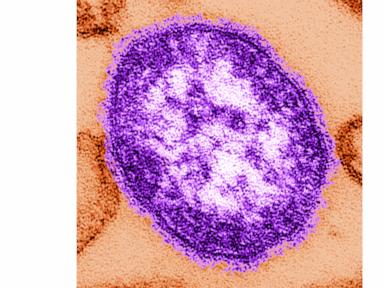
The coroner's office does not deal in abstractions. When infant mortality intersects with a preventable pathogen, the paperwork reduces a public health failure to weight in grams, organ failure percentages, and the final, quiet confirmation of viral load in lung tissue. Recent coroner disclosures detailing the deaths of infants amid a surging measles outbreak have torn open a sobering reality. Measles is not a childhood rite of passage from a bygone era. It is a ruthless, highly efficient immune-suppressive agent that exploits every single crack in our collective defense grid.
For decades, public health messaging treated measles eradication as an administrative inevitability. That hubris created a vacuum. When vaccination rates dip below the herd immunity threshold of roughly ninety-five percent, the virus does not merely circulate; it hunts. It seeks out the immunocompromised, the unvaccinated by circumstance, and the newborns who are simply too young to receive the first dose of the MMR vaccine.
The Anatomy of Viral Vulnerability
Understanding why an infant succumbs to measles requires looking past the characteristic rash and examining the immune system's architecture. Measles is primarily an airway infection, but its true weapon is immune amnesia. When the virus infects memory lymphocytes, it effectively wipes the slate clean. A child who survives measles can suddenly lose their immune memory to previously encountered pathogens like influenza or strep throat.
Infants under twelve months occupy the most dangerous tier of this crisis. They rely entirely on maternal antibodies passed through the placenta during the third trimester or via breast milk. Yet, modern epidemiological data shows that maternal immunity has a shorter half-life than it did decades ago, largely because maternal immunity in many populations now stems from vaccination rather than natural infection.
- Maternal Antibody Decay: Transferred antibodies wane faster in infants of vaccinated mothers, leaving a window of susceptibility months before the first scheduled MMR dose at twelve months.
- Aerosol Persistence: The virus hangs suspended in indoor air for up to two hours after an infected person leaves a room, making clinical waiting rooms and public transit vectors of transmission.
- Systemic Cascade: Initial symptoms mimic a severe cold—fever, cough, coryza, and conjunctivitis—obscuring the diagnosis until secondary bacterial pneumonia or encephalitis takes hold.
Systemic Fractures and the Trust Deficit
Public health data collected over the past five years reveals a steady, alarming erosion of routine pediatric immunization schedules. The disruption began with pandemic-era clinic closures, but it persisted due to a deeper, more corrosive cultural shift. Vaccine hesitancy has mutated from fringe skepticism into a mainstream ideological stance, fueled by algorithmic amplification on social media and a growing distrust of institutional authority.
When officials report infant fatalities from a vaccine-preventable disease, the public response often splits along predictable ideological fault lines. One side demands stricter mandates and punitive measures for non-compliance. The other retreats further into skepticism, questioning the transparency of the reporting. Both responses miss the operational failure. Mandates without accessible, trusted community infrastructure simply drive hesitant populations underground.
Medical professionals on the front lines report a troubling shift in clinical conversations. Parents are no longer just asking about vaccine side effects; they are questioning the fundamental necessity of eradicating childhood diseases altogether. Decades of successful vaccination programs created a paradox. Because people no longer see children dying of measles, diphtheria, or polio, the diseases themselves become abstract concepts, while the vaccine side effects remain tangible, individual fears.
The Economic and Logistical Realities of Containment
Containing a measles outbreak is an expensive, labor-intensive exercise in contact tracing and quarantine management. Local health departments, chronically underfunded and understaffed, are forced to play high-stakes detective work. Every single case requires identifying dozens, sometimes hundreds, of exposed individuals across schools, workplaces, and healthcare facilities.
In under-resourced communities, this containment model collapses under its own weight. Families working hourly wage jobs cannot afford to quarantine for twenty-one days. Clinics lack the rapid-diagnostic logistics to differentiate measles from other viral exanthems before exposure spreads through crowded waiting areas.
+------------------------+-------------------------+--------------------------+
| Outbreak Phase         | Public Health Action    | Systemic Bottleneck      |
+------------------------+-------------------------+--------------------------+
| Index Case Detection   | Isolate and report      | Delayed clinical triage  |
+------------------------+-------------------------+--------------------------+
| Contact Tracing        | Map exposure networks   | Staff shortages          |
+------------------------+-------------------------+--------------------------+
| Ring Vaccination       | Deploy MMR doses rapidly| Cold-chain logistics     |
+------------------------+-------------------------+--------------------------+
Rebuilding the Defense Perimeter
Addressing this vulnerability requires abandoning the assumption that education alone will reverse sliding vaccination rates. Trusted messengers matter more than official edicts. Pediatricians, community health workers, and faith leaders must be equipped with resources to have nuanced, empathetic conversations with hesitant parents, addressing specific concerns rather than dismissing them with broad statistical assertions.
At the same time, health systems must rethink protection for the vulnerable demographic currently bearing the brunt of these outbreaks: infants under one year. Researchers continue to evaluate whether the standard immunization schedule should be adjusted during active community outbreaks, potentially offering a zero dose as early as six months of age during high-risk windows, with the standard two-dose series following later.
The coroner's report serves as an unvarnished ledger of what happens when public health infrastructure frays. Every infant death attributed to measles represents not an unpredictable tragedy of nature, but a failure of the surrounding adult population to maintain the basic biological shield that civilization spent a century constructing.