The Shadow Over Camp Arifjan
The highway running south from Kuwait City toward the border installations carries a very specific kind of quiet traffic. Supply trucks, civilian contractors in dust-caked sedans, and unmarked military transports churn through the desert haze. For decades, this corridor has served as the logistical backbone of American power projection in the Middle East. Right now, that infrastructure carries a heavy, unspoken friction.
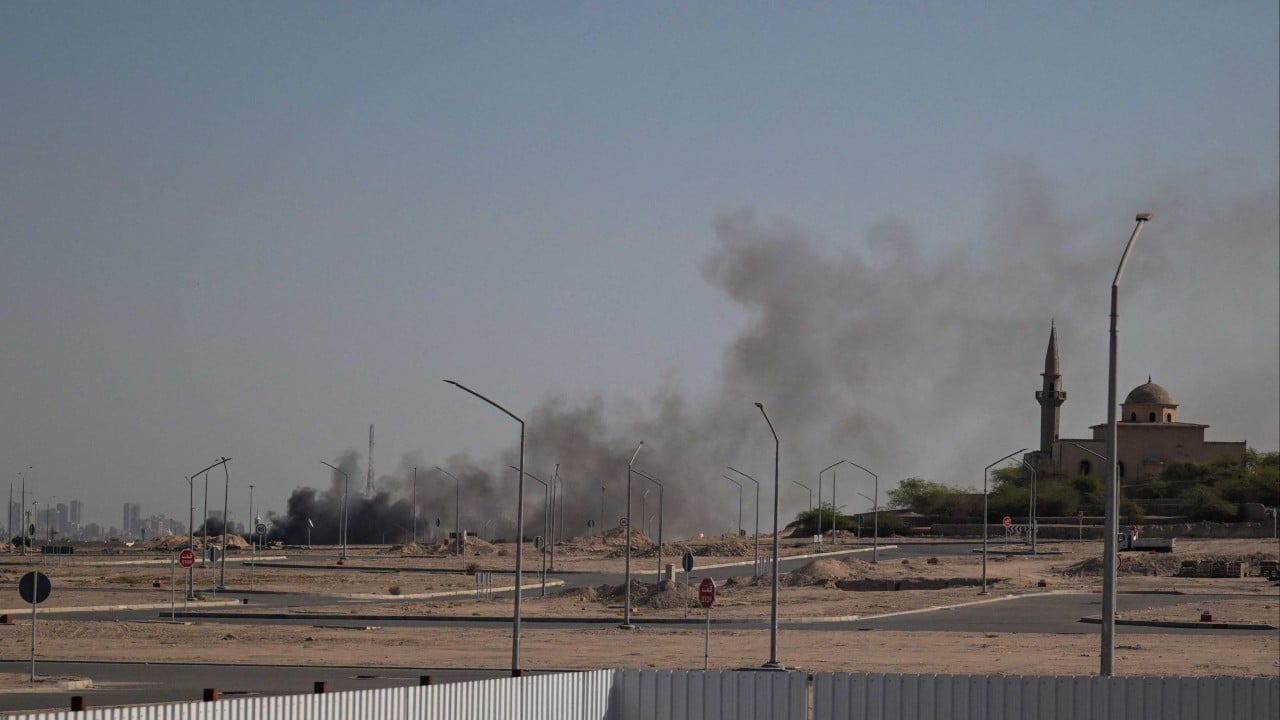
US troops in Kuwait find themselves caught in a tightening vice of regional hostility, diplomatic anxiety, and shifting local sentiment. What used to be a quiet, well-compensated deployment in a secure partner nation has transformed into an exercise in high-stakes exposure. The persistent anger radiating from Tehran does not stop at the border. It bleeds directly into the domestic politics of a Gulf state that is growing increasingly weary of paying the collateral price for Washington’s standoff with Iran.
When regional tensions spike, the proximity of American personnel to the friction points turns every installation into a potential flashpoint. Local citizens watch the skies with a different kind of calculation than they did ten years ago. The old guarantees of absolute safety under a blanket security umbrella are fraying.
The Logistical Anchor Under Pressure
To understand why American forces remain essential to the Pentagon’s architecture in the region, you have to look at the sheer scale of the footprint. Kuwait is not merely a base; it is a massive staging ground.
- Camp Arifjan acts as the primary hub for logistics, command operations, and supply lines feeding regional missions.
- Ali Al Salem Air Base manages critical airlift capabilities, keeping a steady pipeline of tactical mobility open across multiple theaters.
- Thousands of service members rotate through these facilities every year, maintaining the heavy equipment yards that support broader regional deterrence.
Yet, this massive operational footprint creates an equally massive vulnerability. In an era of precision missiles and asymmetric proxy warfare, concentration equals target density. Kuwaiti authorities are well aware of this mathematical reality. Every time regional rhetoric escalates, the host government must balance its alliance obligations with the very real fear of becoming a battleground for a war it did not start.
The bilateral defense agreements signed decades ago assumed a predictable threat matrix. Those assumptions have evaporated. The proliferation of cheap, long-range drones and ballistic missiles means that geography offers far less protection than it used to.
Shifting Public Sentiment on the Ground
Walk through the neighborhoods of Salmiya or talk to merchants in the old souks, and you will hear a distinct tonal shift regarding the American presence. It is rarely outright hostility. Instead, it is a fatigue born of proximity to perpetual crisis.
Many Kuwaitis view the US military footprint not as a shield, but as a lightning rod. The logic is straightforward. If American forces use local soil to project power against regional adversaries, local soil becomes an acceptable target for retaliation.
Local parliamentarians frequently voice these anxieties, using the presence of foreign troops as a political lever during domestic budget and security debates. The government in Kuwait City walks a diplomatic tightrope. It must maintain the strategic benefits of the American alliance while soothing a domestic populace that resents feeling like a pawn in a larger geopolitical chess match.
Washington often views host-nation security through a purely transactional lens. We provide the umbrella; you provide the real estate. But local populations live with the weather underneath that umbrella every single day. When Iranian-backed proxies signal their intent, it is the neighborhoods near the bases that bear the psychological weight of the threat.
The Strategic Dilemma Facing Washington
The Pentagon faces a brutal strategic reckoning in the Gulf. Maintaining a heavy footprint in Kuwait provides undeniable logistical efficiency, but that efficiency comes with escalating political and security costs.
Force protection measures consume enormous resources. Troops spend more time inside hardened bunkers and behind perimeter fences, limiting their engagement to vital operational duties. The friction between maintaining a credible deterrent posture and managing local political sensitivities grows sharper with every cycle of regional escalation.
Alternative options exist on paper, but none offer the seamless infrastructure that Kuwait has spent decades developing alongside US planners. Moving heavy armor and supply depots elsewhere in the region would cost billions and disrupt operations for years.
So the status quo persists, sustained by inertia and necessity. American service members continue their rotations under a darkening cloud of regional anger, waiting to see whether the delicate deterrence holding the Gulf together will finally snap.