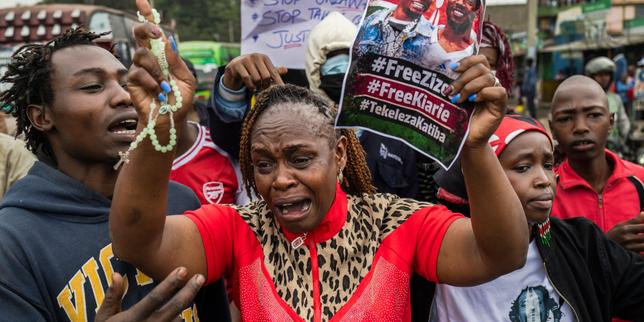
State security operatives in Nairobi have shifted from open street clashes to a silent, targeted campaign of nocturnal abductions to neutralize opposition well ahead of the 2027 general election. This covert strategy aims to dismantle the decentralized network of young activists who crippled the capital with anti-government protests over the last two years. By picking off organizers from their homes, vehicles, and workplaces, authorities are attempting to preemptively secure the political playing field. Government officials publicly deny involvement, but human rights watchdogs and survivors reveal a systematic pattern of state-sponsored intimidation designed to instill absolute fear before voters ever reach the ballot box.
The New Strategy of Preemptive Silencing
The nature of political repression in East Africa has changed. In previous decades, regimes relied on heavy-handed police deployments, tear gas, and mass arrests broadcast live on evening television. Today, the strategy relies on silence.
Activists vanish in the middle of the night. Unmarked vehicles with concealed registration plates pull up outside residential compounds, armed men in civilian clothing break down doors, and the targets disappear into a network of unofficial detention centers. This is not accidental chaos. It is a calculated bureaucratic operation designed to isolate leaders of the civic movement before they can mobilize voters for the upcoming electoral cycle.
The state learned a harsh lesson during the mass youth uprisings of 2024 and 2025. Street-level crackdowns only drew international condemnation and galvanized public fury. By shifting to targeted abductions, the security apparatus minimizes public spectacles while achieving the exact same result. The fear is palpable. Activists who once spoke openly on digital forums now change their phone numbers weekly and sleep in rotating safe houses.
Moving Beyond Street Level Violence
Human rights organizations have shifted their focus from documenting casualties at protests to tracking missing persons reports. The Kenya National Commission on Human Rights recently flagged a surge in enforced disappearances directly tied to state agents. While the Ministry of Interior claims these incidents are either staged by opposition actors or ordinary criminal matters, the evidence points elsewhere.
Consider the logistics of a typical abduction. The operations require access to state surveillance data, mobile phone triangulation, and immunity from local police intervention. When family members attempt to file missing persons reports at neighborhood police stations, they are routinely met with bureaucratic stonewalling or outright threats.
The financial cost of maintaining this apparatus is significant. The state recently allocated billions of shillings ostensibly for victim compensation and judicial reforms, yet independent investigations suggest that parallel funds continue to support the intelligence units executing these roundups. This dual-track approach allows the executive branch to project an image of reform to international donors while maintaining an iron fist at home.
The Regional Normalization of Dictatorial Tactics
Kenya does not operate in a vacuum. The political environment across East Africa has degraded significantly following highly contested and violent elections in neighboring states. Cross-border cooperation between intelligence agencies has reached unprecedented levels, creating a hostile environment for dissidents seeking asylum.
Transnational Repression on the Rise
Prominent human rights defenders and international civil society directors have faced sudden deportations and arbitrary entry denials at Jomo Kenyatta International Airport. Intelligence officers have detained regional figures for hours without legal counsel, interrogating them on their alleged ties to domestic youth movements.
This regional alignment serves a specific purpose. By standardizing the suppression of civic dissent, ruling coalitions ensure that cross-border solidarity movements cannot take root. When Kenyan activists traveled to neighboring capitals to discuss democratic reforms, government officials openly warned that exporting political dissent would carry severe consequences. The subsequent silence from regional bodies confirms that a tacit agreement exists among the leadership to protect incumbent regimes at all costs.
The Weaponization of Cyber Laws
Physical abductions are only one side of the coin. The legal framework has been systematically re-engineered to criminalize digital expression. Amendments to cybercrime legislation have expanded state powers over encrypted communications, allowing authorities to label online critics as threats to national security.
- Surveillance Infrastructure: State agencies have increased their monitoring of community networks, mapping out relational webs between activists, journalists, and financial backers.
- Preventative Arrests: Bloggers are routinely summoned for questioning regarding minor critiques of economic policy, serving as a warning to the broader public.
- Internet Control: Government officials have openly stated their readiness to restrict digital platforms during periods of heightened political tension, neutralizing the primary tool used by the youth to organize.
The Fiction of Reform
Western diplomats often praise the current administration for its commitments to the rule of law and its willingness to address historical injustices. This praise ignores the reality on the ground. The establishment of independent oversight bodies has done little to stem the tide of abuses because these institutions lack the enforcement power to prosecute high-ranking security chiefs.
The executive branch recently announced a massive fund aimed at compensating victims of past police brutality. Critics view this move as a public relations maneuver rather than a genuine shift in policy. Money cannot replace missing citizens, nor does it dismantle the clandestine units operating within the Directorate of Criminal Investigations. The strategy is clear: pay for past sins in public while committing new ones in the shadows.
Political survival overrides constitutional obligations. As the 2027 election approaches, the ruling elite faces a fractured electorate and deep dissatisfaction over structural economic adjustments. Unable to win the argument on economic merits, the state has fallen back on the oldest tool in the authoritarian playbook.
Fracturing the Youth Movement
The primary target of this campaign remains the politically conscious youth population. Unlike traditional opposition movements led by established ethnic kingpins, the recent wave of dissent has been leaderless and decentralized. This structural fluidity initially terrified the state.
Without a single leader to bribe or arrest, the regime struggled to contain the disruption. The current campaign of abductions is an attempt to force a structure onto a fluid movement. By targeting prominent digital voices and logistics coordinators, the security apparatus hopes to isolate individual nodes of the network until the entire system collapses under the weight of mutual suspicion.
It is working to a degree. The open defiance seen in previous years has evolved into a cautious, underground resistance. Activists must now weigh the utility of a tweet or a peaceful march against the very real prospect of being pulled into an unmarked van and never seen again. The administration has successfully shifted the cost of political participation from civic duty to existential risk.
The international community remains largely quiet, distracted by geopolitical conflicts elsewhere and eager to maintain Kenya as a stable anchor state in an unstable region. This silence provides the perfect cover. The abductions will continue, the tactics will refine, and the space for democratic choice will shrink further long before the first ballot is cast.
Enforced disappearances report details state-backed tactics represents an essential investigation into how human rights organizations are tracking these covert state operations inside Nairobi.