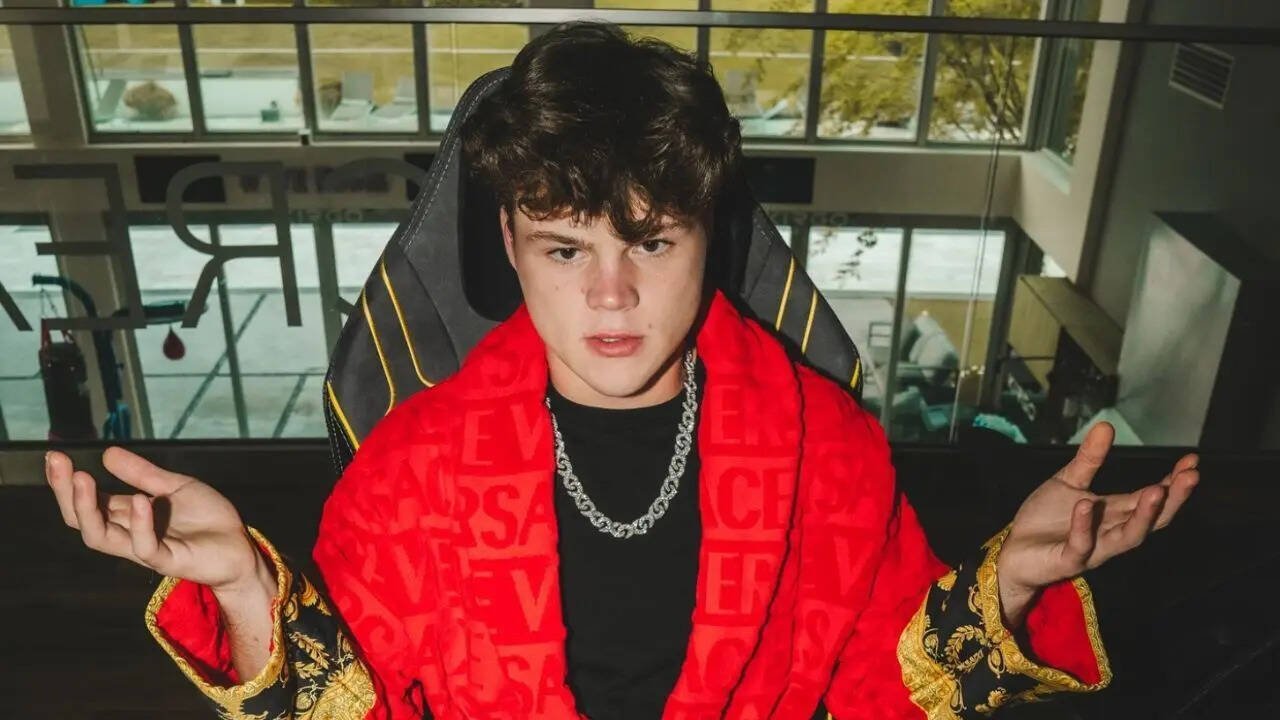
The viral video circulating on social media showing controversial streamer Jack Doherty being handcuffed and placed into a police cruiser is almost certainly fake. It is a calculated piece of content engineered to exploit the internet's collective outrage. While the 14-second clip has triggered a wave of speculation regarding a potential violation of his alleged house arrest, local police records do not validate a new arrest, and the vehicle used in the footage lacks legitimate law enforcement markings. This is not a legal emergency. It is a marketing strategy.
The internet operates on an attention economy where negative engagement spends just as well as positive acclaim. Doherty, a 22-year-old creator who built a massive following through public confrontation, understands this mechanics better than most. By feeding his critics exactly what they want to see—his apparent downfall—he guarantees millions of views, algorithmic promotion, and a prolonged stay in the cultural conversation. For a more detailed analysis into this area, we recommend: this related article.
Anatomy of a Staged Arrest
Skepticism surrounding the footage began mounting within minutes of its upload. Viewers quickly noticed that the patrol car featured generic, oversized lettering on the rear panel simply reading "POLICE," a deviation from standard Los Angeles Police Department cruiser designs. The emergency lights flashed amber rather than the standard law enforcement red and blue. Furthermore, the supposed police officer escorted Doherty toward the vehicle with a level of casual indifference rarely seen during a genuine detention for a probation or house arrest violation.
This theatrical display follows a highly specific timeline. Weeks prior, Doherty published a video showing himself wearing an ankle monitor, claiming he had been placed under house arrest for several months. To get more details on this topic, detailed coverage is available on Deadline.
"All my haters are probably going to be so happy that I am put on house arrest," Doherty stated while showing off his luxury residence.
Legal experts and internet sleuths immediately questioned the validity of the ankle monitor, noting it resembled a prop rather than a federally mandated tracking device. The subsequent "arrest" video serves as the narrative escalation to that initial hook.
The Precedent of Real Legal Trouble
The reason the public so easily buys into the hoax is because Doherty possesses a genuine history of law enforcement encounters. In November 2025, Miami Beach police legitimately arrested the streamer after he intentionally blocked traffic on Washington Avenue to fulfill an online wager. According to official police reports from that incident, Doherty ignored multiple commands to clear the roadway, responding to officers with, "Once I'm done with this bet!"
During the subsequent search, authorities discovered marijuana and amphetamines, leading to charges of drug possession and resisting an officer without violence. He posted bail within hours and immediately filmed his exit from the detention facility.
Because he has crossed the line into actual criminal behavior in the past, his audience struggles to separate genuine legal consequences from fictionalized drama. The modern influencer playbook actively blurs these boundaries to keep audiences off-balance.
The Industrialization of Outrage
What we are witnessing is the logical conclusion of an unregulated live-streaming ecosystem. Platforms incentivize extreme behavior because conflict drives retention. When a creator runs out of organic real-world chaos to broadcast, they must manufacture it.
Staging an arrest is an incredibly effective tactic for three distinct reasons.
- Guaranteed Hate-Watching: Audiences who despise a creator will click on a video of their arrest to witness accountability.
- Algorithmic Velocity: The fierce debate in the comment section regarding whether the footage is real or fake signals high engagement to platform algorithms, pushing the video to wider audiences.
- Control of the Narrative: By faking a crisis, the creator dictates the beginning, middle, and end of the story, eventually revealing the "truth" in a subsequent high-traffic video.
The financial rewards for this type of deception are substantial. A viral stunt that achieves cross-platform distribution can generate tens of thousands of dollars in direct ad revenue and subscriber growth. The minor reputational damage incurred by being labeled a liar is factored into the cost of doing business.
The Burnout of Content House Realism
The broader danger of this trend lies in the erosion of audience trust across the entire digital media sector. As stunt creators lean heavily into hyper-realistic, staged crises, the threshold for what shocks an audience continues to rise. What begins with fake public arguments inevitably escalates to simulated law enforcement interactions, wasting public attention and occasionally complicating real-world emergency responses.
Doherty remains a symptom of a larger systemic reality. As long as distribution networks reward retention over authenticity, creators will continue to treat the legal system as a stage prop and their audience as a metric to be manipulated. The viral handcuff video did not capture a lawbreaker getting his comeuppance. It captured an entertainer executing a highly predictable script for an audience that loves to watch him fail.